


TL;DR:
- A fleet claim process workflow is essential for reducing vehicle downtime and claim costs by ensuring timely reporting, complete evidence, and effective subrogation. Technology such as telematics, AI-driven document processing, and workflow automation enhances efficiency and speeds up settlements. Proper documentation, rapid FNOL, and diligent subrogation improve claim outcomes and fleet cost management.
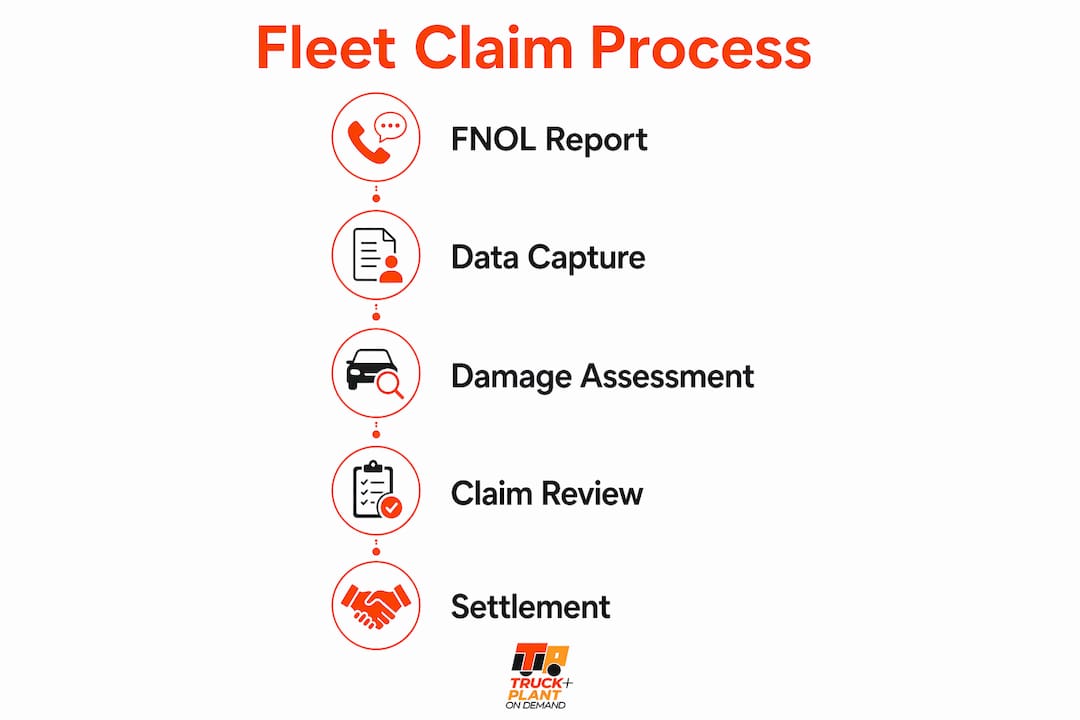
A claim process workflow for fleets is the structured sequence of steps a fleet operator follows from the moment an incident occurs through to final settlement with the insurer. Getting this sequence right directly reduces vehicle downtime and claim costs. Well-documented, complete claims can reduce overall claim costs by 15–30%. That figure alone makes fleet claim management one of the highest-return operational priorities for any commercial transport business. The industry term for this discipline is accident management, and it sits alongside, but separate from, your insurance policy itself.
What are the essential components of a fleet claim process workflow?
The First Notice of Loss, known as FNOL, is the cornerstone of any automotive claims workflow. FNOL is the formal notification to your insurer that an incident has occurred. Rapid FNOL initiation preserves telematics data, controls the incident narrative, and directly correlates with lower claim costs. Every minute of delay after an incident weakens your position.
Beyond FNOL, a functional workflow depends on four categories of inputs working together:
People and roles
- Driver: First responder. Responsible for immediate scene safety, photo evidence, and witness details.
- Fleet manager: Coordinates repair, insurer communication, and documentation.
- Insurer or broker: Assesses liability and authorises settlement.
- Subrogation specialist: Pursues third-party cost recovery where another party caused the loss.
Data and documentation
- Photographic evidence from the scene
- Telematics logs and GPS data at time of impact
- Vehicle maintenance and service history
- Third-party contact and witness information
- Police report reference numbers where applicable
Technology prerequisites
| Requirement | Purpose |
|---|---|
| Telematics with impact sensors | Automatic incident detection and data capture |
| Mobile claims app | On-scene photo upload and FNOL submission |
| Digital maintenance records | Instant attachment to claim file |
| Automated notification system | Alerts fleet manager and insurer simultaneously |
Regulatory and compliance baseline
Your workflow must align with your insurer’s specific FNOL timeframes and your country’s road accident reporting obligations. In South Africa, the Road Accident Fund and relevant traffic legislation set minimum reporting requirements that feed directly into your claims process.
How to execute the fleet claim process step by step
A clear, repeatable sequence is what separates fleets that settle claims in days from those stuck in weeks of back-and-forth. The following steps reflect best practices for claims processing for fleets in 2026.
-
Immediate incident response. The driver secures the scene, checks for injuries, and calls emergency services if needed. No vehicle should be moved before photos are taken. The driver uses a mobile app or direct call to trigger FNOL within the first 30 minutes.
-
Evidence collection. The driver photographs all vehicles involved, road conditions, signage, and any visible damage. Witness names and contact numbers are recorded. GPS coordinates and time-stamp data from the telematics unit are captured automatically.
-
FNOL submission and claim creation. The fleet manager submits the FNOL to the insurer with all available evidence attached. Integrated telematics impact sensors can notify management before the driver even makes contact, giving you a head start on the claim file.
-
Maintenance record attachment. Vehicle service history is attached to the claim file within 15 minutes of the incident where automated systems are in place. Attaching maintenance records early counters any allegation of negligent vehicle upkeep, which is a common tactic used to shift liability in litigation.
-
Repair coordination. The fleet manager authorises a repair through an approved panel repairer. A courtesy or replacement vehicle is arranged to keep operations moving. All repair invoices and assessor reports are added to the claim file.
-
Subrogation assessment. Once liability is established, a subrogation specialist reviews whether a third party caused the loss. Specialist subrogation services recover costs in 11% of cases at more than 100% of the available claim amount, including diminished value and fees. This step alone can turn a net loss into a net recovery.
-
Settlement and closure. The insurer issues settlement. The fleet manager reviews the payout against the documented loss and flags any shortfall. The claim file is archived for future reference and premium review discussions.
Pro Tip: Set a mandatory 30-minute FNOL window as a written policy for all drivers. Post the reporting steps on a laminated card in every cab. Drivers who know exactly what to do at the scene produce better evidence and faster settlements.
For a faster path through this process, the 5-step claims guide from Truckplant covers settlement acceleration tactics specific to commercial fleets.
What technology tools improve claims processing efficiency for fleets?
Technology does not replace good process. It makes good process faster and harder to get wrong. The most impactful tools for automotive claims workflow automation fall into three categories.

Intelligent Document Processing (IDP)
AI-driven IDP automates the extraction of data from unstructured claim documents such as repair invoices, police reports, and assessor notes. This removes manual data entry, cuts errors, and accelerates the claim file from submission to assessment. Adjusters spend less time on paperwork and more time on complex decisions.
Telematics integration
Telematics platforms do more than track location. Impact sensors detect collisions and trigger automated alerts to fleet management systems. This means your team knows about an incident in real time, often before the driver has finished the call to emergency services. The data captured, including speed, braking force, and GPS coordinates, becomes objective evidence that is difficult to dispute.
Workflow automation platforms
Enterprise-grade fleet management platforms orchestrate task assignment across drivers, managers, repairers, and insurers. Automated notifications push reminders when documentation is missing or deadlines approach. This removes the human bottleneck that causes most claims delays.
Pro Tip: Before selecting any platform, confirm it integrates directly with your telematics hardware. A system that requires manual data export defeats the purpose of automation.
Automation and AI substantially reduce manual claims work, freeing adjusters to focus on complex cases. That efficiency benefit flows back to you as a fleet manager through faster settlements and fewer disputes.
The freight sector offers a useful parallel. The freight claim process guide from Worldwide Express shows how structured documentation and digital submission cut resolution times across high-volume transport operations.
How do you troubleshoot common fleet claim workflow problems?
Even well-designed workflows break down under pressure. These are the failure points fleet managers encounter most often, and the fixes that work.
Delayed reporting
Drivers who do not report incidents immediately create the single biggest cost in fleet claim management. Late FNOL means lost telematics data, degraded photographic evidence, and an insurer who questions why the delay occurred. Fix this with mandatory reporting windows written into driver contracts and automated alerts that flag unreported incidents from telematics data.
Incomplete evidence
A claim file missing photos, witness details, or a police report number forces the insurer to investigate further. That investigation adds time and cost. High-quality claim files that score 8 or above out of 10 for ease of handling reduce insurer processing time by 20–30%. The practical implication: a complete file is not just good practice, it directly affects your premium at renewal.
Manual processing bottlenecks
Paper-based or email-driven workflows create version control problems and missed deadlines. Centralise all claim activity in a single digital platform. Assign clear task ownership so nothing sits in an inbox waiting for action.
Subrogation missed or delayed
Many fleet operators close a claim and accept the net loss without checking whether a third party was at fault. A subrogation specialist should review every claim where another vehicle or party was involved. The recovery potential is significant and often overlooked.
Compliance gaps
Regulatory requirements around accident reporting, data retention, and insurer notification windows vary by jurisdiction. Build compliance checkpoints into your workflow as non-negotiable steps, not optional reminders. For fleets operating across borders, the international freight claims guide provides useful context on multi-jurisdiction claim handling.
To reduce premium exposure while improving claim outcomes, the fleet insurance cost guide from Truckplant outlines practical steps that connect directly to workflow quality.
Key takeaways
A well-executed claim process workflow for fleets reduces costs, accelerates settlements, and protects your fleet’s operational continuity from the moment an incident occurs.
| Point | Details |
|---|---|
| FNOL speed matters most | Submit the First Notice of Loss within 30 minutes to preserve data and control the claim narrative. |
| Complete files cut costs | Well-documented claims reduce overall costs by 15–30% and insurer handling time by 20–30%. |
| Telematics is objective evidence | Impact sensor data provides time-stamped, dispute-resistant proof that strengthens every claim. |
| Subrogation recovers real money | A specialist review of third-party liability can recover more than 100% of the claim amount in some cases. |
| Automation removes bottlenecks | IDP and workflow platforms eliminate manual errors and keep claim files moving without human delays. |
Why I think most fleets are leaving money on the table
Fleet managers I speak with consistently underestimate two things: the value of a complete claim file and the cost of skipping subrogation. Most operators treat a closed claim as a finished task. The insurer paid out, the vehicle is repaired, and the file is archived. That thinking is expensive.
The real opportunity is in the quality of what you submit and what you pursue after settlement. A claim file that reads clearly, contains full documentation, and attaches maintenance records from the start does not just settle faster. It builds a track record with your insurer that influences your renewal premium. Insurers evaluate claims on ease-of-handling metrics. A fleet that consistently submits clean, complete files is a fleet that gets treated differently at renewal time.
The second missed opportunity is subrogation. Most fleets do not have a specialist reviewing every incident for third-party recovery potential. They accept the net loss and move on. That is a structural gap in effective fleet claim strategies that costs real money every year.
The future of claims handling is moving toward full automation, where telematics data feeds directly into insurer systems and AI generates the initial damage estimate before a human adjuster is involved. Fleets that build clean, digital workflows now will adapt to that future without disruption. Fleets still running paper-based processes will face a painful and expensive transition.
My practical advice: treat your claims workflow as a financial asset, not an administrative burden. Every improvement you make to documentation quality, reporting speed, and subrogation follow-through has a direct rand value.
— Coert
How Truckplant supports your fleet claim workflow
Managing a fleet claim from incident to settlement is demanding work. Your insurance cover should make that process easier, not harder.
Truckplant’s fleet insurance for commercial vehicles is built around the reality of how transport businesses operate. With Truck & Plant On-Demand™, you control what you insure, when you insure it, and how your cover changes as your operations do. You pay for the cover you need, not a fixed premium that ignores your actual risk exposure. Whether you run a single truck or a large mixed fleet, Truckplant offers cover tailored to your business. Get in touch to find out how on-demand cover can work alongside a structured claims workflow to protect your fleet and your bottom line.
FAQ
What is FNOL and why does it matter for fleet claims?
FNOL stands for First Notice of Loss. It is the formal notification to your insurer that an incident has occurred, and submitting it quickly preserves telematics data and directly reduces claim costs.
How does telematics improve the claims process for fleets?
Telematics impact sensors detect collisions in real time and capture objective data including speed, location, and braking force. This data strengthens your claim file and reduces disputes over liability.
What is subrogation in fleet insurance?
Subrogation is the process of recovering claim costs from a third party who caused the loss. Specialist subrogation services can recover more than 100% of the claim amount in some cases, including fees and diminished value.
How can fleet managers reduce insurer handling time?
Submitting complete, well-documented claim files consistently reduces insurer handling time by 20–30%. Insurers score claims on ease of handling, and high scores correlate with faster settlements and better premium outcomes.
What is Intelligent Document Processing in claims handling?
Intelligent Document Processing, or IDP, uses AI to extract data from unstructured documents like repair invoices and assessor reports. It reduces manual entry errors and accelerates claim file processing from submission to assessment.