


Finding commercial vehicle and plant insurance that aligns cover to project cycles and asset activity without overpaying for idle time is needlessly difficult in South Africa. Most traditional insurers either require annual commitments, lack day-level activation controls, or push generic motor policies that miss key plant and cargo exposures. This comparison sets out activation flexibility, claims speed, and cover tailoring across six alternatives so you can choose an insurance provider that matches your risk profile and operational rhythm.
Table of Contents
- Truck & Plant On-Demand™ Insurance
- HCV
- VAPS HCV Insurance
- Trucksurance
- Firedart
- Consort Technical Underwriters Insurance Products
- Comparing Solutions for Commercial Vehicle and Plant Insurance
Truck & Plant On-Demand™ Insurance
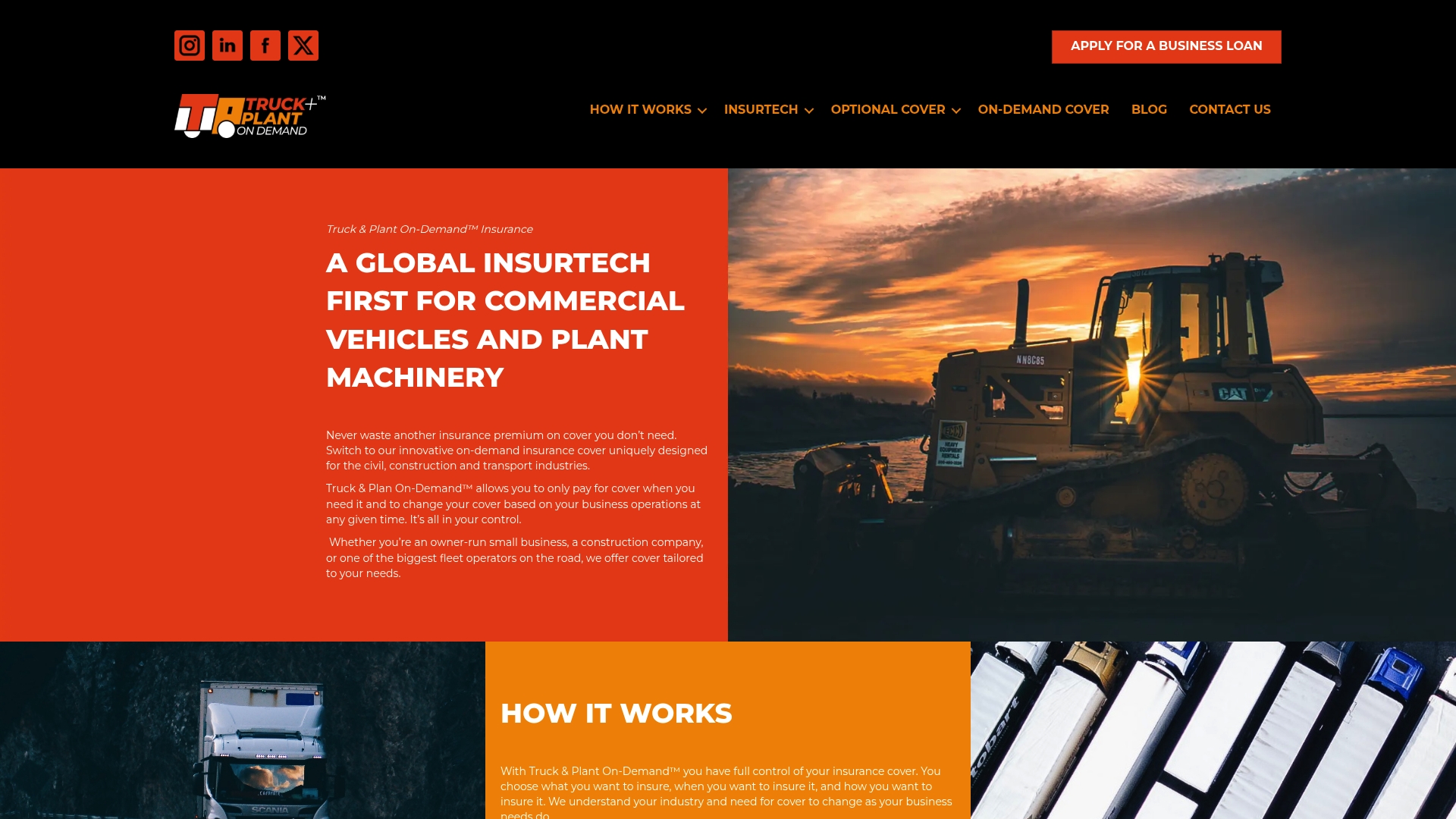
At a Glance
Truck & Plant’s marketing materials state claims are authorised within 48 hours once documentation and an assessor’s report are received. That speed claim is a clear promise for firms that measure downtime in lost workdays.
The product targets commercial vehicles, yellow plant machinery, trailers, tools and cargo with a pay as you go approach you switch on for active projects and switch off when assets sit idle.
Core Features
- On demand cover for trucks, excavators, trailers, tools and goods in transit with day‑level control at the policy or asset level.
- Flexible activation and deactivation so you only hold cover during projects, not every month of the year.
- Tailored options including full motor cover, fire, theft and public liability that match jobsite exposure.
- Clear, plain‑language policy wording and digital policy documents that reduce ambiguity at claim time.
- Fast claims authorisation that the vendor advertises as taking place within 48 hours when paperwork and assessor input are complete.
Key Differentiator
The platform’s core advantage is the operational granularity it offers: policies can be adjusted in real time to match which assets are working, where they are working, and for how long. That capability shifts insurance from a fixed monthly cost to a variable operational expense tied to actual usage.
Pros
-
The pay as you go model reduces wasted premium on idle assets and aligns cover to project schedules, which helps cashflow for SMEs and contractors.
-
Policy tailoring covers mixed fleets and plant types so a single account can manage trucks, trailers and yellow plant without multiple insurers.
-
Fast claims authorisation shortens repair cycles and helps get mobile assets back on site sooner when the vendor’s paperwork conditions are met.
-
The platform uses data analytics and AI to price and advise on risk, which can lead to more accurate premiums for fleets with telematics or stable operating patterns.
-
A user‑friendly digital interface centralises policy activation, certificates and claim tracking so administrators spend less time on paperwork.
Cons
- Limited geographic reach: cover is confined to South Africa and certain neighbouring countries, not worldwide.
Who It’s For
Fleet owners, construction contractors and transport managers operating in South Africa or nearby markets who need flexible, short‑term cover tied to project cycles. Particularly useful for firms that park equipment between projects and want to reduce standing insurance costs.
Unique Value Proposition
Toggle cover at the asset level and pay for insurance only on the days each truck, trailer or excavator is active. That single operational control converts fixed insurance spend into a controllable line item you can match to project billing and mobilisation schedules.
Real World Use Case
A mid‑sized construction company activates vehicle and plant cover only for the three months of a roadworks contract, then suspends plant cover while machines sit in storage. The approach reduces annual premium spend and keeps cover aligned to actual risk windows.
Pricing
Pricing is bespoke and varies by fleet size, asset mix, location and selected cover types. Expect per day or per project calculations rather than fixed monthly premiums; Truck & Plant says quotes are tailored to operational needs.
Website: https://truckplant.com
HCV
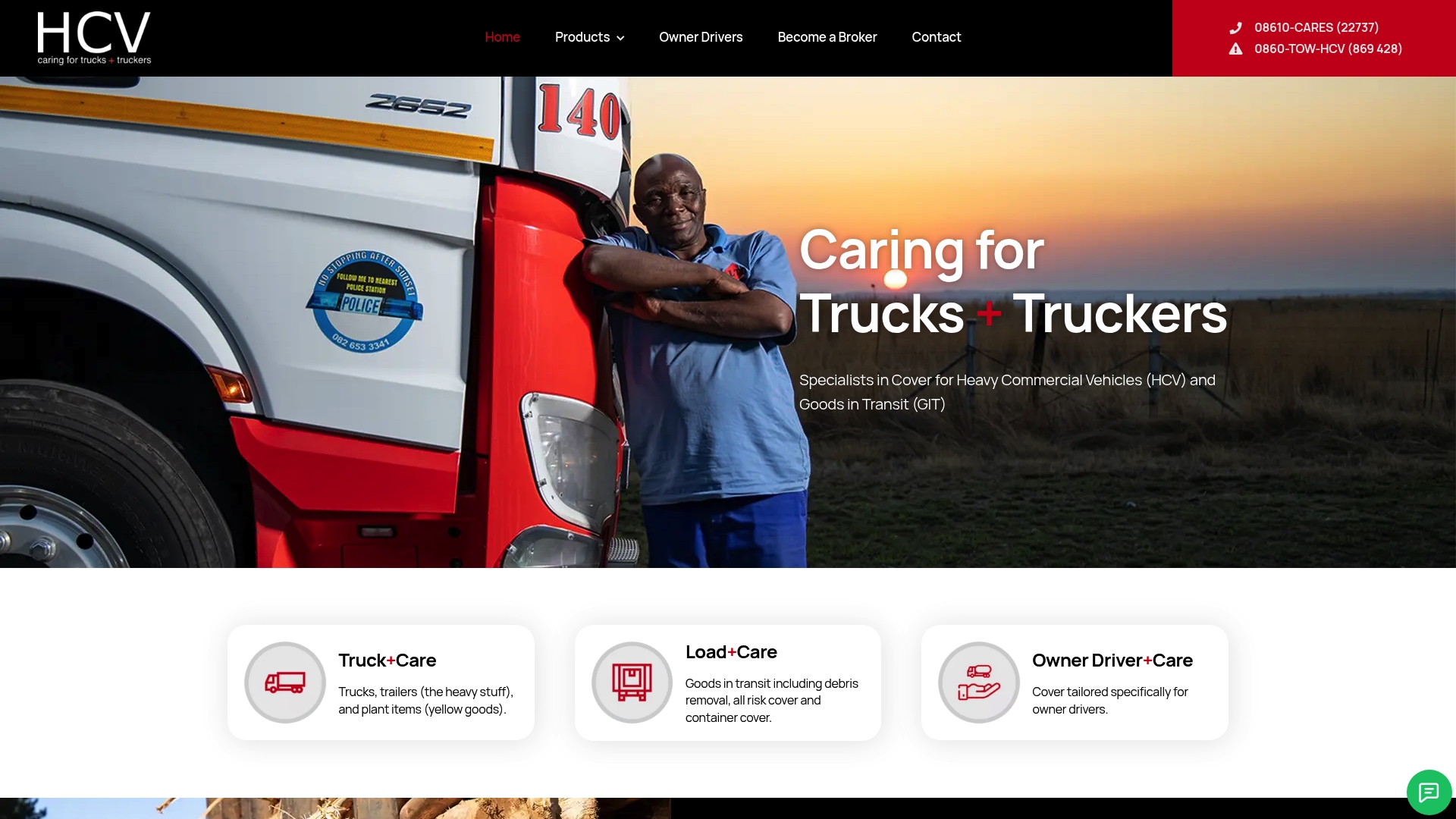
At a Glance
HCV’s marketing materials state a 24-hour call centre and that truck repairs are handled within 48 hours where possible. The firm focuses solely on heavy commercial vehicles, trailers and goods in transit and offers a suite of driver-focused add-ons and cross-border assistance.
Core Features
- Insurance cover for trucks, trailers and plant equipment with an Agreed Value policy option that fixes the insured amount for settlements.
- Range of value-added products such as roadside assistance, windscreen cover and personal accident benefits for drivers.
- Cross-border assistance for goods in transit, making cover available for neighbouring-region movements.
- 24-hour claims and service line plus vendor-stated rapid claims handling for truck repairs where operationally feasible.
Key Differentiator
HCV specialises in heavy vehicle and cargo risks rather than mixed personal or light-fleet lines. That narrow focus produces policy wording and optional covers aimed at operator realities: agreed value for trucks, driver personal accident layers and transit solutions that anticipate cross-border delays and cargo exposure.
Pros
- Specialisation in heavy commercial vehicles gives underwriters and brokers policy forms tailored to truck and trailer exposures rather than generic motor wording.
- The catalogue of extras reduces the need to stitch separate covers together. Roadside assistance and personal accident add-ons sit alongside cargo protection.
- HCV has been operating since 1995, which signals long-term market experience handling fleet and transit claims.
- Policies are underwritten by Infiniti Insurance Limited, a licensed non-life insurer, which provides a clear insurance counterparty for regulatory and credit checks.
- Vendor-stated fast repairs and a round-the-clock service line improve uptime for fleets that cannot afford long workshop downtimes.
Cons
- Cover is limited to commercial vehicles and goods in transit; private cars and non-commercial risks are outside its scope.
- Regional focus is South Africa and neighbouring crossings; operators working extensively outside that footprint will need broader international solutions.
- The website and product information do not publish fixed pricing or an online quote portal, so procurement requires broker engagement or direct discussion.
When It May Not Fit
If you need pay-per-use or on-demand cover that switches daily according to site activity, HCV is not set up for that model. If your routes extend well beyond Southern Africa or you run mixed personal and commercial fleets, the product scope above will be too narrow.
Who It’s For
Transport and logistics companies, fleet managers and owner-operators in South Africa who run heavy trucks, trailers or yellow plant and need tailored transit cover and driver protections. Best for operators who prefer traditional insurer relationships rather than app-driven on-demand products.
Real World Use Case
A regional logistics operator places its 30-truck fleet on agreed value cover, adds roadside assistance and driver personal accident layers, and extends cargo transit cover for cross-border loads. The insurer and broker manage repairs and claims via the 24-hour line so trucks return to work faster.
Pricing
No fixed retail prices are published. Pricing is arranged per policy and fleet profile via broker or direct negotiation, reflecting agreed values, route mix and chosen add-ons.
Website: https://hcv.co.za
VAPS HCV Insurance
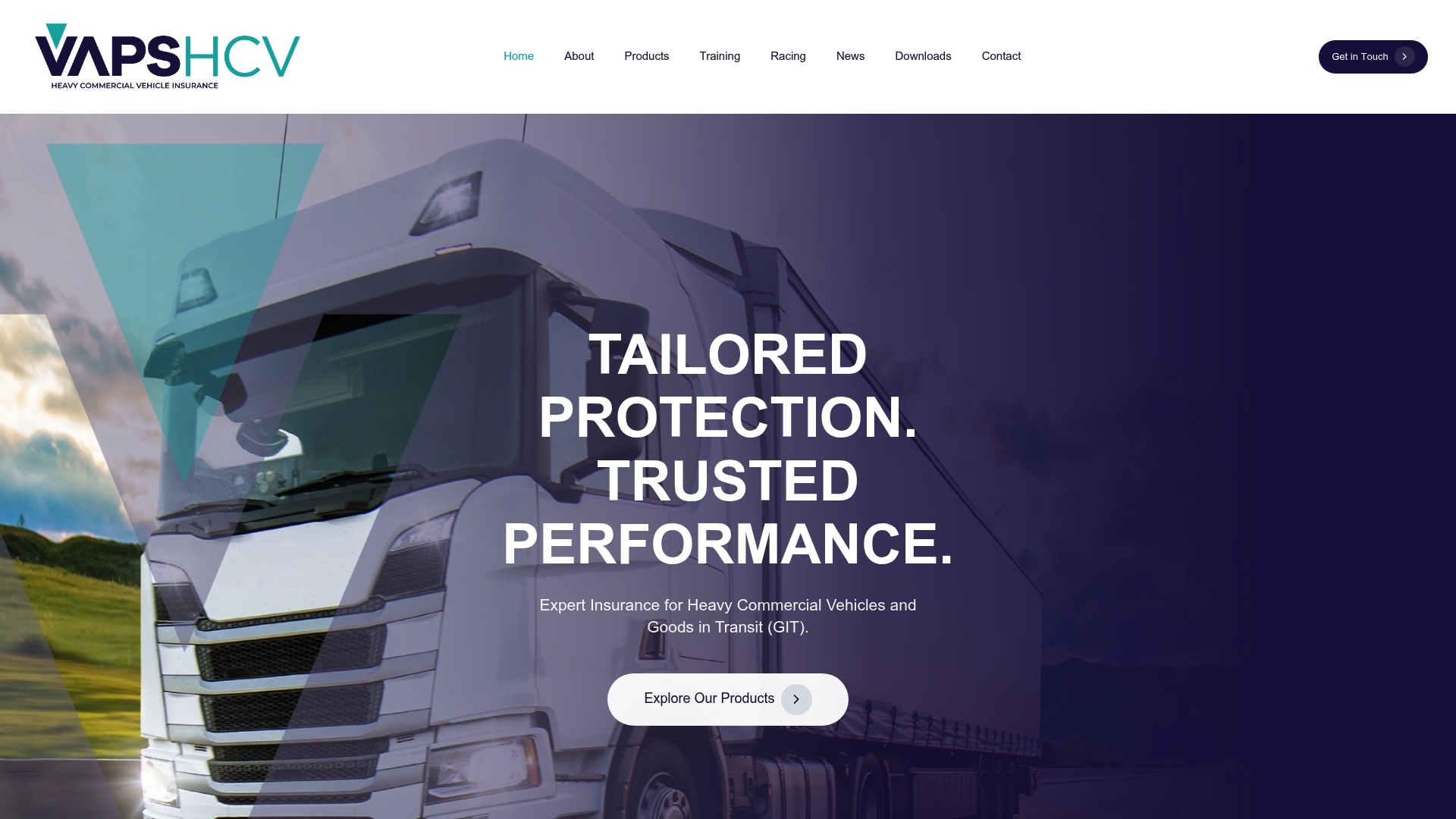
At a Glance
VAPS HCV’s participation in motorsport underlines a performance and precision mindset applied to heavy vehicle risk. The firm operates as a specialist underwriting manager in South Africa, focusing on tailored cover for heavy commercial vehicles and goods in transit backed by hands‑on support.
Core Features
- Tailored insurance solutions for heavy commercial vehicles and goods in transit that map to fleet use cases.
- Fast, fair claims handling with practical on-the-ground support for recovery and towing incidents.
- Roadside assistance and driver protection as value-added products that reduce operational downtime.
- Telematics solutions for real-time tracking, safety monitoring, and basic fleet analytics to inform premiums and risk control.
Key Differentiator
VAPS HCV positions itself as an underwriting manager that crafts industry-specific policies rather than a broad-market insurer. That narrow focus means cover and claims workflows are designed for truck fleets and logistics operators, unlike on-demand platforms such as Truckplant that target pay-for-use cover and dynamic activation.
Pros
- Specialisation in heavy commercial vehicle insurance gives brokers and fleet managers policy language that reads like their operations, not generic motor cover.
- The emphasis on personalised service reduces handoffs during a claim, which helps get a vehicle back to work faster.
- Value-added offerings such as roadside assistance and driver protection cut out the need to assemble multiple vendors for basic fleet resilience.
- Telematics capability lets operators use live data to support safety conversations and show risk reduction to underwriters.
- Educational resources and broker training materials help partners place cover more confidently and reduce quote friction.
Cons
- There are no readily available third-party reviews, which makes independent assessment of service levels difficult for new clients.
- Public content lacks detailed policy limits and premium examples, so cost comparisons require a direct broker conversation.
- The offering appears focused on the South African market, which limits applicability for regional or international fleet operators.
When It May Not Fit
If you need instant online pricing or transparent, line-item premium maths on a public portal, VAPS HCV may feel opaque. For international fleets that require cross-border cover and standardised global policies, this locally focused underwriting approach could miss your requirements.
Who It’s For
Fleet operators, owner-drivers, and logistics businesses in South Africa that want specialist cover aligned to heavy commercial vehicle risks. Best for organisations that prefer brokered, customised policies rather than self-serve, metered insurance.
Real World Use Case
A national logistics operator places its fleet with VAPS HCV, combining comprehensive accident and theft cover with telematics to monitor harsh braking and idle time. Claims are handled through a broker liaison and roadside assistance reduces average vehicle downtime after incidents.
Pricing
No public pricing or tiered rates are published. Pricing appears broker-driven and bespoke to fleet profile, vehicle type and telematics fitment, so you must contact VAPS HCV or your broker for illustrations and premium estimates.
Website: https://vapshcv.co.za
Trucksurance
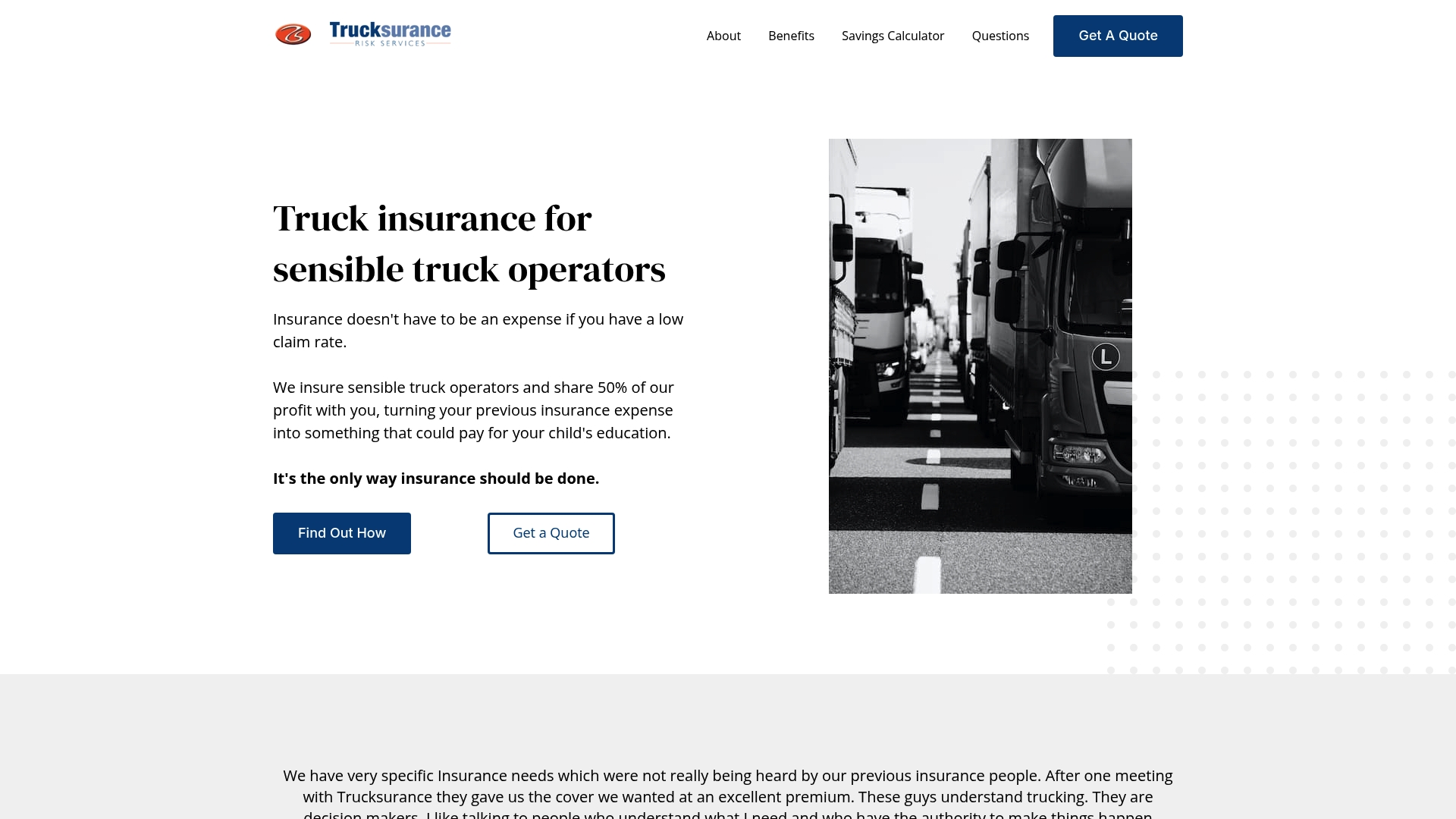
At a Glance
Trucksurance advertises a 50% profit share with policyholders, a concrete commercial claim that reframes premiums as potential returns for responsible operators. The vendor also says it brings over 20 years of industry experience and direct access to decision-makers, all aimed at low claim rate fleets.
Core Features
-
Profit sharing: Half of reported profits are shared with qualifying policyholders according to the vendor’s model, aligning insurer and operator incentives.
-
Personalised service: Direct lines to decision-makers and tailored risk assessments for each fleet so cover reflects real operations rather than one-size-fits-all packages.
-
Transparent pricing: Clear cost explanations and a focus on showing how premiums relate to cover and potential profit distributions.
-
Holistic policy design for truck and plant exposures with emphasis on operators who maintain low claim frequency.
Key Differentiator
The profit-sharing model above is the standout. Instead of a standard claims-only return, Trucksurance’s approach aims to return a portion of underwriting surplus to clients, turning part of the insurance spend into a potential wealth-building mechanism for eligible operators. That approach narrows the product to disciplined fleets.
Pros
-
Responsible operators gain from the profit-share concept and a service model that rewards low claim activity rather than penalising it.
-
Personalised service gives operators direct access to decision-makers, reducing delays and layers of bureaucracy in cover and claims conversations.
-
Clear pricing communication helps managers compare the real cost of cover against expected returns from the profit share.
-
The focus on low claim rate operators means underwriters will structure cover around real exposures rather than generic assumptions, which often lowers unnecessary cover costs.
Cons
-
Limited public detail on exact policy limits, endorsements, or exclusions makes it hard to compare cover line by line with traditional insurers.
-
The model appears designed for low claim rate operators only, which leaves high-risk fleets and many start-ups outside the offering.
-
The vendor-supplied materials lack clarity on how profit distributions are calculated, audited, and timed for policyholders.
When It May Not Fit
If your operation has a recent history of frequent claims or you are an early-stage operator still building safety records, Trucksurance may not accept your risk or the economics will work against you. Also avoid this if you need a standard public tariff or immediate, published policy wordings for tender responses.
Who It’s For
Experienced owner-drivers, family fleets, and established transport companies with demonstrable low claim histories that want personalised underwriting and a chance to recover part of their insurance spend through profit sharing.
Real World Use Case
A mid‑sized haulage firm with a strong safety record engages Trucksurance for a tailored policy. The company receives a bespoke risk assessment, direct contact with underwriters, and participates in profit distributions when the underwriting year returns surplus.
Pricing
Pricing is not published and is described in the vendor materials as “informational only.” Expect underwriting that varies by fleet risk profile rather than standard public rates. Prospective clients will need a direct discussion to get firm figures.
Website: https://trucksurance.co.za
Firedart
At a Glance
Firedart sells its engineering and construction insurance through FAIS insurance intermediaries, which means you engage via a broker rather than buying online directly. That broker-only route reflects the product mix: project-specific cover and broker-managed claim support tailored to site risk.
Core Features
Firedart offers tailored insurance packages for construction and engineering projects, with choices designed around project scope and asset type.
- Contractors All Risk, plant and machinery, and photovoltaic system cover for on-site exposures.
- Electronic equipment, dismantling transit and erection cover, plus works damage options for mid to large projects.
- Dedicated claims specialists, a nationwide loss adjustor network, and broker onboarding and training support.
The emphasis is on bespoke policies that can be arranged as single-project covers or as annual blanket arrangements for fleets of plant.
Key Differentiator
Firedart positions itself on deep local engineering underwriting experience and close insurer relationships. That combination aims to speed placements on complex, high-value projects and give brokers a predictable panel to present to clients.
Pros
-
Strong underwriting focus helps match cover to construction-specific exposures rather than forcing generic package language. This reduces coverage gaps on technical installations.
-
The broker-centric distribution model means brokers receive training and claims support, which lowers handover friction during claims events and speeds resolutions.
-
A broad set of cover types including plant, machinery and solar gives project teams one point of contact for multiple risk lines instead of managing separate policies.
-
Nationwide access to loss adjustors and a dedicated claims team means physical inspections and technical assessments are coordinated locally across provinces.
Cons
-
The public site does not publish specific product limits, sub-limits or sample policy wordings, so procurement teams must request detailed documentation via a broker before pricing or risk acceptance.
-
There is little independent third-party review data available online, so claims handling performance and client satisfaction rely on broker referrals and anecdotal reports.
-
The broker-only access model can slow direct comparisons for firms that prefer online self-service or instant quotes from multiple suppliers.
Who It’s For
Brokers, engineers and construction companies in South Africa seeking tailored engineering and construction risk cover will find Firedart relevant. It is best where a broker will manage placement and where projects need technical policy wording rather than retail product simplicity.
Real World Use Case
A contractor insuring a large commercial build would work through their broker to secure a project-specific policy covering material damage, third-party liability and plant on hire. Firedart’s claims specialists and adjustor network would coordinate the site survey and technical loss assessment if an incident occurs.
Website: https://firedart.co.za
Consort Technical Underwriters Insurance Products
At a Glance
Consort advertises strategic partnerships with major reinsurers including Lloyd’s and Lombard Insurance Company Limited, giving its products deeper capacity than many niche brokers. That market positioning underpins project-level policies for contractors and plant risks aimed at South African construction work.
Core Features
- Contractors All Risks policies tailored to site phases and handover milestones, with options for project-specific or annual cover.
- Electronic Equipment cover for on‑site systems, testing gear and temporary installations.
- Plant All Risks protection for yellow plant, mobile machinery and hired equipment used in civil work.
- Support content including educational articles and campaign publications to help clients understand engineering exposures.
Key Differentiator
The combination of tailored engineering products and access to reinsurance capacity is Consort’s main angle. Rather than a generalist insurer, it positions policies around construction workflows and plant operations, backed by the underwriting relationships described above — a useful fit for projects that need bespoke wording rather than off‑the‑shelf policies.
Pros
- Specialised underwriting focus on engineering and construction reduces the need to reword general policies for site risks.
- According to Consort, the team brings over 200 years of collective experience, which shows in policy wording and claims handling guidance rather than marketing speak.
- The link to established reinsurers and underwriters supports higher capacity placements for larger projects and heavier sums insured.
- Offers both project-specific and annual policy structures, which helps contractors who run seasonal work or irregular fleets.
- Educational resources and campaign publications help project managers and brokers frame risks before placement.
Cons
- Public third-party reviews and user feedback are limited, so market reputation must often be assessed via broker references.
- Policies generally require placement through authorised brokers or intermediaries rather than direct retail sales, adding a step to procurement.
- As a specialist, Consort’s product set may not suit businesses seeking a single insurer for property, liability and engineering under one roof.
When It May Not Fit
If you run multinational operations or need a policy that follows equipment across borders, Consort’s geographic focus on South Africa makes it a poor match. Also, firms that want direct online self-service quotes will find broker engagement mandatory, which slows fast procurement cycles.
Who It’s For
Construction companies, contractors, plant hirers and project managers in South Africa who need engineering‑grade policy wording and capacity for mid to large infrastructure projects. Best where broker relationships are already established and bespoke cover is required.
Real World Use Case
A civil contractor placed a Contractors All Risks policy for a multi‑stage road contract with tailored extensions for testing and temporary works. Consort’s underwriters worked with the broker to match indemnity periods to milestone payments, reducing uninsured schedule gaps during handover.
Pricing
Not applicable. Consort publishes product information and places cover via brokers; premiums are bespoke and depend on project scope, sum insured and chosen extensions. Contact an authorised broker to obtain a quotation and policy wording.
Website: https://consort.co.za
Comparing Solutions for Commercial Vehicle and Plant Insurance
In the pursuit of insurance solutions for commercial vehicles and plant equipment, understanding the strengths and targeted applications of available options ensures informed decision-making. This section explores how major offerings cater to distinct use cases and highlights where each excels.
Flexibility Across Operational Needs
Truck & Plant On-Demand™ Insurance provides agility through its pay-as-you-go model, allowing users to activate and deactivate cover on a daily basis. This level of operational control transforms typical fixed insurance expenses into a dynamic cost component matching actual utilisation. While other providers, such as VAPS HCV Insurance, focus on policies with claims support, their structures align more with long-term fleet operations instead of finely tuned project cycles. This difference makes Truckplant ideal for firms managing heterogeneous project timelines.
Claims Handling Efficiency
Both Truck & Plant On-Demand™ Insurance and HCV emphasize rapid claims processes, with HCV stating repair completion typically within 48 hours of claim submission and Truckplant boasting 48-hour claim authorisation upon receiving all documentation. For heavy truck hauliers requiring immediate operational recovery, HCV’s industry focus combined with its 24-hour service line builds a customer-first reputation. Truckplant’s strengths, however, apply more broadly due to its digital-first approach notable for on-the-go adjustments.
Best Fit Recommendations
- Truck & Plant On-Demand™ Insurance: for businesses requiring flexible and project-tailored insurance cover due to variable utilisation.
- HCV: Best suited for operators of heavy commercial fleets emphasizing predictable, fast claims handling combined with dedicated driver protections.
- Trucksurance: Ideal for low-claim fleets seeking cost efficiency through profit-sharing models.
Our Pick
Truck & Plant On-Demand™ Insurance represents the most versatile choice for businesses managing diverse assets with frequent variability in project timelines. However, organisations with cross-border operations or those requiring broker-perfected heavy vehicle terms might find discrete alternatives advantageous. With Truckplant, users enjoy adjustable, transparent policies tailored to specific operational needs, setting it apart in this competitive arena.
Commercial Vehicle and Plant Insurance: Product Comparison
Choosing the right insurance provider for your fleet and projects entails evaluating flexibility, coverage options, pricing models, and specific geographic scopes.
| Product Name | Key Differentiator | Best For | Pricing | Notable Limitation |
|---|---|---|---|---|
| Truckplant | Real-time policy activation and asset-level control | Contractors with assets idle between projects | Not disclosed | Geographic reach limited to South Africa and neighbouring regions |
| HCV | Specialisation in heavy vehicle and cargo risks | Fleet managers needing tailored transit coverage | Not disclosed | Limited to commercial vehicles; no pay-per-use or dynamic models |
| VAPS HCV Insurance | Industry-specific underwriting and claims workflow | Heavy vehicle operators needing tailored policies | Not disclosed | Limited online information for independent evaluation |
| Trucksurance | Profit-sharing model for eligible disciplined fleets | Operators with low claim histories and safe records | Not disclosed | Suited for low-risk influencers; limited details on profit-sharing arrangements |
| Firedart | Comprehensive engineering risks tailored to projects | Construction firms requiring bespoke policy wording | Not applicable | Access limited to brokered arrangements, slowing procurement |
| Consort | Tailored policies with reinsurance-backed capacity | Large infrastructure projects managed via brokers | Not applicable | Geographic focus restricted to South Africa |
Take Control of Your Insurance Costs with Truckplant
Struggling to balance insurance premiums with fluctuating project demands is a common challenge for fleets and construction companies. Truckplant offers a solution designed for South African operators who want to avoid paying for cover when their trucks or yellow plant machinery are idle. Unlike traditional insurance options, Truckplant’s On-Demand™ cover lets you switch protection on or off as your work schedule changes. This means you pay only for the days you need cover, aligning insurance expenses directly with your operational needs.
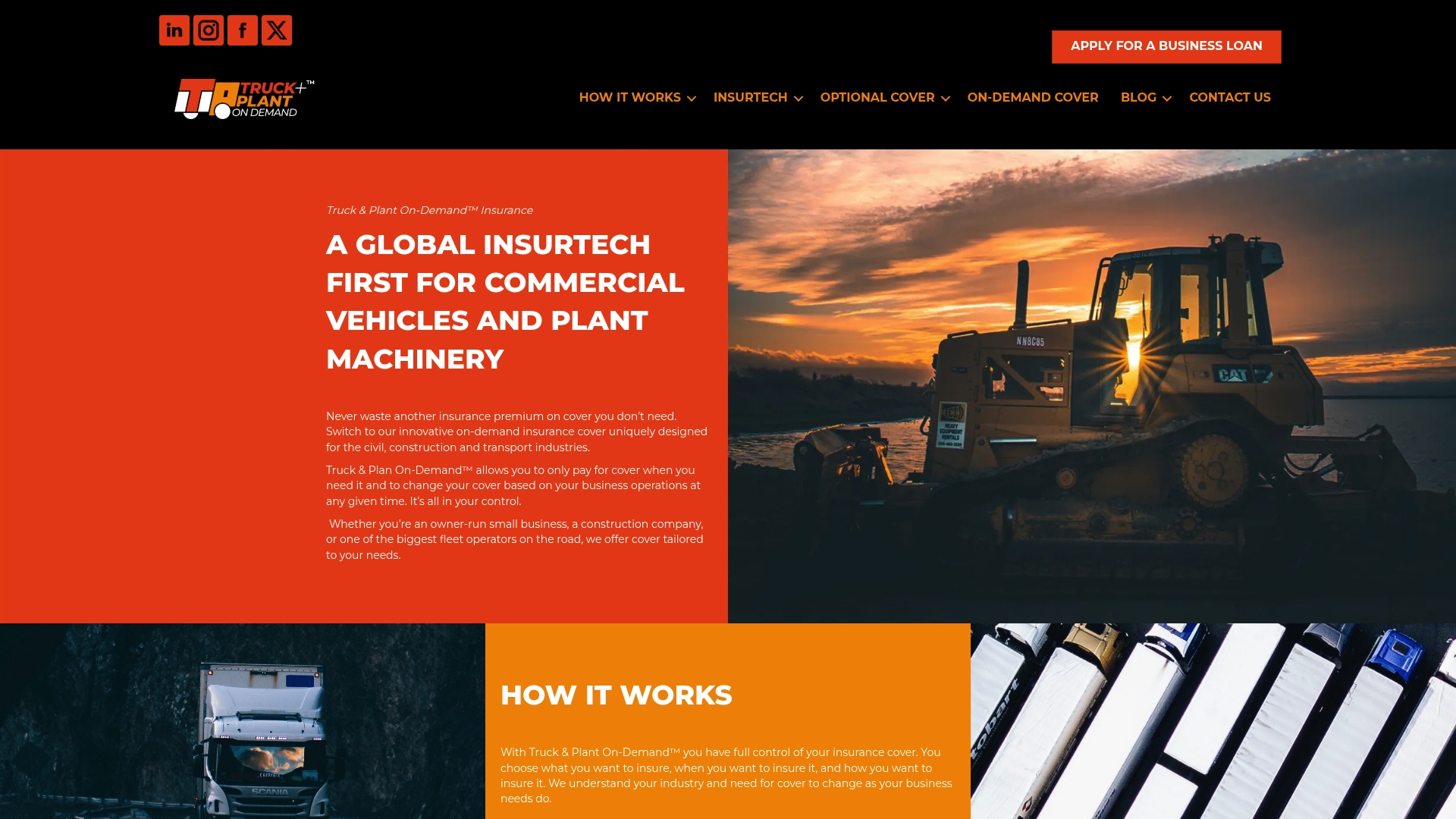
Discover how Truckplant transforms fixed monthly costs into flexible operational expenses by giving you control over your insurance. Visit Truckplant to customise your cover and reduce waste today. Activate your insurance only when your assets work and see how easy it is to optimise your cashflow with real-time insurance toggling.
Frequently Asked Questions
What is the claims authorisation timeframe for Truckplant?
Truckplant authorises claims within 48 hours once documentation and an assessor’s report are received. This rapid process is essential for companies that need to minimise downtime and get back to work quickly.
How does the flexibility of Truckplant’s coverage compare to HCV’s offerings?
Truckplant’s flexible activation and deactivation options allow users to hold cover only during active projects, making it ideal for contractors needing short-term insurance. In contrast, HCV specializes in heavy commercial vehicles and offers Agreed Value policies, which might be more beneficial for transport companies focused on consistent vehicle usage.
What are the main features that make Truckplant suitable for fleet owners?
Truckplant provides on-demand cover with day-level control, tailored to specific assets like trucks or machinery. This feature aligns insurance costs directly with operational needs, something that benefits fleet owners who have varied project schedules.
Can companies with mixed fleets benefit from Truckplant?
Companies with mixed fleets can significantly benefit from Truckplant’s ability to tailor policies that cover various types of vehicles and equipment together. This eliminates the need to manage multiple insurers, streamlining their insurance process.
How does Truckplant handle claims support compared to other competitors?
Truckplant provides a user-friendly digital interface for tracking claims and managing policies, which aids administrators in reducing paperwork time effectively. This ease of use can be more beneficial compared to providers like VAPS HCV, which may have less automated systems for claims handling.