


TL;DR:
- Running a transport fleet in South Africa involves unavoidable risks that require tailored insurance coverage to ensure quick recovery from incidents. Standard policies often leave gaps in liability, cargo, and vehicle protection, emphasizing the need for customized, purpose-built fleet insurance solutions. Effective risk management combines appropriate coverage with technology and regular policy reviews to protect operational assets and ensure financial resilience.
Running a transport fleet in South Africa means carrying real risk on every trip. Whether you operate five bakkies or fifty heavy trucks, the cover options for transport fleets you choose will determine how quickly your business recovers from an accident, theft, or cargo dispute. The mistake most fleet operators make is assuming a standard vehicle policy covers everything. It does not. Transport fleets face a unique combination of liability exposure, cargo risk, and operational complexity that demands a structured, purpose-built approach to insurance for fleets.
Table of Contents
- Key takeaways
- Core cover options for transport fleets
- Specialised cover options to consider
- Choosing the right cover for your fleet
- The administrative case for fleet policies
- Best practices for fleet protection in South Africa
- My take on fleet cover misconceptions
- Tailored fleet cover from Truckplant
- FAQ
Key takeaways
| Point | Details |
|---|---|
| Standard cover is rarely enough | One-size-fits-all policies leave critical gaps in cargo, liability, and specialist vehicle protection. |
| Customise based on operations | Your routes, cargo type, and driver profile should directly shape your policy structure. |
| Fleet policies simplify admin | Consolidating all vehicles under one policy reduces renewal friction and makes scaling easier. |
| Technology reduces risk exposure | GPS tracking and identity verification tools complement your insurance and reduce theft-related claims. |
| On-demand cover saves money | Paying for cover only when you need it prevents wasted premiums on idle or seasonal assets. |
Core cover options for transport fleets
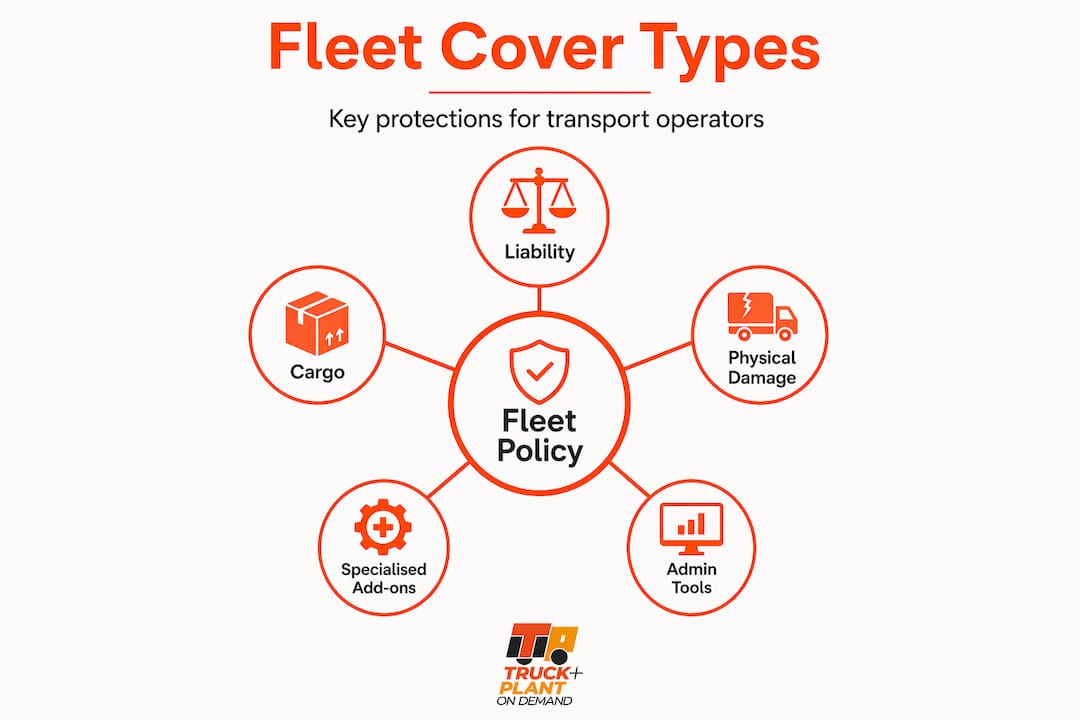
Fleet insurance consolidates liability, physical damage, cargo, and operational add-ons into a single policy, and it can apply to as few as two vehicles. Understanding what each component actually covers is the starting point for building a policy that works.
Liability coverage sits at the foundation of any fleet policy. It breaks into two parts. Bodily injury liability covers medical costs and legal claims when one of your drivers injures another person in an accident. Property damage liability covers the cost of repairing or replacing third-party property your vehicle damages. Together, these are non-negotiable for any commercial transport operation on South African roads.
Physical damage coverage protects the vehicles themselves. It splits into collision cover, which pays for damage from accidents involving another vehicle or object, and comprehensive cover, which handles everything else: fire, flooding, hail, and vandalism. These coverages protect your vehicles and any third parties involved in an accident or damage event.
Motor truck cargo insurance is where many fleet operators underestimate their exposure. This covers the freight or goods you are transporting if they are lost, stolen, or damaged in transit. If you carry high-value loads, electronics, or temperature-sensitive goods, a basic cargo clause is not sufficient. You need specific limits that reflect the actual value of what you haul.
- Bodily injury liability: covers injury claims from third parties
- Property damage liability: covers third-party vehicle or property repair
- Collision cover: protects your own vehicles in accidents
- Comprehensive cover: fire, theft, weather, and vandalism
- Motor truck cargo: protects freight in transit
Pro Tip: Always check whether your cargo cover limit per incident matches the maximum value of a single load. Many operators discover the gap only after a claim.
Specialised cover options to consider
Optional coverages include motor truck cargo, trailer interchange, hired and non-owned auto liability, and general liability for non-driving risks. These add-ons are where your policy starts to reflect the actual shape of your operations.
Trailer interchange coverage becomes relevant when your drivers use trailers not owned by your business. This is common in the logistics sector, where trailers are swapped between operators under interchange agreements. Without this cover, damage to a trailer you do not own but are responsible for sits entirely at your expense.

Hired and non-owned auto liability covers scenarios where drivers use rented or personal vehicles for business purposes. If a regional manager takes a hired vehicle to a client site and causes an accident, your standard fleet policy will not respond. This extension closes that gap.
General liability insurance covers risks outside of vehicle operation entirely. Think customer injuries on your premises, or legal claims arising from your business activities that have nothing to do with driving. This coverage is critical to overall operational risk management and is frequently overlooked.
Beyond these, consider:
- Theft and vandalism extensions: for high-risk routes or yard storage
- Cargo damage top-up: for specialty or high-value goods beyond standard limits
- Hazardous materials liability: if your fleet transports chemicals or fuel
- Employer’s liability: covering driver injury claims beyond the Road Accident Fund
Pro Tip: Map every scenario where your drivers interact with vehicles or cargo that you do not own. Each one is a potential coverage gap that a specialised extension can close.
Carrier liability insurance protects against damage caused by carrier negligence during transit, but limits and exclusions vary widely. Standard liability may not cover weather damage, theft of personal belongings, or mechanical failures unrelated to carrier handling. Know what your policy excludes before you need it.
Choosing the right cover for your fleet
No two fleets are identical. A refrigerated goods operator running overnight routes faces completely different risks to a construction company moving plant equipment between sites. Your cover should reflect that difference.
Here is a practical process for customising your policy:
- List every vehicle type in your fleet. Trucks, trailers, bakkies, tankers, and specialty equipment each carry different risk profiles and may need different coverage structures.
- Map your routes and cargo types. High-crime corridors in South Africa increase theft risk. Hazardous cargo requires specific liability extensions. Long-haul routes increase accident exposure.
- Audit your driver profiles. Failing to disclose drivers to your insurer can lead to denied claims. Include seasonal drivers and contractors in your disclosure process.
- Identify third-party vehicle exposure. Do your drivers ever use hired, rented, or customer vehicles? If yes, hired and non-owned auto liability belongs in your policy.
- Review cargo values per load. If your standard transport limits apply per incident across multiple vehicles, high-value loads may need supplemental coverage.
- Balance premium cost against risk tolerance. A lower premium with higher excess might work for a well-maintained, low-claim fleet. A newer business should consider lower excesses to protect cash flow.
| Fleet type | Key risks | Recommended cover focus |
|---|---|---|
| Long-haul trucking | Cargo loss, accidents, driver fatigue | Cargo, liability, comprehensive |
| Construction equipment transport | Damage in transit, third-party property | Physical damage, general liability |
| Cold chain/refrigerated goods | Cargo spoilage, mechanical failure | Cargo with temperature extensions |
| Urban delivery fleets | High accident frequency, theft | Collision, hired/non-owned auto |
Insurers underwrite fleet premiums based on risk profile factors like vehicle types, driver records, routes, and past claims. A well-managed operation with documented safety procedures and a clean claims history can access better pricing. That is a direct financial return on good operational discipline.
The administrative case for fleet policies
There is a practical argument for fleet insurance beyond pure coverage value, and it is one that fleet managers often underestimate until they are managing ten or more vehicles under separate policies.
Fleet insurance offers significant administrative advantages by consolidating multiple coverages, making renewals and coverage updates far less cumbersome. Instead of tracking multiple renewal dates, policy documents, and insurer contacts, you deal with a single policy.
Adding or removing vehicles from fleet insurance policies is often straightforward, with premiums adjusting accordingly. This matters when you are scaling quickly or running seasonal operations where fleet size fluctuates.
Key administrative benefits include:
- Single renewal date across all vehicles
- Consistent coverage terms for all drivers and vehicles
- Simplified claims management with one insurer contact
- Easier fleet audits and compliance documentation
- Flexibility to add or remove vehicles without rewriting the entire policy
“The real cost of poor fleet insurance administration is not the premium. It is the claim that gets denied because a driver was not disclosed, or the cargo loss that exceeds your limit by R200,000. Get the structure right upfront.”
Common pitfalls to avoid: letting driver lists go stale, failing to update declared vehicle values after purchases, and assuming renewal terms match the previous year without reviewing changes.
Best practices for fleet protection in South Africa
South Africa presents specific risks that fleet operators cannot afford to ignore. Vehicle theft and cargo fraud are persistent threats, and the operational environment demands more than a policy document.
Technology tools like GPS tracking, identity verification, and secure documentation are becoming standard practice for protecting fleets. These tools do more than deter theft. They generate data that supports claims, disputes, and fraud prevention.
Practical steps to strengthen your fleet’s protection:
- Install GPS tracking on every vehicle, including trailers
- Use electronic bills of lading and condition reports at every handover
- Verify carrier and driver credentials before authorising route assignments
- Document vehicle condition at departure and arrival with photographic evidence
- Report theft incidents immediately to both police and your insurer
Pro Tip: Insurers increasingly look at telematics data when assessing claims. A GPS record showing your vehicle’s location and speed at the time of an incident can be the difference between a paid claim and a disputed one.
Keep your broker or insurer updated on route changes, new cargo contracts, and driver turnover. Your policy should reflect your current operations, not the operations you had when you first signed up. For a deeper look at how fleet insurance integrates with operational risk management, it is worth reviewing your full risk exposure at least annually.
My take on fleet cover misconceptions
I have worked with fleet operators across South Africa who run tight, professional operations, and yet carry insurance that would fall apart at the first serious claim. The most common problem is not negligence. It is misplaced confidence in a policy that has never actually been tested against the specifics of the operation.
What I have seen repeatedly is operators who think their cargo cover limit is per vehicle, when it is actually per incident across the entire fleet. That distinction can mean a R500,000 shortfall on a single bad day. I have also seen fleets denied claims because a seasonal driver was never added to the declared driver list, despite the business paying premiums faithfully for years.
The uncomfortable truth is that the cheapest fleet policy is rarely the most expensive risk. Underinsurance is far more costly than the premium saving it appears to create. My advice: sit with your insurer or broker at least once a year and walk through your actual operations. Not what your policy says you do. What you actually do. Routes change. Cargo contracts change. Drivers come and go. Your cover should keep pace with all of it.
The operators who get this right treat their insurance review as a business process, not an annual formality.
— Coert
Tailored fleet cover from Truckplant
If you have read this far, you know that the right cover options for transport fleets are not found in a generic, off-the-shelf policy. They are built around your specific vehicles, routes, cargo, and risk profile.
Truckplant’s on-demand fleet insurance gives South African fleet operators the flexibility to pay for cover when they need it and adjust that cover as their operations change. Whether you need physical damage cover for a growing truck fleet, cargo protection for high-value loads, or tool of trade insurance for specialist equipment, Truckplant has a structure that fits. You are in control of what you insure, when you insure it, and how. Get a quote today and stop paying for cover that does not match your operation.
FAQ
What is included in standard fleet insurance?
Standard fleet insurance typically covers bodily injury liability, property damage liability, collision, and comprehensive physical damage. Core fleet cover protects both your vehicles and third parties involved in accidents or damage events.
How many vehicles do you need for fleet insurance?
Fleet insurance can apply to as few as two vehicles. The policy consolidates cover for all listed vehicles under a single agreement, making administration and renewals significantly simpler.
Is cargo automatically covered under fleet insurance?
No. Motor truck cargo insurance is typically a separate or optional add-on. Standard fleet policies focus on vehicle liability and physical damage, so you need to request cargo cover explicitly if you transport goods.
What happens if a driver is not listed on the fleet policy?
Failing to disclose drivers can result in denied claims and coverage gaps. Always update your insurer when adding seasonal drivers, contractors, or new permanent staff to your operation.
Can you add or remove vehicles mid-policy?
Yes. Adding or removing vehicles from a fleet policy is generally straightforward and premiums adjust accordingly. This flexibility makes fleet insurance well-suited to businesses that grow or operate with seasonal vehicle requirements.