


Compliant hazmat cover in South Africa means three things in place at once: goods-in-transit cover endorsed for the specific hazard class you carry, pollution or environmental liability, and primary motor liability that recognises the cargo. Missing permits or mis-declared loads typically void claims outright. Before you renew or bind anything, run a classification audit and pull together every driver and vehicle document you have.
TL;DR:
- Having proper permits, accurate cargo declarations, and driver documentation is essential, as any lapse can void claims or trigger denials.
- Pollution liability coverage is often underinsured in South Africa and must be explicitly included alongside goods-in-transit endorsements for chemical or waste cargo.
- On-demand hazmat insurance is a cost-effective option for fleets with intermittent hazardous loads, provided all compliance documents are verified before activation.
- Claim rejections frequently result from simple paperwork errors such as mis-declaration, incorrect UN numbers, or expired endorsements, rather than major operational failures.
- Different hazard classes, especially explosives and radioactive materials, require specialist policies and cannot rely on generic commercial coverage.
Table of Contents
- What dangerous goods insurance actually covers
- South African rules and permits insurers check first
- Why do insurers deny dangerous goods claims?
- How insurers price hazardous cargo risk
- The compliance checklist before you bind cover
- What claims and cover gaps actually look like on the ground
- Where on-demand cover fits hazardous-goods operations
- Get compliant hazardous-goods cover without paying for idle months
- Where to verify these requirements
- Why the paperwork matters more than the premium
- Sources
What dangerous goods insurance actually covers
Most operators assume their standard fleet policy stretches to cover a load of solvents or lithium batteries. It doesn’t, and that gap is where claims fall apart. Dangerous goods insurance is not one product, it’s a stack of endorsements layered onto your existing cover, each one addressing a different failure point.
Goods-in-transit (cargo) cover is your starting point, but the standard version usually excludes hazardous classes by default. You need a hazmat endorsement written into the policy that names the UN class, the packing group, and the routes you’ll travel. Specialist hazmat programmes tend to bundle this with automobile liability, pollution cover, and excess layers so the whole exposure sits under one structure rather than three disconnected policies.
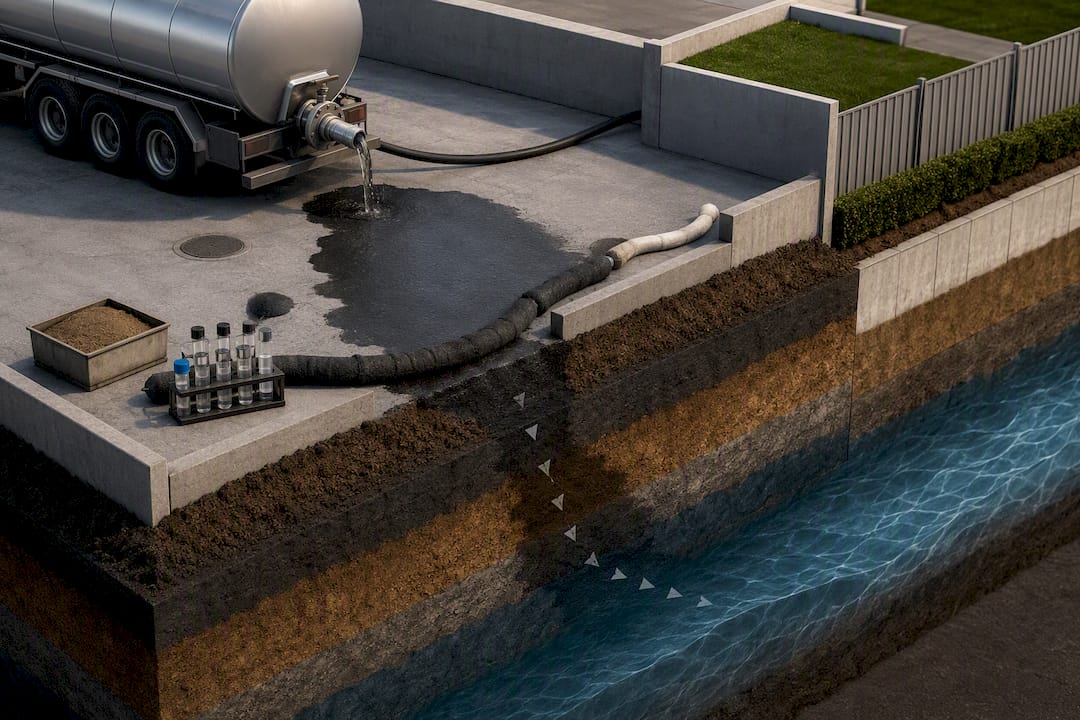
Pollution or environmental liability is where most South African operators are underinsured, sometimes without knowing it. A standard cargo policy without explicit environmental wording will not pay for soil remediation, water contamination cleanup, or third-party claims after a spill. Pollution liability cover exists specifically to close that gap, and for anything carrying chemicals, fuel, or waste, it should sit alongside your goods-in-transit endorsement, not as an afterthought.
Primary motor liability and general business liability still matter here too. They cover injury and property damage from the vehicle itself, but they interact with your cargo cover in ways brokers don’t always explain clearly.
Here’s how the main policy elements map to the risk they’re solving:
- Goods-in-transit with hazmat endorsement: covers loss or damage to the cargo itself while in transit.
- Pollution/environmental liability: covers clean-up costs and third-party claims from spills or contamination.
- Primary motor liability: covers injury and third-party property damage caused by the vehicle.
- General business liability: covers broader operational exposures beyond the vehicle and cargo.
- Excess/umbrella layers: extend limits when a single incident exceeds primary policy caps.
Certain hazard classes, particularly explosives, radioactive materials, and some corrosives, need specialist wording that a generic commercial policy simply doesn’t offer. If you’re carrying those, expect your broker to place the risk with a specialist market rather than your usual fleet insurer.
South African rules and permits insurers check first
Before an underwriter even prices your risk, they’ll want proof you’re legally allowed to carry what you’re carrying. The National Road Traffic Act governs dangerous goods transport in South Africa, and South African National Standards (SANS) codes set the technical detail: packaging, labelling, placarding, and vehicle marking requirements for each hazard class. Transporting hazardous goods without the correct permits or licensing doesn’t just risk a fine. It typically invalidates your insurance cover the moment an incident happens.
Abnormal-load or special permits come into play when a vehicle’s dimensions, mass, or the nature of the cargo require route approval from the relevant road authority. This applies more often than operators expect, particularly for tankers and oversized containers carrying hazardous substances.
Insurers will generally ask for documentary proof before binding cover, and the list is longer than most first-time hazmat operators anticipate:
- Dangerous Goods Declaration (DGD) for the specific load and UN number.
- Valid PrDP with the correct hazmat endorsement for each driver.
- Vehicle compliance certificate matching the hazard class carried.
- Route or abnormal-load permit where dimensions or mass require it.
- SANS-compliant packaging and placarding records.
Certificate validity periods vary by document type, so build a renewal calendar rather than tracking expiry dates individually. A single lapsed PrDP endorsement on the day of an incident can undo an otherwise solid claim.
Why do insurers deny dangerous goods claims?
Claim denials in this category almost never come from a single dramatic failure. They come from paperwork gaps that seemed minor until an assessor started asking questions. Four patterns account for most of the denials South African hazmat operators run into.
- Mis-declaration of the cargo. Declaring a load under the wrong hazard class, or not declaring it as hazardous at all, is the most common reason cargo cover is voided after an incident. Some carriers will not accept certain classes, like explosives or radioactive material, under any circumstances, and others require prior written acceptance.
- Driver documentation failures. A PrDP without the specific hazmat endorsement, or a subcontracted driver whose credentials were never verified, gives insurers grounds to dispute a claim.
- Packaging and vehicle compatibility failures. Loading incompatible hazard classes together, or using a vehicle not specified for that class, breaches both SANS guidance and the policy wording.
- Administrative errors. A missing Dangerous Goods Declaration or an incorrect UN number on the paperwork is a small mistake with an outsized consequence: it can be treated the same as never having declared the load at all.
A specialist logistics review of South African hazmat transport puts mismatched cargo declaration and cover at the top of the list of avoidable claim failures, ahead of driver error or mechanical breakdown.
How insurers price hazardous cargo risk
Underwriters price hazmat risk on a handful of variables, and understanding them gives you real leverage over your premium. Hazard class and volume come first: a tanker of diesel prices very differently to a load of industrial solvent, even at similar volumes. Route matters too, particularly whether you’re travelling through urban water catchments or past sensitive environmental zones, since that changes the pollution exposure directly.
Vehicle specification and maintenance history feed into the same calculation, as do driver records. A clean claims history and documented driver vetting process tend to soften terms noticeably. Underwriters also look favourably on documented standard operating procedures and an emergency-response plan, because both reduce the severity of a loss even when they can’t prevent it.
Limit structures usually separate cargo loss from pollution exposure, since the latter can run far higher once clean-up and third-party claims are involved. Expect a lower deductible on cargo loss and a higher one, with a larger limit, on the pollution side.
The compliance checklist before you bind cover
Getting compliant dangerous goods insurance in South Africa comes down to sequencing. Do these steps in order, and most of the delays and declined applications disappear.
- Run a classification audit. Confirm the exact UN number and packing group for every load type you carry, not just the obvious ones.
- Gather your Dangerous Goods Declarations. One per load type, matched to the classification audit.
- Verify every driver’s PrDP endorsement. Check expiry dates and confirm the endorsement matches the hazard class actually being carried.
- Confirm vehicle specification against the hazard class. Tanker linings, placarding, and compartment separation all need to match SANS requirements.
- Document packaging and segregation practices. Insurers increasingly ask for this in writing, not just as a verbal assurance.
- Vet subcontractors to the same standard. A subcontracted driver’s missing endorsement is still your claim to lose.
- Ask your insurer to specify endorsements in writing. Get the hazmat cargo endorsement and pollution wording named explicitly in the policy schedule, not implied by a general clause.
- Build an emergency-response plan before the first load moves. This should cover spill containment, notification procedures, and driver training, and training modules like LifeSafety’s manual handling course can support the operational side of this.
Pro Tip: Ask your broker for the exact policy wording on pollution liability before you sign, not a summary of it. “Sudden and accidental” pollution wording excludes gradual contamination, which is precisely the scenario most warehouse and depot leaks fall into.
What claims and cover gaps actually look like on the ground
A tanker leak that contaminates soil near a depot rarely costs what operators expect. The clean-up, groundwater testing, and third-party claims from neighbouring property owners often exceed the value of the cargo itself by a wide margin, which is exactly why pollution liability belongs in the core policy rather than as an optional extra.
Driver documentation and classification audits come up again and again in claim disputes, not because operators are careless, but because hazmat endorsements lapse quietly between renewal cycles. For fleets that only carry hazardous loads seasonally or on specific contracts, paying a full annual hazmat premium for cover used a handful of months a year wastes money that could fund better driver vetting instead.
Where on-demand cover fits hazardous-goods operations
Fleets carrying hazmat loads intermittently, a contract here, a seasonal run there, often pay for twelve months of cover to use four. On-demand insurance lets you activate goods-in-transit and liability cover for the periods you’re actually hauling, and switch it off between contracts.
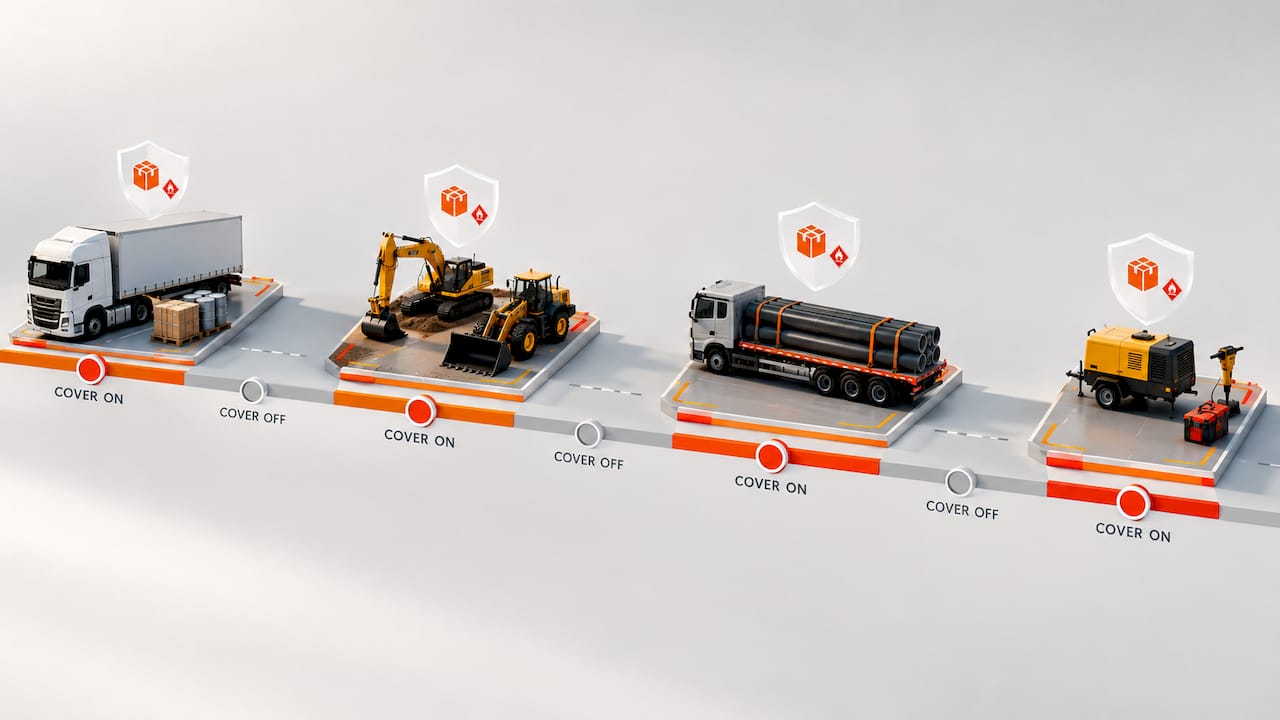
This fits well for medium-hazard classes with predictable, declared routes and verified drivers. High-hazard classes, explosives, radioactive material, certain corrosives, will usually still need specialist placement regardless of the cover model, and that’s a market reality rather than a limitation of any single provider. Before activating cover, expect to provide your Dangerous Goods Declaration, driver PrDP endorsements, and vehicle compliance records. That documentation is what makes any hazmat placement, on-demand or annual, actually valid when a claim lands.
Get compliant hazardous-goods cover without paying for idle months
If your fleet only carries hazardous loads on certain contracts, an annual policy priced for full-time hazmat exposure is money left on the table every quarter you’re not hauling. This on-demand insurance model is built for exactly that pattern: you activate goods-in-transit and liability cover endorsed for your hazard class when a load is booked, and you’re not paying premium for the weeks the truck is empty of dangerous goods.

To get an accurate quote, have your Dangerous Goods Declarations, driver PrDP endorsements, vehicle compliance certificates, and route details ready. From there, the process runs in three steps: you specify the hazard class and endorsement you need, Truckplant issues a quote reflecting that exact scope, and cover activates once terms are confirmed. Some high-hazard classes still require specialist underwriting, and where that’s the case, providers in this market will flag it upfront rather than leave you guessing at claim time. Start by requesting a quote for your fleet insurance cover and get the hazmat endorsement written in from day one.
Where to verify these requirements
Regulatory and policy detail changes, so verify current requirements directly rather than relying on secondhand summaries.
- Safe Transport of Dangerous Goods, for National Road Traffic Act and SANS obligations.
- Dangerous Goods and Insurance, for carrier acceptance policy on hazard classes.
- Hazmat Transportation P&C Insurance, for how specialist programmes structure cover.
- Truckplant’s compliance checklist, for a working document you can apply directly.
Why the paperwork matters more than the premium
The conventional wisdom around hazmat cover treats it as a pricing problem: get the cheapest policy that technically satisfies the hazard class. That thinking gets operators into trouble, because the real failure point in South African hazmat claims is almost never the premium level. It’s the documentation trail behind it.
I’d argue the industry undersells how much control operators actually have here. A classification audit costs almost nothing and takes an afternoon, yet it’s the single biggest predictor of whether a claim gets paid. Insurers aren’t looking for reasons to deny claims, they’re looking for evidence the risk was managed the way the policy assumed it would be. When that evidence is missing, the claim collapses regardless of how comprehensive the policy looked on paper.
Where I think fleets genuinely get this wrong is treating pollution liability as a nice-to-have add-on rather than core cover. A spill that contaminates groundwater near a depot can cost more in clean-up and third-party claims than the vehicle and cargo combined. Cutting that line item to save on premium is the single most expensive false economy in this category.
Flexible, usage-based cover changes the calculation for operators whose hazmat work is genuinely intermittent, but it doesn’t change the documentation burden. If anything, it raises the stakes on getting classification and driver records right every single time you activate cover, because there’s no annual buffer of “we’ve always had this policy” to fall back on.
— Coert
Sources
- Safe Transport of Dangerous Goods
- Dangerous Goods and Insurance
- Hazmat Transportation P&C Insurance | AXA XL