


TL;DR:
- Complete and accurate fleet insurance documentation lowers premiums and speeds up approval processes. Missing or incomplete documents increase costs, cause delays, and lead to unfavorable terms. Proper preparation of driver rosters, vehicle schedules, loss history, and telematics data can significantly enhance insurance outcomes.
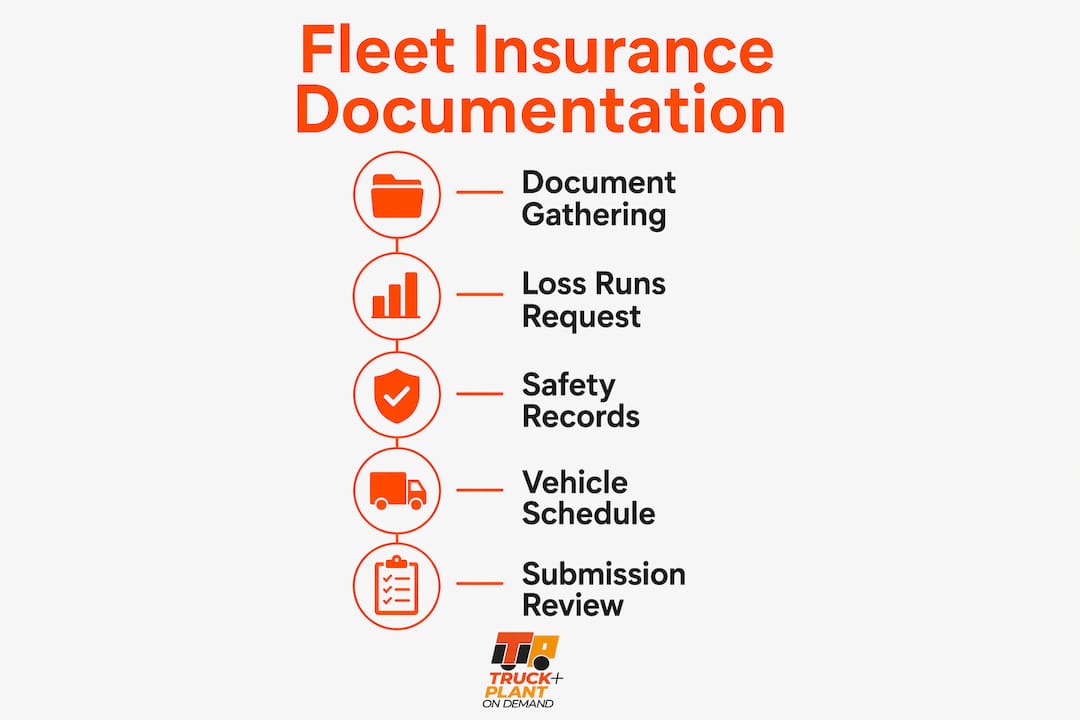
Fleet insurance documentation is defined as the complete set of records, schedules, and reports that insurers require to accurately assess, price, and bind cover for commercial vehicle fleets. This fleet insurance documentation guide covers every core document your insurer needs, from vehicle schedules and driver rosters to loss runs and telematics reports. Getting this right is not a formality. Incomplete submissions force underwriters to make conservative assumptions, and those assumptions cost you money. Whether you manage five trucks or five hundred, understanding fleet insurance documentation is the first step toward controlling your premiums and securing the cover your business actually needs.
What documents are required for a bindable fleet insurance submission?
A bindable fleet submission requires 9 core documents, and missing any one of them can raise your premiums by 15–20%. That is not a rounding error. It is the direct cost of giving your underwriter incomplete information and forcing them to guess.
The 9 core documents are:
- Named insured profile: Full legal business name, registration number, and entity type (sole trader, company, or close corporation).
- Garaging addresses: Physical addresses where vehicles are stored overnight, down to postal code level.
- Driver roster: Full names, dates of birth, South African licence categories, experience, and hire dates for every driver.
- Vehicle schedule: Registration numbers, make, model, year, VIN, gross vehicle weight rating (GVWR), stated value, and use class for each vehicle.
- Operations details: Operational radius, type of cargo carried, and whether vehicles cross provincial or national borders.
- Loss runs: Three to five years of claims history from your current or previous insurer.
- Business registration documents: Proof of entity and, where applicable, operator licences.
- Safety programme records: Any formal driver training, vehicle inspection logs, or incident management procedures.
- Telematics data: System type, installation proof, and driver behaviour reports if applicable.
At 5 vehicles, underwriting shifts from individual vehicle rating to composite or schedule fleet rating. This changes how risk is quantified across your entire fleet. Composite rating applies a single per-vehicle rate across all units. Schedule rating prices each vehicle individually based on its own risk profile. Both models depend entirely on the accuracy of your submitted documents.
How does complete documentation influence underwriting and premiums?

Underwriters replace assumptions with data. Every document you submit narrows the gap between what an insurer guesses about your fleet and what your fleet actually looks like. A complete submission reduces underwriting assumptions, speeds up quote approval, and gives you a stronger position in premium negotiations.
The impact of incomplete documentation shows up in three specific ways:
- Higher base premiums: Missing vehicle data or vague use-class descriptions push underwriters toward worst-case pricing.
- Quote delays: Incomplete driver rosters or missing loss runs stall the submission process, sometimes by weeks.
- Unfavourable terms: Gaps in claims history lead insurers to assume a worse loss ratio than your actual record may justify.
Loss runs must be provided by your current insurer within 5 working days of request. Requesting them early, before your renewal deadline, prevents pricing delays and gives you time to attach corrective action narratives to any claims.
Pro Tip: Request your loss runs at least 60 days before renewal. This gives you time to review the data, correct any errors, and prepare written narratives for any significant claims before your broker submits to market.
Underwriters also review safety programme records and telematics data as part of their risk model. Fleets that can demonstrate formal driver training and GPS-monitored behaviour consistently achieve better terms than those that cannot.
What documentation details should South African fleet managers prepare?
South African fleet managers face specific documentation requirements that reflect both local compliance standards and insurer expectations. The foundation is business registration and operator licence verification. Every commercial fleet operating in South Africa must hold the relevant operating licences under the National Land Transport Act, and insurers will request copies.
Prepare the following in a structured format:
- Business registration certificate from the Companies and Intellectual Property Commission (CIPC), or equivalent for sole traders and partnerships.
- Vehicle registration documents for each unit, confirming make, model, year, and registration number aligned to the South African National Traffic Information System (eNaTIS).
- Driver licence details including South African licence code (Code 8, 10, 14), Professional Driving Permit (PrDP) status where required, and any endorsements.
- Garaging addresses with GPS coordinates or street addresses for each location where vehicles are stored in South Africa.
- Cargo documentation describing the type of goods carried, whether hazardous materials are involved, and any special equipment fitted to vehicles.
- Claims narratives for any incidents in the past three to five years, describing what happened, what corrective action was taken, and what controls are now in place.
Pro Tip: For each claim in your loss run, write a one-paragraph narrative covering the incident, the cause, and the corrective action. Underwriters respond positively to fleets that demonstrate they learn from incidents. This single step can shift your risk profile from average to preferred.
The vehicle schedule must contain detailed data including VIN, registration, model, value, and use class. Vague or incomplete schedules are the most common reason fleet submissions stall in South Africa. Keep a master spreadsheet updated every time a vehicle is added, replaced, or modified.
How does telematics documentation affect fleet insurance costs?
Telematics is the single largest lever for fleet insurance discounts. Standard GPS and dashcam systems generate discounts of 5–15%. Usage-based insurance programmes that score individual driver behaviour can exceed 20% in premium reductions. The discount is not automatic. You must submit the right documentation to unlock it.
Insurers require the following telematics documentation:
- System type and provider name (for example, MiX Telematics or Ctrack in the South African market)
- Proof of installation for each vehicle
- Driver behaviour scoring reports covering speeding, harsh braking, and fatigue events
- Usage data showing kilometres driven per vehicle per period
| Telematics documentation | Discount potential | Insurer requirement |
|---|---|---|
| GPS tracking only | 5–10% | System type and installation proof |
| GPS plus dashcam footage | 10–15% | Installation proof and footage access |
| Full driver behaviour scoring | Up to 20%+ | Scoring reports and driver roster linkage |
Linking your telematics data to your driver roster is critical. Insurers need to match behaviour scores to named drivers. A dashcam system that records incidents but cannot identify the driver provides limited underwriting value. A GPS fleet system that links location data to driver IDs gives underwriters the evidence they need to price your fleet accurately and favourably.
Safety programme records work alongside telematics data. Formal driver training logs, vehicle inspection checklists, and incident response procedures all contribute to a stronger risk profile. Insurers treat documented safety programmes as evidence of proactive risk management, not just compliance.
What are best practices for submitting fleet insurance documentation?
Proactive documentation management is the difference between a smooth renewal and a last-minute scramble that costs you money. Proper documentation management reduces underwriting assumptions, expedites quote approval, and enables better premium negotiation. The following steps build that foundation.
- Request loss runs 60 days before renewal. Insurers are legally required to provide them within 5 working days, but processing delays happen. Early requests protect your timeline.
- Maintain a live vehicle schedule. Update your master vehicle list every time a unit is added, sold, or modified. Use a shared spreadsheet or fleet management software to keep records current.
- Keep driver rosters current. Record every new hire, licence renewal, PrDP update, and driver departure. Outdated rosters are a common cause of coverage disputes after an incident.
- Prepare claims narratives in advance. For every claim in your loss run, write a brief explanation covering the cause and the corrective action taken.
- Submit documentation at least 30 days before renewal. Early submission gives your broker time to negotiate terms and gives underwriters time to ask questions without rushing.
- Work with your broker on document review. A good broker will identify gaps before submission. Share your draft vehicle schedule and driver roster with them at least six weeks out.
Pro Tip: Use a dedicated folder structure, either digital or physical, with subfolders for vehicle documents, driver documents, loss runs, and telematics reports. Label each file with the vehicle registration number or driver name and the document date. This makes annual renewals and mid-term endorsements far faster to process.
Reviewing your fleet insurance options annually, rather than simply rolling over your existing policy, also gives you leverage. A well-documented fleet with clean loss runs and telematics data is an attractive risk. Use that to your advantage.
Key takeaways
Complete, accurate fleet insurance documentation is the most direct way to reduce premiums, speed up approvals, and secure the cover your commercial fleet actually needs.
| Point | Details |
|---|---|
| Nine core documents required | Missing any one document can raise your premiums by 15–20% on submission. |
| Five-vehicle threshold matters | At five vehicles, underwriting shifts to fleet rating, changing how your risk is priced. |
| Loss runs need early action | Request loss runs 60 days before renewal to avoid delays and unfavourable terms. |
| Telematics unlocks real discounts | Full driver behaviour scoring documentation can reduce premiums by more than 20%. |
| Claims narratives change outcomes | Written corrective action narratives shift your risk profile from average to preferred. |
Why documentation gaps cost more than most fleet managers realise
I have reviewed fleet insurance submissions from operators across South Africa, and the same gap appears repeatedly. The vehicle schedule is incomplete. A registration number is missing. A driver’s PrDP status is not listed. The loss run covers only two years instead of five. Each of these gaps looks minor in isolation. Together, they tell an underwriter that this fleet is not well managed, and the premium reflects that judgment.
The frustrating part is that most of these fleets are well managed. The vehicles are maintained. The drivers are trained. The incidents are handled professionally. But none of that shows up in the submission because the documentation does not capture it. The insurer prices what they can see, not what you know to be true.
Telematics data is the most underused tool in this process. Fleets running MiX Telematics, Ctrack, or similar systems in South Africa are sitting on discount-eligible data that never makes it into their insurance submission. Linking that data to your driver roster and submitting it with your renewal is one of the highest-return actions you can take this year.
The other lesson I keep coming back to is the value of claims narratives. A loss run that shows three incidents looks very different when each incident has a paragraph explaining what happened and what changed afterward. Underwriters are not just counting claims. They are assessing whether your business learns from them. Show them that it does.
— Coert
Truckplant: fleet cover built around your operations
South African fleet managers need cover that reflects how their business actually operates, not a fixed premium that ignores seasonal changes, varying vehicle use, or fluctuating driver rosters.
Truckplant’s Truck & Plant On-Demand™ Insurance is built specifically for commercial fleets in South Africa. You choose what to insure, when to insure it, and how your cover is structured. Premiums adjust as your operations change. Whether you run five vehicles or fifty, Truckplant gives you full control over your fleet policy documentation and cover terms. Speak to the Truckplant team to find out how on-demand cover can align with your fleet’s specific risk profile and documentation requirements.
FAQ
What is fleet insurance documentation?
Fleet insurance documentation is the complete set of records an insurer requires to assess and price cover for a commercial vehicle fleet. It includes vehicle schedules, driver rosters, loss runs, business registration documents, and telematics data.
How many documents does a fleet insurance submission require?
A bindable fleet submission requires 9 core documents. Missing any one of them can increase your premium by 15–20%.
How long does it take to get loss runs from an insurer?
Insurers are required to provide loss runs within 5 working days of a formal request. Request them at least 60 days before your renewal to avoid delays.
Can telematics data reduce my fleet insurance premium?
Yes. Standard GPS and dashcam systems generate discounts of 5–15%, and usage-based programmes with full driver behaviour scoring can exceed 20% in premium reductions.
What is the minimum fleet size for fleet-specific insurance rating?
At 5 vehicles, underwriting shifts from individual vehicle rating to composite or schedule fleet rating, which changes how your overall risk is priced and documented.