


The fleet management best practices that move the needle fastest are: a driver safety program built on coaching rather than punishment, preventive maintenance triggered by real usage data, telematics that centralize your fleet information into one dashboard, disciplined fuel and spend control, and decisions driven by a short list of KPIs rather than gut feel. You do not need to overhaul everything at once. You need the right order.
Start this week with:
- Pull your last three months of fuel and maintenance spend by vehicle.
- Check whether preventive maintenance is scheduled by mileage/hours or just guessed.
- Confirm every vehicle reports telematics data to one place, not three.
- Set a baseline for cost per kilometer and incident rate.
- Flag your highest-risk routes or seasonal peaks for a cover review.
Get these right and you should see:
- Lower fuel spend within the first reporting cycle
- Fewer unplanned breakdowns and better uptime
- A measurable drop in preventable incidents
Key Takeaways
Fleets that combine coaching-based driver safety, usage-triggered maintenance, centralized telematics, and disciplined fuel control consistently outperform fleets managing each in isolation.
| Point | Details |
|---|---|
| Start with data, not tools | Baseline your fuel, maintenance, and utilization numbers before buying any new software. |
| Coach, don’t punish | Use telematics event data to target coaching, since job-relevant framing drives better driver adoption. |
| Calibrate maintenance intervals | Adjust PM schedules using your own failure history instead of copying generic OEM intervals. |
| Track five KPIs, not fifteen | Cost per kilometer, utilization, fuel per kilometer, PM compliance, and incident rate cover what matters most. |
| Match insurance to actual risk | On-demand cover from Truckplant lets you scale protection for projects or seasonal spikes without overpaying the rest of the year. |
Table of Contents
- What counts as fleet management best practices today?
- What should a fleet manager prioritize first?
- How do you build an effective driver safety program?
- How often should you schedule preventive maintenance?
- What data should your telematics system centralize?
- Why does fuel deserve most of your cost-cutting attention?
- Which KPIs actually tell you if your fleet is improving?
- How do you choose the right fleet software?
- How do you roll out new fleet practices without disrupting operations?
- Where does insurance fit into fleet risk management?
- How should you manage your fleet from purchase to disposal?
- What compliance obligations should fleet managers track?
- What does a practical green fleet strategy look like?
- How does advanced analytics improve fleet decisions over time?
- A flexible way to cover fleet risk without overpaying
- Frequently asked questions
- Sources
What counts as fleet management best practices today?
Fleet management now means running vehicle operations, safety, maintenance, lifecycle planning, compliance, and cost control as one connected system, not five separate spreadsheets. The Federal Energy Management Program’s fleet framework frames this as four steps: plan, collect, strategize, implement. That sequence matters because it forces you to gather real data before you strategize, rather than reacting to whichever problem shouted loudest last week.
A fleet manager’s core remit typically covers:
- Vehicle acquisition, deployment, and disposal
- Driver safety and compliance oversight
- Maintenance scheduling and defect resolution
- Fuel and operating cost control
- KPI tracking and reporting to finance and operations
Metrics like cost per kilometer, uptime percentage, and incident rate anchor most of these decisions. They are the vocabulary you will use in every conversation with finance and operations.
What should a fleet manager prioritize first?
Safety, uptime, cost per kilometer, and regulatory compliance sit above everything else on a fleet manager’s list. Nothing else matters if a driver gets hurt or a vehicle fails a compliance check.
Bring in maintenance and HSE weekly, finance and procurement monthly, and HR/IT whenever driver tools or telematics systems change. A working cadence looks like this: review incidents and breakdowns daily, check utilization and fuel trends weekly, report cost per kilometer monthly, and revisit the fleet management plan quarterly with named owners for each initiative.
How do you build an effective driver safety program?
Punitive safety programs fail because drivers learn to hide problems instead of fixing them. Telematics data on speeding, harsh braking, and idling works far better when it feeds a coaching loop instead of a disciplinary file.
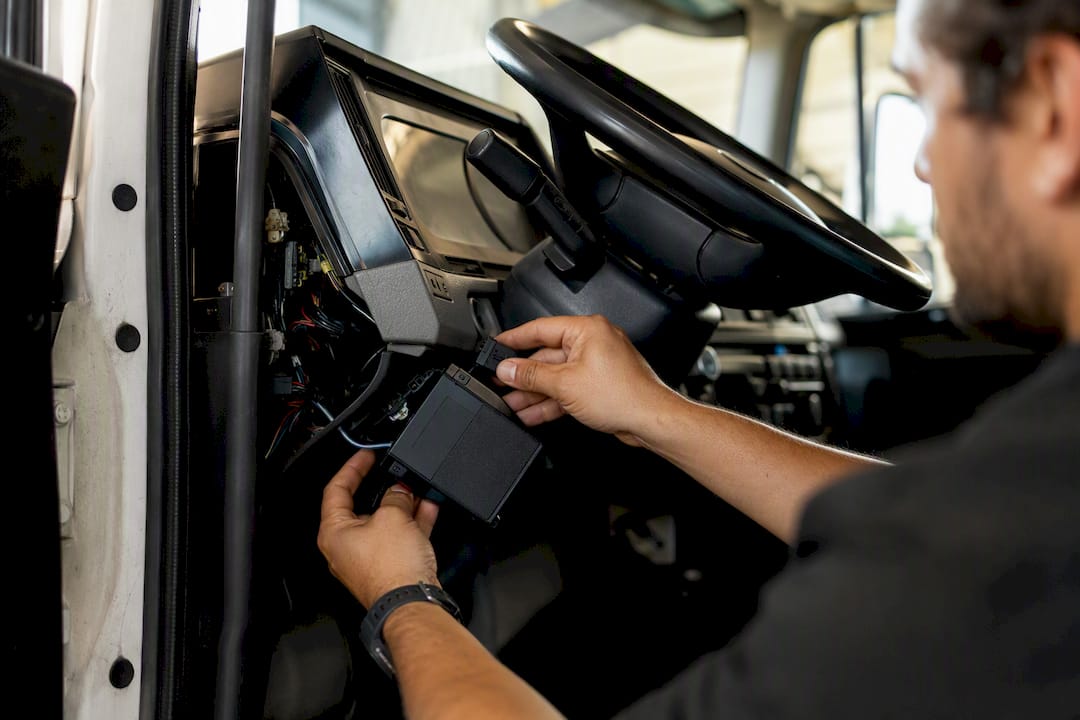
The loop is simple: detect the behavior, coach it with a benefit the driver actually cares about, then reward improvement. Research on driver training adoption found that programs framed around technical specifications lose drivers fast, while programs that lead with job-relevant benefits, like less fatigue, fewer write-ups, better routes, stick.
Build your checklist around these elements:
- In-cab alerts for real-time coaching moments, not just after-the-fact reports
- Mobile inspection tools drivers can complete in under five minutes
- A refresher training cadence, not a one-time onboarding session
- Incentives tied to sustained improvement, not single trips
Be upfront with drivers about what telematics tracks and why. A driver who understands that harsh-braking data protects them in a dispute, rather than being used to fire them, will actually engage with the program.
Pro Tip: Roll out coaching alerts for one behavior at a time, like idling, before adding speeding or braking data. Drivers who get hit with five metrics at once tend to tune out all of them.
How often should you schedule preventive maintenance?
Preventive maintenance works best when it’s triggered by mileage, engine hours, and calendar time together, then adjusted using your own failure history rather than a generic OEM schedule. Copying manufacturer intervals without adjusting for your actual duty cycles wastes money on parts that didn’t need replacing and misses failures that show up earlier under harder use, according to fleet optimization research.

Mobile inspection apps close the gap between a driver spotting a defect and a technician fixing it. Standardize what “defect” means across your fleet so a cracked mirror and a failing brake line don’t get logged the same way.
| Check type | Trigger | Typical threshold |
|---|---|---|
| Oil and fluid service | Mileage or engine hours | Every 8,000–12,000 km or per OEM, adjusted for duty cycle |
| Brake inspection | Mileage + calendar | Every 3 months or 15,000 km |
| Tire condition | Visual + mileage | Every 10,000 km or monthly |
| Daily walk-around | Calendar (daily) | Before every shift |
Track your PM compliance rate and correlate it against breakdown frequency. If a specific component keeps failing between scheduled services, that’s your signal to shorten the interval for that part, not the whole vehicle.
Automated PM scheduling and consolidated maintenance data reduce reactive repairs and lower total cost of ownership over time.
What data should your telematics system centralize?
At minimum, your system needs location, odometer readings, fuel consumption, engine fault codes, and driver ID tied to every trip. Without driver ID attached to the data, you cannot coach anyone, you can only observe the vehicle.
The integration chain that matters:
- Telematics hardware feeds vehicle and driver data in real time.
- That data connects to your maintenance system to trigger PM automatically.
- Fuel card transactions link back to the same vehicle and driver records.
- Everything rolls up into one enterprise reporting layer.
Roll telematics out in phases rather than fleet-wide on day one:
- Pilot with one depot or vehicle group for 60 to 90 days
- Fix data quality and driver adoption issues before scaling
- Expand fleet-wide once dashboards and alert thresholds are proven
- Assign a data owner responsible for governance, not just IT
Picture the flow as vehicle to telematics device to fleet platform to reports and alerts. That’s the whole chain, and every link needs to actually talk to the next one, not just export a file nobody reads. Telematics integration with insurance is also worth understanding early, since usage data increasingly shapes what cover costs you.
Why does fuel deserve most of your cost-cutting attention?
Fuel typically runs 30% to 40% of total fleet operating costs, making it the single largest expense you actually have leverage over, according to fuel cost management research. You can’t negotiate away insurance mandates or vehicle depreciation nearly as easily as you can cut idling time.
ATRI’s operational-cost analysis confirms fuel and driver-related costs drive most of the year-to-year cost volatility trucking fleets experience.
Tactics that produce measurable results:
- Set and enforce an anti-idling policy with automatic alerts past a set threshold
- Optimize routes to cut empty miles and unnecessary detours
- Coach drivers on acceleration and braking habits that waste fuel
- Restrict fuel-card use by vehicle, location, and time window
- Flag anomalies, like a sudden spend jump on one vehicle, for investigation within 48 hours
Benchmark fuel per kilometer by vehicle group and route type. A single outlier vehicle burning 20% more fuel than its peers usually points to a mechanical issue or a driving pattern worth coaching, not bad luck.
Which KPIs actually tell you if your fleet is improving?
Six numbers cover most of what matters: cost per kilometer, utilization rate, fuel per kilometer, PM compliance rate, incident rate, and on-time service percentage. Track more than that and you’ll spend your review meetings arguing about which metric matters instead of acting on any of them.
Build a one-page monthly dashboard for operations and finance, then handle exceptions separately as they come up rather than burying them in the main report. Fleet optimization work also found that many fleets carry 10% to 20% excess vehicle capacity, something a clean utilization number will expose fast.
How do you choose the right fleet software?
Buy for your priorities, not for a feature list a salesperson hands you. Before you sign anything, require proof of integration capability, open APIs, mobile inspection workflows, exportable reporting, and clear terms on who owns your data if you leave.
Expect three broad categories in-market: entry-level tracking apps for small fleets, standalone maintenance suites, and integrated platforms combining telematics, maintenance, and reporting. Match the category to your fleet size rather than buying enterprise software for six vehicles.
Before scaling any vendor fleet-wide:
- Define success criteria upfront, like a 10% fuel reduction or 95% PM compliance.
- Pilot with a small vehicle group for 60 to 90 days.
- Evaluate against your defined metrics, not vendor promises.
- Only then commit to a fleet-wide rollout.
How do you roll out new fleet practices without disrupting operations?
Run a quick pilot first, then scale with documented process standards, then shift into continuous improvement and governance. Trying to change maintenance, telematics, and fuel policy simultaneously fleet-wide almost always backfires.
Expect resistance in predictable places: data overload for managers, skepticism from drivers, workshop capacity limits, and supplier lead times on parts. Counter each one directly, cap the dashboards you review weekly, frame new tools around driver benefits rather than mandates, book workshop capacity ahead of rollout, and order critical parts before you need them.
Pair training with a simple incentive, then measure early ROI against your baseline within 90 days.
Where does insurance fit into fleet risk management?
Insurance is a risk-transfer tool, not an afterthought bolted onto your budget once a year. Tailored, on-demand cover lets you scale protection up for a seasonal spike, a short-term project, or a hired-in vehicle, without paying for capacity you don’t need the rest of the year.
A fleet that hires in three extra trucks for a two-month project doesn’t need a year-long policy adjustment. It needs cover that switches on for the project and off when it ends.
Use short-term cover for:
- Project-based equipment or vehicle hire
- Seasonal demand spikes
- Third-party or subcontracted plant on site
Truck & Plant On-Demand™ was built around exactly this kind of flexibility, adjustable cover without the friction of renegotiating a full policy every time your operation changes shape.
How should you manage your fleet from purchase to disposal?
Every vehicle in your fleet has a cost curve, low upfront, rising maintenance costs, and a resale value that erodes fastest in year one. Managing that curve deliberately, instead of just replacing vehicles when they break down, is what separates fleets that control cost from fleets that get surprised by it every quarter.
At acquisition, decide upfront whether you’re buying for a 3-year, 5-year, or 7-year hold, and buy the spec that fits that horizon. A fleet that swaps trucks every three years should prioritize resale value and lower financing costs over the cheapest sticker price. A fleet holding vehicles for seven years should weight reliability and parts availability more heavily, since you’ll be maintaining that vehicle well past its warranty.
Track total cost of ownership by vehicle, not just by fleet average. Purchase price, fuel consumption, maintenance spend, downtime cost, and resale value all belong in that number. A vehicle that looked cheap to buy but burns 15% more fuel than its peers is not actually the cheaper option once you run the math over five years.
Disposal timing matters as much as acquisition. Selling a vehicle right before a major component, like a transmission or engine rebuild, comes due usually nets a better return than waiting until after you’ve sunk that repair cost into it. Set a mileage or age threshold per vehicle class where you automatically flag it for disposal review, rather than deciding case by case under pressure when something breaks.
Right-sizing plays into this too. If your utilization data shows a vehicle class running below 70% capacity, that’s a disposal or reassignment candidate before it’s a replacement candidate.
What compliance obligations should fleet managers track?
Compliance failures cost more in downtime and liability than almost any other operational risk you’ll manage, and they’re entirely preventable with the right documentation cadence. Vehicle roadworthiness, driver licensing and medical certification, hours-of-service limits, and load and weight restrictions form the baseline every commercial fleet needs to track, regardless of what you haul or where you operate.
Build a compliance calendar the same way you’d build a maintenance schedule, with dates, owners, and evidence trails. Licensing renewals, roadworthy certificates, and driver medical checks all have expiry dates that are easy to lose track of across a fleet of any real size. A single expired certification discovered during a roadside inspection can ground a vehicle and open you up to liability you didn’t budget for.
Documentation matters as much as compliance itself. If an incident happens, whoever reviews it, an insurer, a regulator, a court, will want to see your maintenance records, driver training logs, and inspection history. Fleets that treat documentation as a formality rather than evidence tend to find that out the hard way when a claim gets disputed.
Assign a named owner for compliance tracking, separate from whoever owns maintenance or safety. When one person is accountable for licensing and certification deadlines specifically, renewals get handled before they lapse instead of after. Review your fleet risk exposure regularly rather than only after an incident forces the conversation.
What does a practical green fleet strategy look like?
Sustainability in fleet management starts with the same data you’re already collecting for cost control, fuel per kilometer, idling time, and route efficiency, because most of what reduces emissions also reduces spend. You don’t need a separate sustainability initiative bolted onto your operation; you need to read your existing KPIs through a second lens.
FEMP’s framework for public and commercial fleets names right-sizing, reducing vehicle miles traveled, increasing fuel efficiency, and optimizing alternative fuels as its four core principles, and each one pays for itself before it pays off environmentally. A right-sized fleet burns less fuel simply because it’s running fewer half-empty vehicles. Reducing empty miles through better route planning cuts both emissions and operating cost in the same move.
Alternative fuel adoption, whether that’s electric vehicles, hybrid options, or biodiesel blends, works best as a phased transition tied to your natural replacement cycle rather than a wholesale swap. Replacing vehicles as they reach end of life with a lower-emission option avoids writing off assets early and lets you build charging or fueling infrastructure gradually instead of all at once.
Idling reduction remains one of the highest-return sustainability tactics available, because it costs nothing to implement beyond policy enforcement and telematics alerts you likely already have. A fleet that cuts average idling time by even a few minutes per vehicle per day sees that saving compound across hundreds of vehicles and thousands of shifts a year.
Route optimization software, already part of most integrated fleet platforms, does double duty here too. Shorter, smarter routes burn less fuel, put fewer hours on vehicles, and reduce driver fatigue, three wins from one change.
How does advanced analytics improve fleet decisions over time?
Centralized telematics and maintenance data only becomes valuable once you connect it to the systems where business decisions actually get made, finance, procurement, and enterprise resource planning. A fleet dashboard that lives in isolation from your accounting system tells you what happened; integration is what tells you what to do next.
Predictive analytics, built on your own historical failure and usage data rather than generic industry averages, can flag which vehicles are likely to need major repairs before they break down. This works because your fleet’s failure patterns are shaped by your specific routes, loads, and climate, not a manufacturer’s lab conditions. The fleet optimization approach built on integrated telematics data supports exactly this kind of continuous refinement.
Integration with enterprise resource planning systems lets fuel, maintenance, and depreciation costs flow directly into your financial reporting without manual re-entry. That matters more than it sounds. Manual data transfer between fleet and finance systems is where errors creep in and where monthly reporting delays usually originate.
The continuous improvement loop looks like this: collect data, analyze trends monthly, adjust maintenance intervals or route plans based on what the data shows, then measure whether that adjustment actually moved your KPIs. Fleets that skip the last step, measuring whether a change worked, tend to make the same adjustments repeatedly without ever confirming they help.
What separates fleets that actually improve from those that stall?
The fleets that keep improving treat their monthly utilization and fuel review as non-negotiable, not optional. They also let drivers see their own data, not just get judged by it. Fleets that stall usually have the same telematics system as everyone else. They just never built the habit of reading it.
A flexible way to cover fleet risk without overpaying
Every practice in this guide reduces risk. None of them eliminates it entirely, which is why how you insure your fleet matters as much as how you run it. Truckplant built Truck & Plant On-Demand™ for exactly the gap between traditional annual policies and how commercial fleets actually operate, with seasonal spikes, project-based hire, and vehicles that sit idle some months and work overtime in others.
Say your fleet takes on a six-month construction project requiring three additional hired trucks. A standard annual policy locks you into cover priced for twelve months of exposure. On-demand cover lets you switch that protection on for the project and off when it wraps, so you’re not carrying premium cost for risk you no longer have. The same logic applies to essential insurance strategies built around how your fleet actually moves, not how insurers assume it does.
This is one lever among many, not a substitute for a full procurement or risk review specific to your operation. Check fleet insurance options built for commercial vehicles and get a quote that matches your actual exposure this month, not a generic annual estimate.
Frequently asked questions
What are the most important fleet management best practices to start with?
Prioritize driver safety coaching, usage-based preventive maintenance, and centralized telematics data first. These three create the visibility you need before fuel control and KPI tracking can be effective.
How can fleet managers reduce fuel costs quickly?
Enforce an anti-idling policy, optimize routes to cut empty miles, and set fuel-card controls by vehicle and location. Fuel represents 30% to 40% of operating costs, so even small improvements show up fast.
What KPIs should every fleet track monthly?
Cost per kilometer, utilization rate, fuel per kilometer, PM compliance rate, and incident rate cover the core of fleet performance without overwhelming your reporting.
Is on-demand insurance suitable for a permanent fleet?
It works best alongside standard cover for project-based hire, seasonal spikes, or third-party equipment, rather than replacing your core annual policy outright.
How do you know if fleet software is worth the investment?
Pilot it with a small vehicle group for 60 to 90 days against defined success criteria, like a fuel or compliance target, before committing fleet-wide.
Sources
- FEMP best practices: fleet management framework — U.S. Department of Energy
- Fleet optimization strategies in 2026 — FleetRabbit
- Driver training behaviour scrutinised as EV adoption accelerates — Engineering News