


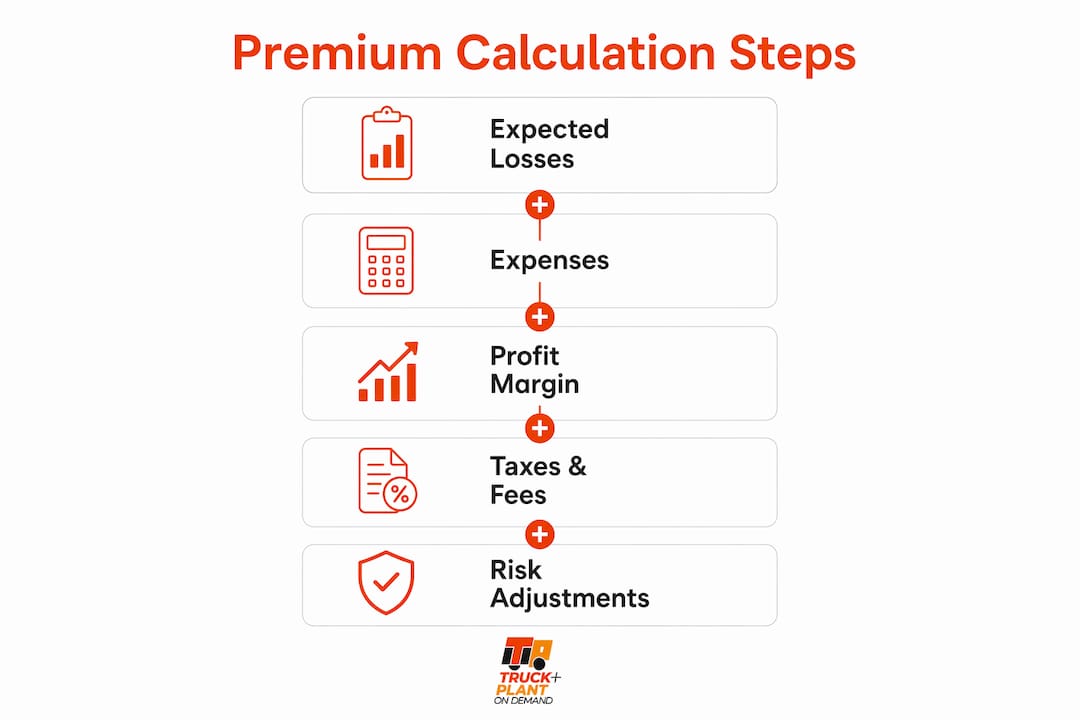
Insurance premiums are the total price you pay to transfer financial risk to an insurer. The core formula, grounded in actuarial science, is straightforward: Premium = Expected Losses + Administrative Expenses + Profit Margin + Taxes ± Adjustments. Every figure in that equation reflects real data about your risk profile, your insurer’s operating costs, and the regulatory environment in your state.
Understanding the difference between a rate and a premium is the first step. The Texas Department of Insurance explains it clearly: a rate is the price per unit of exposure, while the premium is what you actually pay. A rate of $0.20 per $1,000 of coverage on a $50,000 policy produces a $10 premium. The rate is the building block; the premium is the result.
Individual risk factors then adjust that base figure up or down. The most common ones across insurance lines include:
- Age: Younger and older policyholders typically carry higher statistical risk.
- Location: ZIP code affects exposure to crime, natural disasters, and local claims trends.
- Claims history: Prior claims signal future risk and raise premiums accordingly.
- Tobacco use: Relevant primarily in health and life insurance, where it significantly increases expected costs.
- Coverage choices and deductibles: Higher deductibles lower your premium; broader coverage raises it.
Actuarial science sits at the foundation of all of this. Actuaries use historical loss data, statistical modeling, and regulatory guidelines to price risk fairly and keep insurers financially sound. State departments of insurance, such as the Texas Department of Insurance, oversee rate filings to confirm that methods are actuarially justified and legally compliant.
| Component | What it represents |
|---|---|
| Expected losses | Predicted average claims cost per exposure unit |
| Administrative expenses | Operational costs: staffing, technology, claims handling |
| Profit margin | Target return for the insurer |
| Taxes | State-mandated premium taxes |
| Adjustments | Discounts for bundling, surcharges for high-risk factors |

What drives your auto and homeowners insurance premium?
Auto and home insurance premiums follow the same actuarial logic, but the specific risk factors differ by coverage line. Knowing which variables insurers weigh most heavily gives you real leverage over your costs.
For auto insurance, insurers evaluate:
- Driving record: at-fault accidents and traffic violations raise premiums directly.
- Vehicle type: repair costs, theft rates, and safety ratings all feed into the base rate.
- Annual mileage: more time on the road means more exposure to claims.
- Age and experience: teen drivers and those over 70 typically pay more due to statistical loss patterns.
- Location: urban areas with higher accident and theft rates carry higher base rates.
For homeowners insurance, the key variables include:
- Geographic risk: flood zones, wildfire corridors, and high-crime areas all increase expected losses.
- Home age and construction: older homes or those built with materials prone to damage cost more to insure.
- Claims history: a property with prior claims is statistically more likely to generate future ones.
- Proximity to emergency services: distance from a fire station affects your rate.
Insurers combine a base rate with individual risk modifiers to arrive at your specific premium. A clean driving record in a low-risk ZIP code might attract a modifier well below 1.0, pulling your premium down from the base. A recent at-fault accident in a high-theft urban area pushes it the other way. The Arizona Department of Insurance confirms that both personal risk profiles and geographic factors are standard inputs in this process.
Coverage choices compound the effect. Choosing a $1,000 deductible instead of $500 on a homeowners policy typically lowers your annual premium, because you are absorbing more of the first-dollar risk yourself. Adding optional endorsements, such as scheduled equipment cover or extended replacement cost, adds to the premium proportionally.

Pro Tip: Review your auto policy’s listed annual mileage every year. If you drive less than your policy states, ask your insurer to update it. Fewer miles on record can reduce your premium without changing any other coverage.
How health insurance premiums are set under US law
Health insurance premium calculation operates under tighter legal constraints than any other line. Under the Affordable Care Act, insurers offering individual and small-group plans in the US marketplace may only use five rating factors:
- Age: Older enrollees pay more, but the ratio is capped by law.
- Location: Premiums vary by state and rating area based on local healthcare costs.
- Tobacco use: Insurers may charge tobacco users higher premiums, subject to state rules.
- Family size: The number of people covered affects the total premium.
- Plan category: Bronze, Silver, Gold, and Platinum tiers reflect different cost-sharing structures.
Sex and medical history are explicitly prohibited as rating factors for ACA-compliant plans. This is a meaningful legal protection. Before the ACA, insurers could charge women more than men for identical coverage, or decline coverage based on pre-existing conditions. That practice is now unlawful for marketplace and employer-sponsored group plans.
Under the ACA, health insurers must justify their premium rates to state regulators before implementing them. Rates that are deemed unreasonable or not actuarially sound can be challenged and blocked, giving consumers a layer of protection that does not exist in most other markets.
Employer-sponsored plans operate somewhat differently. Employers negotiate group rates based on the collective risk profile of their workforce, which often produces lower per-person premiums than individual marketplace plans. The employer typically absorbs a share of the premium cost, reducing what employees pay directly.
Plan design choices matter too. A high-deductible health plan carries a lower monthly premium but shifts more out-of-pocket cost to you when you use care. A Gold-tier plan costs more each month but covers a larger share of medical expenses. Regulatory oversight, administered by state departments of insurance, ensures that these structures remain compliant and that rate filings are publicly justified.
The actuarial framework behind every premium
Actuaries use two primary methods to calculate and adjust premiums across all insurance lines: the pure premium method and the loss ratio method.
The pure premium method starts with expected losses per exposure unit, also called the loss cost. If a fleet of 100 trucks historically generates $200,000 in annual claims, the pure premium per truck is $2,000. Actuaries then load that figure for expenses and profit to arrive at the final rate.
The loss ratio method takes a different angle. It compares actual losses paid to premiums collected. If an insurer’s loss ratio is higher than its target, it adjusts rates upward at the next filing cycle. If the ratio is lower, rates may hold or decrease. Both methods rely on the same underlying data: historical claims, exposure counts, and trend factors that project past experience into future periods.
The premium must balance expected claim probability with operational costs and market competitiveness. Underprice the risk and the insurer becomes insolvent; overprice it and policyholders leave for competitors.
Underwriting is where actuarial pricing meets individual risk assessment. Underwriting evaluates whether to accept a risk and at what price, using statistical models, inspection reports, and application data. A commercial vehicle fleet with a strong safety record and GPS tracking may qualify for preferred underwriting terms. A fleet with multiple at-fault claims in the past three years will face surcharges or restricted cover.
Market-wide trends also shift base rates independently of your individual risk. Rising repair costs, increased litigation, or a spike in weather-related claims in your region can push premiums up even if your own record is clean. The Texas Department of Insurance notes that broader market conditions are a standard input in rate-setting, not just individual policyholder data.
Pro Tip: Ask your insurer what rating factors produced your current premium. Insurers are required to disclose this in most states. Knowing which modifiers are applied to your base rate tells you exactly where to focus if you want to reduce costs.
The CAS actuarial framework formalises this as: Premium = (Expected Losses + Administrative Expenses + Profit Margin + Taxes) minus Adjustments and Discounts. State regulators require insurers to file their rating algorithms and justify each component before applying them to policyholders.
| Method | Core input | Primary use |
|---|---|---|
| Pure premium | Expected loss per exposure unit | Setting new base rates |
| Loss ratio | Actual losses vs. premiums collected | Adjusting existing rates |
Practical ways to manage and reduce your insurance premiums
You cannot change your age or your ZIP code, but you can control more than most people realise. The factors within your reach often have a direct and measurable effect on what you pay.
- Choose a higher deductible. Raising your deductible shifts more first-dollar risk to you, which lowers the insurer’s expected payout and reduces your premium. This works across auto, home, and health cover.
- Maintain a clean record. A claims-free driving history and a property with no recent losses both attract lower risk modifiers at renewal.
- Bundle policies. Holding auto and homeowners cover with the same insurer typically qualifies you for a multi-policy discount.
- Review coverage limits annually. Insuring a vehicle for more than its current market value, or carrying endorsements you no longer need, adds cost without adding protection.
- Ask about discounts explicitly. Telematics programmes, defensive driving courses, security systems, and professional association memberships all generate discounts that insurers do not always volunteer upfront.
For business owners managing a commercial fleet, the levers are similar but the stakes are higher. Understanding fleet insurance cost factors gives you a clearer picture of which variables you can actively manage versus those set by the market. Investing in driver training, GPS tracking, and vehicle maintenance records creates a documented risk profile that underwriters respond to with better terms.
Pro Tip: Schedule a policy review every 12 months, not just at renewal. Circumstances change: a vehicle depreciates, a driver leaves the fleet, a new safety system gets installed. Each change is an opportunity to request a rate adjustment.
Geographic risk is largely fixed, but how you present your risk to an insurer is not. A well-documented safety programme, clean maintenance records, and a low claims frequency tell a story that actuaries and underwriters weigh in your favour. For fleet operators looking for proven ways to cut premiums, the approach is consistent: reduce expected losses, and the premium follows.
Vehicle presentation also plays a role in commercial cover. A well-maintained, clearly marked fleet signals lower risk to underwriters. Some operators find that fleet vehicle branding contributes to a professional risk profile, which can support better underwriting outcomes alongside other risk management measures.
Key takeaways
Insurance premiums are calculated by combining expected losses, expenses, profit margin, and taxes, then adjusting for individual risk factors that actuaries and underwriters assess against historical data and regulatory requirements.
| Point | Details |
|---|---|
| Premium vs. rate | A rate is the price per exposure unit; the premium is the total amount you pay. |
| Core formula | Premium = Expected Losses + Expenses + Profit Margin + Taxes, minus any discounts. |
| Health insurance limits | ACA-compliant plans may only rate on age, location, tobacco use, family size, and plan tier. |
| Actuarial methods | Pure premium and loss ratio methods are the two standard tools for setting and adjusting rates. |
| Consumer levers | Higher deductibles, clean records, bundling, and documented risk management all reduce premiums. |
Truckplant gives you control over what you pay

Most insurers charge you the same premium every month regardless of whether your vehicles are working or sitting idle. Truckplant was built to change that. With Truck & Plant On-Demand™, you choose what to insure, when to insure it, and how to structure your cover, so your premium reflects your actual operations rather than a fixed annual estimate.
Whether you run a single truck or a large civil construction fleet, Truckplant tailors cover to your business needs. You pay for protection when you need it. When you don’t, you don’t pay. That is what fair premium calculation looks like in practice.