


TL;DR:
- Fleet insurance audits compare actual risk exposure with initial estimates to adjust premiums accurately.
- Proper documentation, telematics data, and proactive recordkeeping are key to successful audits.
- Approaching audits as opportunities for improvement and negotiation can lead to cost savings and better coverage.
Fleet insurance audits make many operators nervous. The paperwork, the scrutiny, the possibility of a premium hike. But here’s what most fleet managers in the construction, civil, and transport sectors don’t realise: an audit is not a threat. It’s one of the most powerful opportunities you have to reduce your costs, demonstrate your safety culture, and negotiate better cover. The managers who walk into audits prepared walk out with lower premiums and stronger policies. This guide shows you exactly how to get there.
Table of Contents
- What is an insurance audit for fleets?
- Key documents and data required for successful audits
- The audit process: step-by-step and what to expect
- How to optimize your audit: cost-saving strategies and compliance tips
- The hidden upside: why a smart audit approach gives you a competitive edge
- Next steps: simplify your insurance audits and protect your fleet
- Frequently asked questions
Key Takeaways
| Point | Details |
|---|---|
| Audit readiness starts with documents | Complete and organized records simplify audits and help avoid premium increases. |
| Telematics can cut costs | Electronic data from fleet tracking helps prove lower risk for better insurance rates. |
| Audits are an opportunity | With the right approach, audits can reveal savings and improve fleet coverage. |
| Proactive preparation pays off | Advance planning reduces audit stress and boosts negotiation power with insurers. |
What is an insurance audit for fleets?
An insurance audit is a formal review process that your insurer conducts to compare two things: the risk exposure they estimated when they set your premium, and the actual risk exposure your fleet produced during the policy period. In simple terms, audits ensure your insurance matches your actual fleet risk and usage.
This matters because premiums at the start of a policy year are based on projections. You tell your insurer how many vehicles you plan to run, what routes they’ll cover, and what your expected payroll will be. Life in construction and transport rarely goes exactly to plan. Projects expand. Vehicles are added or retired. Drivers change. An audit captures what actually happened and adjusts your cover accordingly.
For fleet managers in civil construction and logistics, understanding these insurance audit requirements is not optional. Audits are a standard condition of most commercial fleet policies, and failing to participate or providing incomplete data can result in policy cancellation or inflated premiums based on worst-case assumptions.
“An insurance audit is not a penalty. It is a reconciliation. The insurer adjusts your premium based on what actually happened, not what was predicted.”
Here is what auditors typically examine during a fleet insurance review:
- Vehicle records: Number of vehicles, types, registration details, and whether each vehicle was active or parked during the policy period
- Driver qualifications: Licence validity, endorsements, and driving history for all operators
- Vehicle usage: Kilometres travelled, routes used, and any off-road or high-risk operational environments
- Payroll records: Especially relevant where workers’ compensation exposure is part of your policy calculation
- Compliance documentation: Roadworthy certificates, maintenance records, and incident reports
Getting familiar with essential insurance concepts before your audit puts you in a far stronger position when the auditor asks questions.
Key documents and data required for successful audits
Understanding the audit process is one thing, but passing it with flying colours requires the right documentation. Here is exactly what you will need.
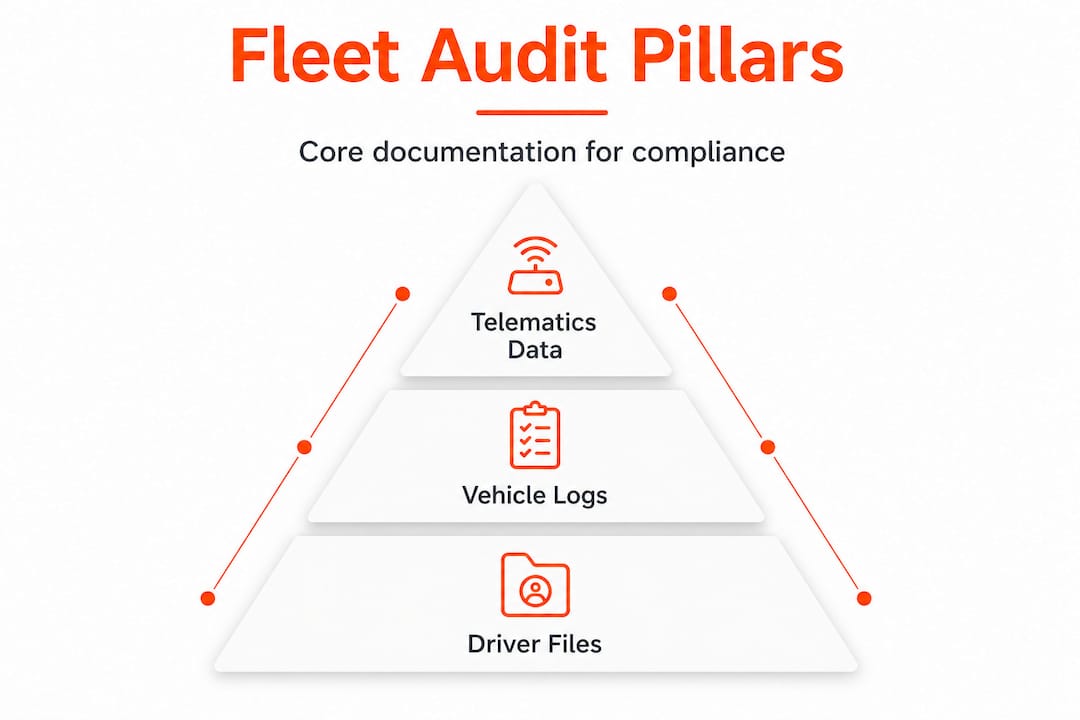
The three pillars of a successful fleet audit are Driver Qualification Files (DQFs), Daily Vehicle Inspection Reports (DVIRs), and payroll records. As industry guidance confirms, you should prepare complete docs including DQFs, DVIRs, and payroll, and use telematics for verifiable risk reduction in renewals. Telematics systems, which use GPS and onboard sensors to track vehicle behaviour, produce data that auditors increasingly accept as objective evidence of risk control.
Here is a breakdown of the key documents you need to have organised and ready:
| Document type | What it covers | Why it matters in audits |
|---|---|---|
| Driver Qualification Files | Licences, medicals, training records | Proves driver competency and reduces liability risk |
| Daily Vehicle Inspection Reports | Pre-trip and post-trip vehicle condition | Demonstrates proactive maintenance and safety compliance |
| Payroll records | Driver and operator wages by category | Used to calculate exposure in workers’ compensation calculations |
| Telematics reports | Speed, braking, route data, idle time | Provides objective, data-backed evidence of safe operations |
| Maintenance logs | Service history, tyre records, repairs | Supports claims of low mechanical risk and reduced accident likelihood |
| Incident and claims history | Accidents, near-misses, claims filed | Gives context to your risk profile for the insurer |
Use this as your starting document checklist when preparing for an upcoming audit. Cross-referencing this list against your existing records several weeks before the audit date gives you time to identify and close any gaps.
Beyond the paperwork, your Electronic Logging Device (ELD) data is increasingly important. ELDs record hours of service, vehicle movement, and compliance with driving time regulations. Insurers view clean ELD records as strong evidence that your fleet operates within legal limits and applies safety standards consistently.
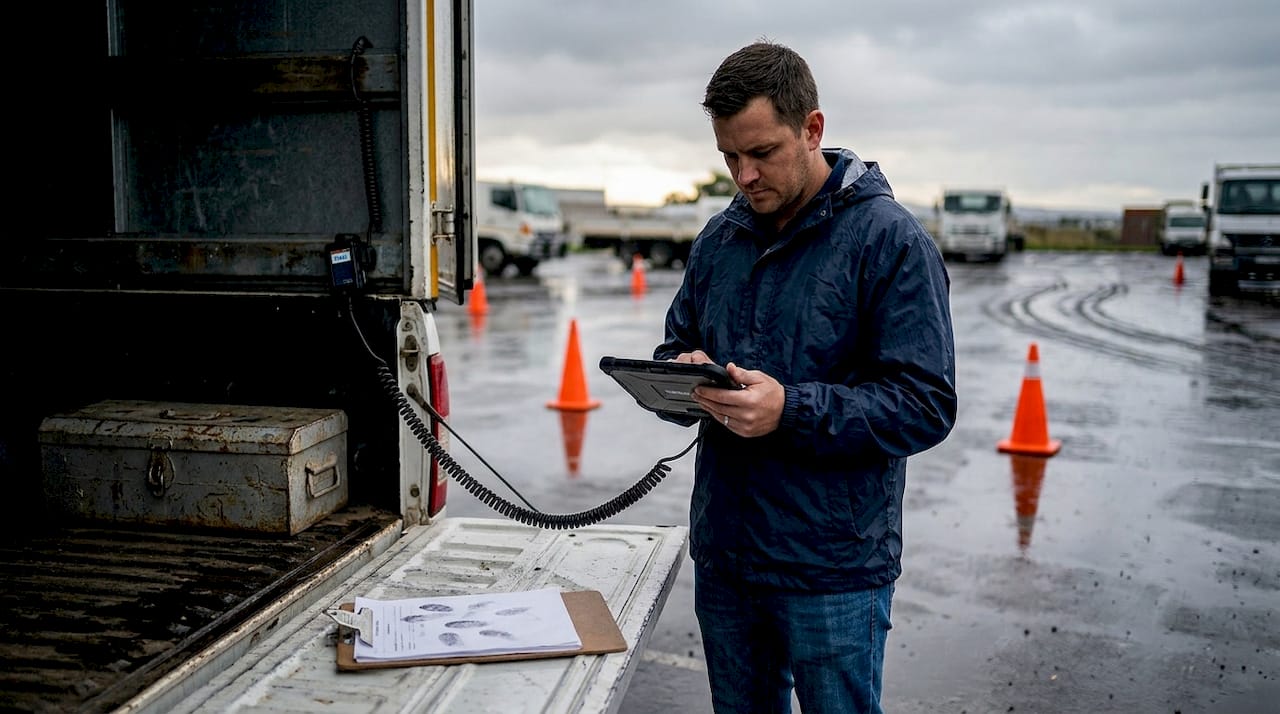
Pro Tip: Create a dedicated digital folder for each vehicle in your fleet, updated monthly, containing all inspection reports, maintenance records, and driver documents. When audit time arrives, you simply export the folder rather than scrambling to locate individual files.
Your insurance checklist for fleets is a good companion resource to use alongside your audit preparation, especially if your fleet includes a mix of trucks, trailers, and plant equipment. And if you want to go further, reviewing fleet management insurance strategies will help you build a documentation culture that makes every future audit faster and less stressful.
The audit process: step-by-step and what to expect
With your documents prepared, it is time to walk through the audit itself so you know what to expect from start to finish.
A typical fleet insurance audit follows a clear sequence. Knowing each stage removes the guesswork and helps you respond efficiently at every point.
-
Notification: Your insurer sends a formal audit notice, usually 30 to 60 days before the audit date. This notice specifies what information is required and the format in which it should be submitted.
-
Data request: The auditor issues a detailed list of required documents. This is where your pre-organised files save you significant time. Fleets that respond quickly and completely to data requests set a positive tone for the entire process.
-
Documentation review: The auditor reviews all submitted records for completeness and accuracy. This may include cross-referencing your telematics data with your declared vehicle usage to confirm alignment.
-
Verification: For larger fleets or high-risk categories, the auditor may conduct a physical inspection or follow-up interview. They may visit your depot, inspect vehicles, or speak with your safety officer.
-
Insurer adjustment: Based on what the audit reveals, your insurer adjusts your premium. If your actual exposure was lower than estimated, you may receive a refund or a credit. If it was higher, you will owe an additional amount.
-
Result and feedback: You receive a formal audit report and a revised premium statement. This is also the right moment to discuss your results with your broker and explore options for the upcoming policy period.
Pro Tip: Respond to every auditor request within 48 hours. Slow responses create doubt and can extend the audit timeline, which increases the chance of interim assumptions being made in your insurer’s favour rather than yours. Data from telematics systems can be used for verifiable risk reduction in renewals, and presenting this data proactively during verification demonstrates confidence in your operations.
Common bottlenecks in fleet audits include missing telematics exports, incomplete driver files for recently hired operators, and payroll records that don’t clearly separate driver categories. Fleets that run a variety of vehicle types, such as heavy trucks combined with construction plant, face added complexity because each category may be assessed differently by the insurer.
Understanding the insurance claims process for your vehicles is also useful context here. Auditors often review your claims history as part of their assessment, and knowing how your claims were handled gives you a clearer picture of how your risk profile will be perceived.
Make sure you are also aware of audit requirements for logistics operators specific to your region or operational category, as these can influence what additional documentation your insurer expects.
How to optimize your audit: cost-saving strategies and compliance tips
Now that you understand the process, here is how to turn your audit into an opportunity for savings and better cover.
The most important shift you can make is moving from a reactive to a proactive documentation approach. Fleets that wait until the audit notice arrives to gather records consistently pay more. Fleets that maintain continuous, structured records demonstrate lower risk and give insurers less reason to apply loading (a premium increase applied when risk cannot be clearly assessed).
Key insight: Telematics data showing consistent safe driving behaviour, including controlled speeds, minimal harsh braking events, and reliable maintenance intervals, directly supports a lower risk rating from your insurer.
Here is a comparison of traditional versus proactive audit approaches:
| Approach | Preparation | Audit outcome | Premium impact |
|---|---|---|---|
| Reactive (traditional) | Gather documents when audit is announced | Incomplete records, delays | Higher risk of premium loading |
| Proactive (optimised) | Continuous digital recordkeeping | Fast, complete submissions | Demonstrates low risk, supports discounts |
| Flexible (on-demand model) | Cover adjusted in real time | Exposure accurately reflects operations | Pay only for actual risk incurred |
The flexible approach is where modern fleet insurance is heading. When you use risk mitigation for fleets strategies combined with on-demand cover, your audit exposure is inherently more accurate because your cover has been adjusted throughout the year to match your actual operations.
Here are practical steps to optimize fleet insurance outcomes through your audit:
- Segment your fleet data by risk category: Separate high-mileage long-haul trucks from lower-risk site vehicles. This prevents high-risk assets from inflating the premium on lower-risk ones.
- Request a pre-audit consultation with your broker: Going through your records before the formal audit identifies weak spots you can address before the insurer sees them.
- Present telematics data as a risk management tool: Don’t just submit the data. Provide a summary that highlights positive trends, such as a reduction in harsh braking incidents over the policy year.
- Challenge inflated exposure assumptions: If the auditor’s initial assessment assumes a higher exposure than your records support, you have the right to dispute it with documented evidence.
According to industry research, fleets using telematics for verifiable risk reduction in renewals routinely achieve more favourable audit outcomes than those relying on manual records alone. The data speaks objectively where paper records can appear incomplete or inconsistent.
If you want to explore more ways to cut insurance costs across your fleet, there are proven steps available that align with good audit practices. And for a deeper look at flexible insurance solutions, understanding how dynamic cover works will transform the way you think about managing your fleet’s risk exposure throughout the year.
The hidden upside: why a smart audit approach gives you a competitive edge
Most fleet managers treat audits as something to survive. The goal becomes “don’t get hit with a big bill.” That defensive mindset is costing you money and leverage.
The managers who genuinely benefit from audits are the ones who see them as a structured opportunity to have a direct conversation with their insurer about the quality of their operations. When your documentation is thorough, your telematics data is clean, and your driver records are complete, you are not just passing an audit. You are making a case. You are demonstrating that your fleet is a lower-risk client than your competitors who show up with a box of disorganised papers and a missing maintenance log.
Here is an insight that surprises many operators: insurers have considerable discretion in how they apply loadings and discounts within their rating models. A fleet that consistently presents well-organised, data-supported audit submissions builds a track record that influences underwriter decisions at renewal. You become a preferred risk. That has real rand value.
There is another dimension that most articles miss. Engaging seriously with the audit process often reveals internal inefficiencies you didn’t know existed. A vehicle that has been recorded as active for months but rarely leaves the yard is costing you premium unnecessarily. A driver category miscalculation in your payroll records could be inflating your workers’ compensation exposure. Audits surface these issues. Fixing them not only reduces your current premium but positions you better for future periods.
Industry guidance confirms the value of preparing complete docs including DQFs, DVIRs, and payroll and using telematics to verify your risk management. But the real competitive edge comes from using that preparation as a negotiating tool, not just a compliance exercise.
This is also where comparing coverage options becomes strategic. An audit gives you a clear, evidence-based picture of your actual fleet risk. That picture is exactly what you need to evaluate whether your current policy structure is the right fit or whether a more flexible, usage-based model would serve your business better.
Next steps: simplify your insurance audits and protect your fleet
Ready to move from audit stress to audit success? Discover how tailored, on-demand insurance can help.
At Truck & Plant On-Demand, we built our cover specifically for the realities of civil, construction, and transport operations. Your fleet doesn’t look the same every month, and your insurance shouldn’t either. Our platform lets you adjust your cover in real time, which means your policy exposure stays accurate throughout the year and your audit outcomes reflect what you actually needed, not a one-size-fits-all estimate.
Our digital-first approach makes documentation straightforward. You have access to your cover details, vehicle records, and policy history when you need them, which is exactly what auditors want to see. Whether you manage five trucks or fifty machines, our fleet insurance solutions are structured to give you clarity and control at every stage of the policy year. Start with on-demand cover for vehicles and experience the difference that purpose-built, flexible cover makes when audit season arrives.
Frequently asked questions
What documents are most important for a fleet insurance audit?
Driver Qualification Files, Daily Vehicle Inspection Reports, and payroll records form the foundation of a successful audit, as complete documentation across these categories ensures your risk profile is accurately assessed without costly assumptions.
How can telematics data help in an insurance audit?
Telematics data gives auditors objective, real-time evidence of safe vehicle operation, and fleets that present this data can demonstrate verifiable risk reduction that directly supports lower premiums at renewal.
How often are insurance audits conducted for fleets?
Most fleet insurance policies are audited annually at the end of the policy period, but fleets operating in high-risk categories such as hazardous goods transport or heavy construction may face more frequent reviews.
Can incomplete records increase my fleet insurance premium?
Yes. When documentation is missing or inconsistent, auditors apply conservative assumptions that typically work against you, and incomplete records can delay the audit and negatively affect your renewal terms.
What is the best way to prepare for an audit if my fleet grows during the policy year?
Notify your insurer about any significant changes to your fleet as they happen, and keep all new vehicle and driver records updated in real time, because open communication with your insurer throughout the year makes the final audit far simpler and reduces the risk of coverage gaps.