


A plant all risks policy protects construction plant and equipment against sudden, unforeseen loss or damage, whether the machine is owned, hired in, or sitting idle on site. If you run a contracting business, operate a plant-hire fleet, or manage a mixed fleet of trucks and yellow machinery, this cover fills the gap that motor and general liability policies leave open. It typically responds to:
- Owned plant, hired-in plant, and plant you hire out to others
- Machinery on site, in transit between sites, or in temporary storage
- Loss from fire, theft, collision, and most accidental damage not specifically excluded
If your plant never leaves one yard and never changes hands, you may need less. If it moves between contracts, gets hired out, or works overtime through a project deadline, PAR is worth reading closely.
Key Takeaways
A plant all risks policy protects owned, hired-in, and hired-out equipment across site, transit, and storage, but the valuation basis you choose determines what you actually get paid at claim time.
| Point | Details |
|---|---|
| Valuation basis drives payout | Choose NRV for newer plant and market value or agreed value for older units, then recheck annually. |
| Transit gaps are common | Confirm loading and unloading are explicitly covered, not just road transport between sites. |
| Obligations affect claims | Keep maintenance logs current and allow surveyor access, since non-compliance can reduce settlements. |
| Extensions close real gaps | Add hired-in plant, continuing hire charges, and substitute hire cover where your operation needs them. |
| Match cover to usage pattern | Truck & Plant On-Demand™ lets contractors with variable plant use activate cover only when equipment is deployed. |
Table of Contents
- What plant equipment insurance covers on site, in transit, and in storage
- When does a construction project actually need this cover?
- Basis of valuation: getting the sum insured right
- What a plant policy typically excludes
- Policy conditions and obligations you can’t ignore
- Optional extensions worth adding to your quote
- How do you prepare a proposal for a plant all risks quote?
- How on-demand plant cover cuts cost for variable operations
- What actually matters when you’re buying this cover
- Get on-demand cover built for how your fleet actually works
- Frequently asked questions
- Sources
What plant equipment insurance covers on site, in transit, and in storage
A well-written plant all risks policy follows the machine, not just the location. Owned plant is usually covered wherever it operates within the territorial limits stated in the schedule. Hired-in plant, machinery you’re renting for a project, needs its own line of cover, since the hire agreement rarely transfers full responsibility for damage. Plant you hire out to other contractors needs the reverse protection, because your liability doesn’t end when someone else is operating the machine.
Cover generally extends across three operational states:
- On site: excavators, dozers, generators, compressors, and smaller tools while working or standing idle
- In transit: during loading, unloading, and road transport between sites, an area where damage claims spike
- In storage: while machines sit in yards, containers, or third-party storage between projects
Many insurers also offer add-on cost covers worth checking, including overtime and express delivery charges to speed up repairs, and plant recovery costs after a breakdown or accident.
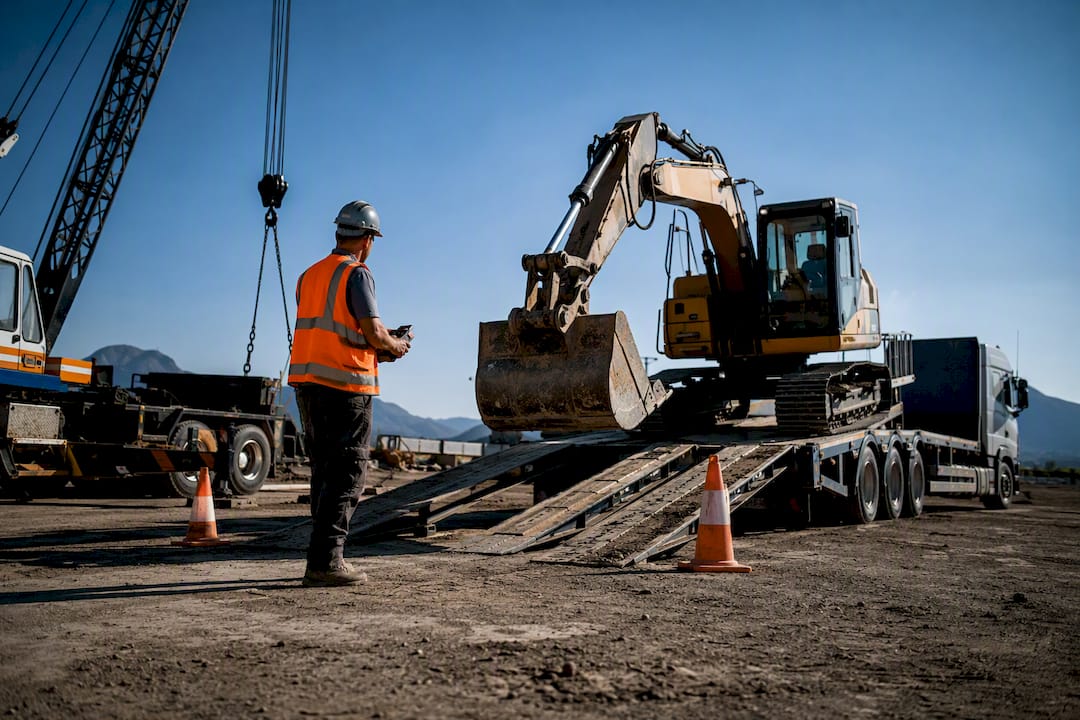
Pro Tip: Ask specifically whether loading and unloading are covered under the transit section. This is one of the most common gaps contractors discover only after a crane drops a compactor onto a flatbed.
When does a construction project actually need this cover?
Timing matters as much as the policy wording. Cover needs typically kick in and shift at three points:
- At contract award, when plant mobilises to site and remains exposed until practical completion.
- Through the defects liability period, when equipment may still be on site for remedial works even though the main contract has closed out.
- During continuous or seasonal hire, when a plant-hire fleet’s exposure rises and falls with demand rather than with a single project timeline.
Many head contracts also force the issue directly. Clauses requiring indemnity to the principal or a waiver of subrogation against the client mean you can’t rely on someone else’s coverage of construction projects. You need your own policy in force before mobilisation, not after.
Basis of valuation: getting the sum insured right
How you value your fleet decides what you actually get paid after a total loss, and this single decision causes more claims disputes than almost any other policy term. Insurers typically offer three bases:
- New replacement value (NRV): pays to replace the item with a new equivalent, regardless of the age of the damaged unit
- Agreed value (AV): a pre-negotiated payout figure, useful for stabilising premiums when resale markets are volatile
- Market value (MV): pays what the used item was worth immediately before the loss, factoring in age and condition
In practice, plant under roughly two years old is often insured on NRV, since replacement cost and market value sit close together at that stage. Older plant frequently shifts to market value, where depreciation can leave a real shortfall against what a replacement machine actually costs. Industry guidance on Plant All Risks treats valuation basis as one of the most contested issues at claims time, precisely because contractors underestimate the gap until a machine is written off.
Recheck your basis annually, or whenever fleet composition changes materially. A checklist that holds up under scrutiny includes current purchase invoices, comparable new-unit pricing, hire-rate history, and photographic condition records.
What a plant policy typically excludes
All risks cover is broad, but “all risks” never means “no exclusions.” Investopedia’s explainer on all-risks coverage makes the point clearly: this style of policy insures against loss unless a specific exclusion applies, which is broader than named-perils cover but still bounded. Expect standard exclusions in these categories:
- Wear and tear categories: gradual deterioration, wear and tear, rust, and inherent defects in manufacture
- Excluded perils: mechanical or electrical breakdown, pollution and contamination, war, and nuclear risks
- Operational exclusions: unauthorised use of plant, and damage traceable to poor maintenance records
Because the insurer usually carries the burden of proving an exclusion applies, a well-documented maintenance history strengthens your position at claim time. Where a genuine gap exists, riders and endorsements can often bring an excluded peril back into scope, machinery breakdown extensions are the most common example contractors add.
Policy conditions and obligations you can’t ignore
Cover only holds up if you meet the conditions attached to it, and insurers treat these obligations seriously. According to policy documentation from Munich Re/HSB, standard obligations include:
- Fair presentation of risk at inception and renewal, disclosing operational use, site conditions, and claims history accurately.
- Maintenance and inspection records, kept current and available on request, since gaps here are a common reason claims get reduced.
- Surveyor access, allowing the insurer’s risk engineer to inspect plant and impose risk-improvement conditions where needed.
- Timing rules, including clauses that set fixed windows (often around 72 hours) for reporting incidents and limits on repair turnaround.
Treat a survey as part of project planning, not an inconvenience. Refusing access or ignoring risk-improvement requirements can lead to reduced settlements or, in serious cases, cancellation. A current risk assessment checklist makes it far easier to walk into a survey prepared rather than reactive.
Optional extensions worth adding to your quote
Standard wording rarely covers everything a working fleet needs, so most contractors negotiate a handful of extensions:
- Hired-in plant and continuing hire charges, so you’re not paying rental fees on a machine that’s off the road for repair
- Substitute or replacement hire cover, which pays for a stand-in machine while yours is being fixed
- Transit and temporary storage wording, checked specifically for loading and unloading gaps
- Expediting costs and debris removal, plus express delivery cover to shorten downtime on a critical path
A breakdown of common plant machinery cover examples shows how these extensions play out against real equipment types, which is a useful reference before you compare quotes.
How do you prepare a proposal for a plant all risks quote?
Getting an accurate quote comes down to the paperwork you bring to the table. Work through these steps:
- Build a plant register: serial numbers, ages, purchase or replacement cost, and current condition for every unit.
- Gather hire agreements: both plant you hire in and plant you hire out, since liability runs differently in each direction.
- Pull maintenance logs: service intervals, repair history, and any outstanding defects.
- Choose your valuation basis: NRV, agreed value, or market value, based on fleet age and how much premium stability you need.
- Ask brokers direct questions: valuation basis options, excess structure per claim type, and territorial or temporal limits on cover.
- Compare endorsements, not just headline premium, across the quotes you receive.
Pro Tip: A transit insurance guide from the logistics sector is worth a read if plant movement between sites is a significant part of your operation. Transit exposure is treated differently from site-based risk in most wordings.
How on-demand plant cover cuts cost for variable operations
Traditional annual PAR policies price for your peak exposure across the whole year, even if half your fleet sits idle for months. That’s expensive when your business runs on short projects or seasonal hire spikes.
Truck & Plant On-Demand™ was built around a different premise: you activate cover for specific machines only when they’re deployed, and adjust it as your operation changes.
- Short projects and seasonal peaks: pay for cover during active periods, not for the full year
- Faster mid-term adjustments: add or remove units as hire contracts start and end, without waiting on a renewal cycle
- Full control: choose what’s insured, when, and how, matched to actual operations rather than an estimate made months ago
Annual PAR still makes sense where a core fleet works continuously, with little seasonal variation. But if your usage swings, on-demand cover, paired with guidance from a fleet risk management resource, closes that cost gap directly.
What actually matters when you’re buying this cover
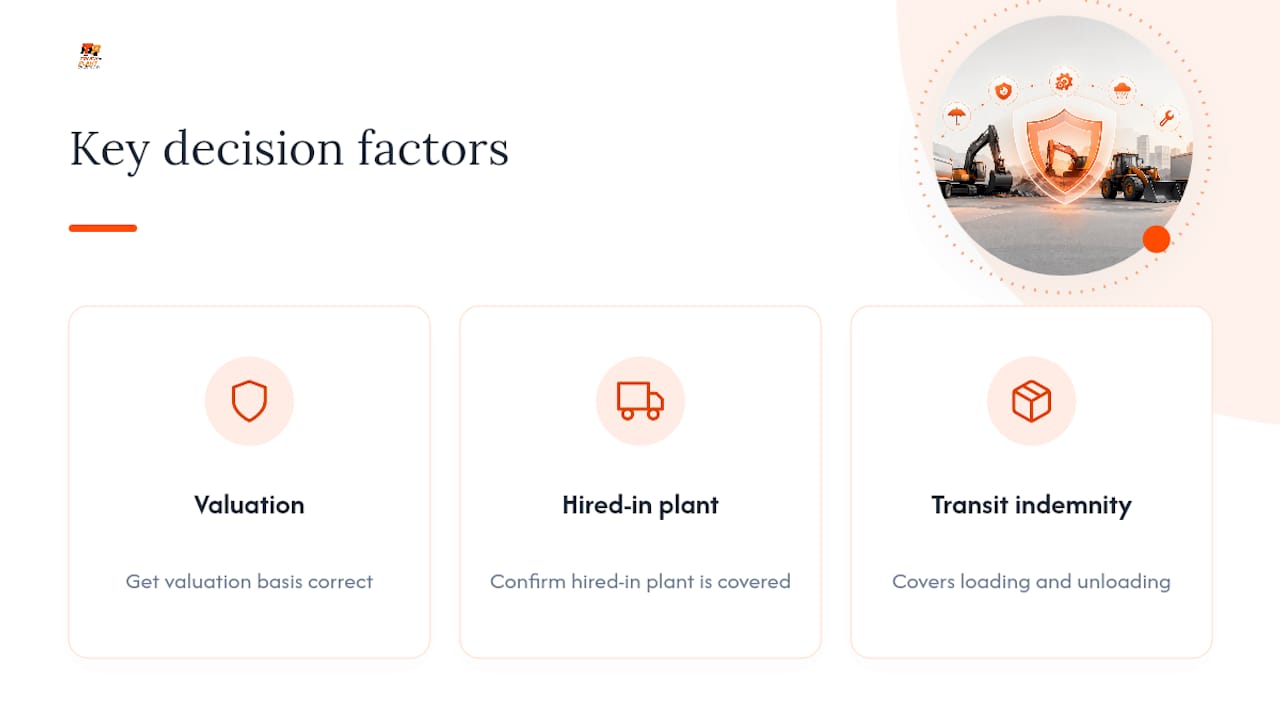
Three things decide whether a plant all risks policy performs when you need it: getting the valuation basis right, confirming hired-in plant is properly covered, and checking transit indemnity extends through loading and unloading. Where your fleet usage swings through the year, on-demand cover is the more sensible fit. Talk to a broker with your plant register and maintenance records ready, not after the fact.
Get on-demand cover built for how your fleet actually works
Annual plant policies charge you for coverage twelve months a year, whether your excavator is on a job site or parked in a yard for six weeks between contracts. Truck & Plant On-Demand™ works differently: you pay for cover when equipment is deployed, and switch it off when it isn’t.

That structure fits contractors juggling multiple short projects, plant-hire operators managing seasonal demand, and fleet operators who don’t want to lock premiums to a full year of coverage they only use in bursts. You control what’s insured and when, adjusting mid-contract as jobs start, finish, or run long. There’s no waiting for a renewal date to fix a gap you’ve already spotted.
If your plant usage varies month to month, get a quote through Truckplant’s fleet insurance page and see how on-demand cover compares against your current annual premium.
Frequently asked questions
Is a plant all risks policy the same as construction insurance?
No. Construction insurance policy packages often bundle contract works, plant, and liability sections together, while PAR specifically covers plant and equipment. Larger projects often need both.
Does plant all risks cover business interruption?
Standard PAR doesn’t include business interruption insurance. If lost income from a damaged machine matters to your operation, ask your broker about advanced loss of profits cover as a separate addition.
What is all risks insurance in simple terms?
It’s cover that responds to loss or damage from any cause unless that cause is specifically excluded in the wording, unlike named-perils cover, which only responds to listed events.
Can I insure plant I’ve hired out to another contractor?
Yes. Most PAR policies allow you to extend cover to plant hired out, though the extent depends on how liability is worded in your hire agreement.
Do I need a new policy for every project?
Not necessarily. Fleet-based cover, particularly on-demand cover, lets you activate and adjust coverage per project without starting a fresh annual policy each time.
Sources
- All-Risks Coverage: What it is, How it Works — Investopedia
- Plant All Risks — key factors to consider — Engineering News