


Premium savings mean paying only for the insurance cover you actually use, rather than a flat annual sum built for a worst-case year. On-demand and usage-based insurance (UBI) reads real telematics data (mileage, hours, driving behaviour) and prices your cover to match, cutting the premium waste baked into traditional annual policies.
If you want a fast, low-risk way to see what this means for your fleet, run a 90-day pilot using your existing telematics feed or a product like Truck & Plant On-Demand™ before switching your whole fleet over.
- Traditional annual cover charges you the same premium every month, whether a truck runs 15,000km or 45,000km.
- Usage-based insurance (UBI) ties your premium to actual exposure and behaviour, and industry analysis of fleet telematics programs shows average annual savings of roughly 15 to 20 percent for fleets that implement them properly.
Pro Tip: Don’t switch your entire fleet on day one. Pilot on-demand cover with your five or ten highest-utilisation vehicles first, then use that data to negotiate the rest at renewal.
Key Takeaways
Premium savings come from matching what you pay to how vehicles and plant are actually used, and telematics-driven fleets report average savings of roughly 15 to 20 percent once behaviour and mileage data feed into underwriting.
| Point | Details |
|---|---|
| Audit before you switch | Pull mileage by VIN, harsh-event frequency, and idle time for 12 months before choosing a model. |
| Match model to fleet type | Use PAYD for lower-mileage or seasonal fleets, PHYD for fleets with coachable driving behaviour. |
| Pilot for 30 to 90 days | Test on a representative vehicle slice before a full switch, and build your renewal case from that data. |
| Coaching compounds savings | Sustained driver coaching turns a first-year discount into larger credits across renewal cycles. |
| Consider on-demand cover | Truck & Plant On-Demand™ activates and bills by actual usage, built for fleets with seasonal or variable operations. |
Table of Contents
- How does usage-based insurance actually generate premium savings?
- Which fleets get the biggest premium savings from on-demand cover?
- What does a real premium savings calculation look like?
- How do you actually roll out on-demand cover across a fleet?
- Why does telematics and driver coaching matter for long-term savings?
- What claims and compliance rules affect on-demand cover?
- How does Truck & Plant On-Demand™ deliver these savings in practice?
- What most fleets get wrong about premium savings
- Get started with pay-for-use fleet cover
- Sources
How does usage-based insurance actually generate premium savings?
On-demand and usage-based insurance work because they replace a single annual guess with continuous, verifiable data. Usage-based insurance uses telematics signals, mileage, driving behaviour, and exposure, to underwrite closer to real risk instead of a fleet-wide average. There are three common models worth knowing:
- Pay-as-you-drive (PAYD): premium scales with distance travelled, best suited to lower-mileage or seasonal fleets.
- Pay-how-you-drive (PHYD): premium scales with behaviour, harsh braking, speeding, night driving, distraction events, rewarding fleets that coach drivers well.
- Hybrid models: blend mileage and behaviour scoring, which most on-demand commercial products now default to.
Insurers turn these signals into dynamic risk segmentation. That means your fleet can move into a lower-risk tier mid-term, get performance credits at renewal, or see retrospective adjustments based on the quarter you actually drove. You still control the levers that shift those numbers: tighter route planning, shift timing that avoids high-risk night hours, idle-time reduction, and structured driver coaching all lower your measured exposure, and your premium with it.
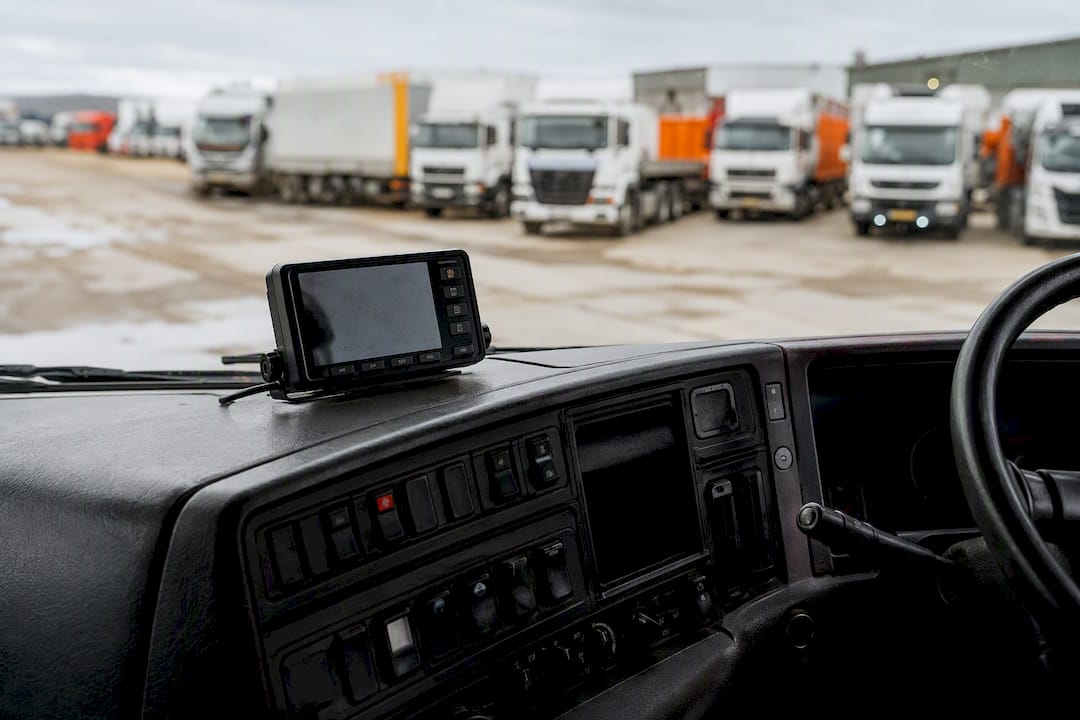
Pro Tip: Check with your insurer which telematics metrics they accept for discounts, some require a certified device or a specific integration standard before any credit applies.
Which fleets get the biggest premium savings from on-demand cover?
Usage-based and on-demand cover rewards variability and improvement, not just size. The best fits share a few traits:
- Low-to-moderate annual mileage, or usage that swings seasonally (plant hire, tool hire, construction subcontractors).
- Regional short-haul routes with predictable idle periods between jobs.
- A genuine commitment to driver coaching, not just a telematics box fitted and forgotten.
- A claims history trending in the right direction, even if it isn’t spotless yet.
If your business runs consistent, high-mileage long-haul routes with poor driving metrics already baked in, don’t expect a windfall. PAYD suits lower-mileage fleets while PHYD suits fleets with coachable driving behaviour, and a fleet with heavy night shifts or high-risk urban delivery routes may see PAYD help immediately while PHYD actually raises cost until behaviour improves. That’s not a reason to avoid UBI. It’s a reason to know your baseline before you commit.
What does a real premium savings calculation look like?
Numbers make this concrete faster than theory. Picture a 20-vehicle regional delivery fleet paying a flat annual premium of $180,000, roughly $9,000 per vehicle, regardless of how each truck is actually used.
- Baseline audit: telematics shows six vehicles run 30% under their rated annual mileage, and average harsh-braking events sit above the insurer’s benchmark.
- Switch to blended PAYD/PHYD cover: mileage-based pricing drops the six underused vehicles’ premiums by roughly 20%, saving around $10,800 across those six trucks in year one.
- Behaviour credit after 90 days of coaching: harsh-event frequency falls, and the insurer applies a further behaviour credit at renewal, typically in the 15 to 20 percent range documented across telematics-driven fleet programs.
- Break-even on hardware: telematics gateways and monthly subscriptions vary in cost, so model your specific device and subscription pricing against expected first-year credits. Most fleets recover that cost within four to eight months once the behaviour credit lands.
The real drivers of savings are mileage reduction, fewer harsh events, shifting hours out of high-risk night windows, and documented coaching improvement your insurer can verify. Behaviour-based scoring alone can produce single-digit to low double-digit premium reductions even before mileage savings are counted.
How do you actually roll out on-demand cover across a fleet?
Moving from curiosity to a working policy change follows a fairly linear path, and rushing it is the single biggest reason pilots underdeliver.
- Audit your baseline data. Pull mileage by VIN, harsh-event frequency, and idle time for the last 12 months.
- Pick pilot vehicles or routes. Choose a representative slice, not just your best-behaved drivers.
- Confirm device and integration requirements. Insurers often need a certified telematics feed or approved hardware before discounts apply, so check this before you invest in new kit.
- Run the pilot for 30 to 90 days. Insurer guidance generally points to a 90 to 120 day runway before renewal to build a credible performance record.
- Measure your KPIs. Mileage trends, event frequency, coaching completion rates.
- Negotiate renewal credits and scale. Bring the data to your broker or insurer directly, then expand to the rest of the fleet.
A sample timeline: Day 0 (audit and vendor selection, fleet manager and IT lead), Day 30 (pilot live, safety lead monitoring), Day 60 (mid-pilot review), Day 90 (data package built), Day 180 (renewal negotiation and fleet-wide rollout). Your insurer-ready report should include mileage by VIN, behaviour scores, and event frequency, presented clearly rather than buried in raw telematics exports. Our telematics guide for fleet insurance breaks down exactly what that package should contain, and renewal timing advice helps you present it at the right moment.
Why does telematics and driver coaching matter for long-term savings?
The first premium credit is only the start. Telematics and coaching create a feedback loop: risky patterns get flagged, coaching addresses them, incidents fall, and underwriters respond with larger credits at each renewal cycle. That compounding effect is where the real premium savings tend to live, not the initial discount.
Fleets that pair basic telemetry with in-cab video build a stronger claims-defensibility record and tend to see faster premium improvement, since disputed incidents resolve faster with footage attached. One pattern shows up repeatedly in coached fleets: harsh-event metrics improve within the first pilot cycle, and by the second renewal, the credit is materially larger than the first.
Statistic callout: Video-enabled telematics paired with structured coaching programs has been linked to double-digit reductions in collision frequency in vendor case studies, strengthening a fleet’s negotiating position at renewal.
Pro Tip: Treat coaching as a permanent program, not a pilot-only exercise. Insurers reward sustained improvement across renewal cycles, not a one-time spike in good behaviour. Our driver safety training guide outlines what a durable coaching program looks like in practice.
What claims and compliance rules affect on-demand cover?
On-demand insurance shifts some administrative weight onto your data pipeline, and getting this right protects the premium savings you’ve earned. Build a claims process around:
- Real-time first notification of loss (FNOL) submitted directly from telematics or a driver app.
- A telematics evidence package: dashcam clips, timestamped mileage logs, and event data tied to the claim.
- Clear chain-of-custody for that data, so it holds up if an insurer or third party disputes the claim.
On the compliance side, keep documented retention policies for telematics and video data, confirm driver consent for monitoring, and check any local reporting rules that could affect insurer acceptance of your data. A partner telematics guide for fleet managers covers device-level setup that supports this.
Pro Tip: Negotiate data format and API access with your insurer upfront, so your telematics vendor can generate insurer-ready exports automatically at renewal instead of a manual scramble.
How does Truck & Plant On-Demand™ deliver these savings in practice?
Truck & Plant On-Demand™ builds the mechanics above directly into the product rather than leaving you to assemble them yourself. It includes:
- Short-term, activate-on-demand cover you switch on and off as equipment or vehicles go in and out of use.
- Per-hour or per-mile billing that tracks actual utilisation instead of a flat annual rate.
- Telematics integrations that feed insurer-ready reporting straight into your renewal conversation.
- Digital claims management for faster FNOL and evidence handling.
A plant-hire business with sharp seasonal peaks can activate cover only for the months equipment is on-site, cutting the off-season premium waste that annual policies force onto every idle unit. A regional delivery fleet that shifts routes away from night hours can see that behaviour reflected in its premium within a cycle or two, rather than waiting a full year for renewal to catch up. Start with a pilot conversation on the Truck & Plant On-Demand™ page.
What most fleets get wrong about premium savings
The conventional pitch on usage-based insurance treats the discount as automatic, something that shows up simply because a telematics box got fitted. It doesn’t. The credit gets earned through documented behaviour change that an underwriter can actually verify, which means the audit stage matters more than most operators assume going in.

The bigger misjudgment is treating on-demand cover as a universal upgrade. It isn’t. A high-mileage, poor-behaviour fleet that switches to PHYD without a coaching program attached can genuinely end up paying more, not less, until the metrics improve. That’s not a flaw in the model. It’s the model working exactly as designed, and it’s why the “who it suits” question deserves more attention than most guides give it.
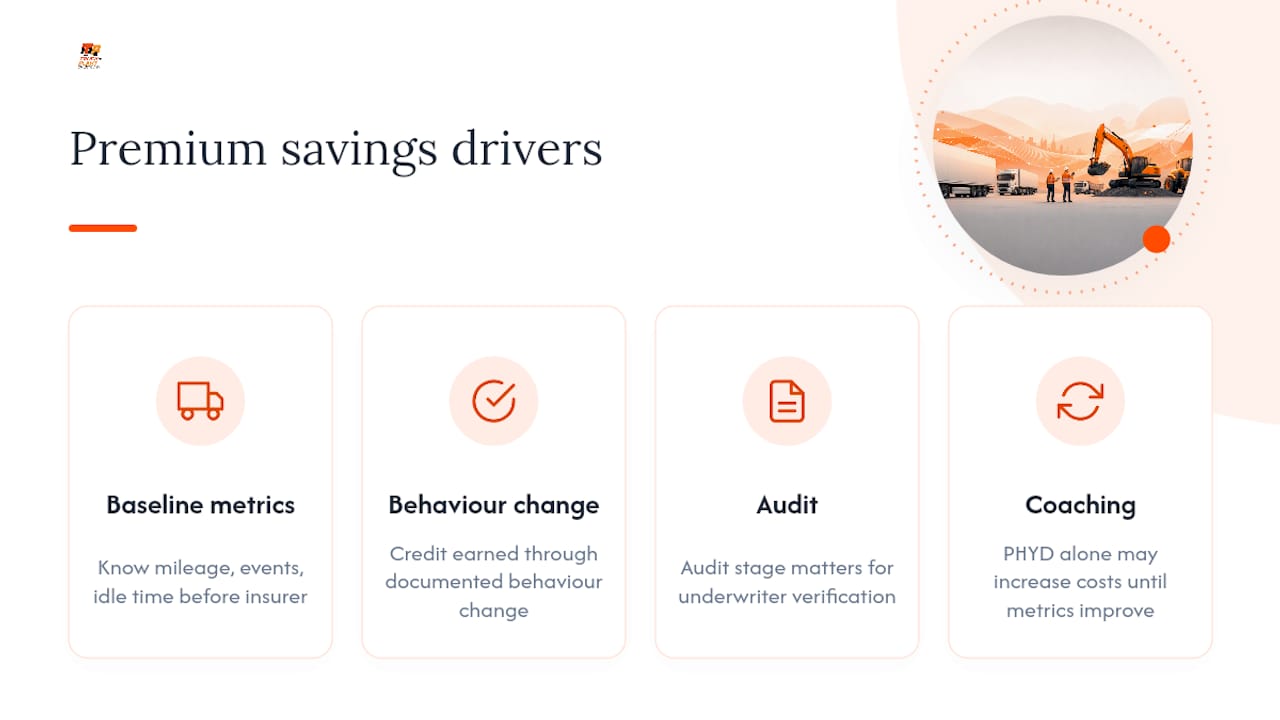
What should come first is boring but decisive: know your baseline mileage, event frequency, and idle time before you talk to an insurer, not after. The fleets that treat telematics as an ongoing operational discipline, not a renewal-season scramble, are the ones seeing savings compound cycle over cycle.
Get started with pay-for-use fleet cover
There are other ways to chase premium savings, tightening driving policies manually, shopping brokers annually, self-insuring smaller risks, but each of those either takes years to show results or shifts risk back onto your business. Truck & Plant On-Demand™ gets you there faster because it prices your cover against real usage from day one, not against a renewal cycle you have to wait a full year to influence.

Whether you’re running a handful of trucks or managing plant equipment across multiple sites, this on-demand structure lets you switch cover on and off as jobs start and finish, so you stop paying for idle risk. It suits owner-run operators just as well as large fleets, because the billing scales with actual use rather than fleet size. If you’ve read this far and recognise your own utilisation patterns in the examples above, the next step is straightforward: visit the Truck & Plant On-Demand™ insurance page and start a pilot enquiry for your highest-utilisation vehicles first.
Sources
- Telematics Insurance Savings: $8K vs $22K — 50-Truck Breakdown | FleetShield
- Usage-Based Insurance Program: The Future of Commercial Auto
- Pay-How-You-Drive Programs for Carriers: UBI Models That Impact Trucking Insurance Premiums – Insurance Curator