


Yes, most transport operators need public liability cover, and it should sit alongside your commercial auto policy, not replace it. Start by mapping where your risk actually lives: on the road, at a loading dock, or after a job is finished. From there, FSCA-authorised insurers and products like Truck & Plant On-Demand™ can help you match cover to those exposures instead of buying a generic package.
TL;DR:
- Public liability covers third-party injuries, property damage, and claims after business operations or at the loading dock, not cargo loss.
- It applies to incidents involving passengers outside the vehicle, damage at clients’ premises, and completed operations, but not goods-in-transit.
- Premium costs depend on vehicle type, route, cargo risk, driver record, and claims history, with documentation influencing renewals.
- Building a layered insurance program requires clear boundaries between public liability, motor, goods-in-transit, and other policies to avoid gaps.
- On-demand insurance offers flexible coverage for seasonal or short-term operations, aligning costs with actual work periods instead of flat annual premiums.
Table of Contents
- What public liability covers for transport businesses
- How public liability differs from motor and commercial auto insurance
- How premiums are calculated and what drives cost
- Structuring cover for transport: a practical checklist
- Exclusions, claims process, and what happens after an incident
- Legal and regulatory requirements for transport operators
- Risk management strategies that reduce your exposure
- Common claims and what they reveal about real exposure
- Why public liability shapes contract negotiations and client trust
- Where on-demand cover fits a layered liability program
- Author perspective: three immediate actions for operators
- Get cover that moves with your operations
- Sources
What public liability covers for transport businesses
Public liability picks up where your motor policy stops. It responds to third-party bodily injury, property damage, and claims arising from your operations off the vehicle itself, including work you’ve already completed. That last part catches operators out more than any other clause.
Think about a shuttle service dropping passengers at a corporate campus. The vehicle is parked, the engine is off, and a passenger slips on a wet step while disembarking. Motor cover won’t respond here because the vehicle wasn’t the cause. Public liability is built for exactly this gap, alongside cases like a forklift damaging a customer’s loading bay during offloading, or a completed haulage job later triggering a claim because cargo wasn’t secured to specification.
Public liability generally applies to:
- Passenger injuries after they’ve left the vehicle
- Damage caused at a customer’s premises during loading or unloading
- Third-party property damage unrelated to a road incident
- Completed operations claims, where the harm surfaces after the job is done
One distinction matters here: public liability is not goods-in-transit cover. If cargo is damaged or lost while moving, that’s a separate policy. Public liability handles what happens to people and property around your operation, not the freight inside your trailer. Operators who assume one policy covers both routinely discover the gap only after a claim is denied.
How public liability differs from motor and commercial auto insurance
The simplest way to separate the two: motor liability covers what happens because a vehicle is being driven; public liability covers what happens because your business is operating, whether or not a vehicle is moving. Transportation insurance treats these as distinct layers for good reason, since a single incident often needs both to respond in sequence.
- Collision on a public road — commercial auto liability responds; it’s a vehicle-in-motion event.
- A delivery driver knocks over stock inside a client’s warehouse while unloading — public liability responds, because the vehicle wasn’t the instrument of harm.
- A passenger is injured boarding a stationary shuttle at a terminal — this usually falls to public liability, since the vehicle is not in transit.
- A completed job later causes damage, like an improperly fitted trailer coupling failing weeks after delivery — completed operations, a public liability extension, carries this.
When an incident straddles both categories, your broker should coordinate the claim across policies rather than let insurers dispute which one leads. That coordination is where a tailored program earns its premium.
How premiums are calculated and what drives cost
Underwriters don’t price transport risk off a flat rate card. Premiums are shaped by multiple factors: your level of cover, turnover, claims history, and the anticipated claims frequency for your specific class of business.
Several operational factors move the number further:
- Vehicle types and fleet age
- Operating radius and whether routes cross provincial or international borders
- Driver records, including licence history and past incidents
- Commodities carried, since hazardous or high-value goods raise exposure
- Claims history over the past three to five years
A shuttle or taxi operator carrying passengers daily faces different rating logic than a long-haul freight contractor hauling containers, and both differ again from an owner-operator running a single truck. Passenger volume, dwell time at stops, and third-party foot traffic all push the shuttle operator’s public liability rating up, even if the vehicle risk looks modest.
Pro Tip: Clean loss runs and a documented driver safety programme are two of the fastest ways to soften a renewal quote. Underwriters price uncertainty, and a tidy submission removes a lot of it.
Transport risk is frequently quoted but not truly understood by insurers working from templates rather than your actual operating pattern. Bundling covers and submitting a fuller operational picture, rather than a bare application form, tends to produce sharper pricing.
Structuring cover for transport: a practical checklist
Building a program that doesn’t leak starts with knowing which exposure belongs to which policy. Layering prevents the gap where two insurers each assume the other is responding, which is exactly where surprises happen at claim time.
- Public liability for off-vehicle third-party injury, property damage, and completed operations.
- Commercial auto for on-road collision and vehicle liability, detailed further in this guide to truck insurance.
- Goods-in-transit for cargo loss or damage while moving.
- Trailer interchange if you regularly swap trailers with other carriers or shippers.
- Hired and non-owned auto if drivers use vehicles you don’t own for company business.
- Completed operations as an extension confirming cover extends past job completion.
- Environmental liability where fuel, chemicals, or waste transport carry contamination risk, covered in more detail in this environmental liability overview.
Before signing, ask your broker three things: what triggers each policy, where the coverage boundaries overlap, and what documentation the underwriter wants to see. Most will ask for driver files, maintenance records, and copies of shipper or client contracts, since contract clauses often dictate minimum liability limits you’re contractually bound to carry. A shipper demanding substantial public liability limits as a condition of the contract isn’t unusual, and failing to meet it can cost you the account before it costs you a claim. The role insurance plays in transport operations becomes clearer once you see cover as contract currency, not just protection.
Exclusions, claims process, and what happens after an incident
Every public liability policy carries exclusions worth checking before you need them, not after. Common ones include contractual liabilities you accepted without insurer sign-off, ordinary wear and tear, intentional acts, and pollution incidents unless you’ve specifically added environmental cover.
When a third-party claim lands, the process usually runs in a predictable sequence:
- Report the incident to your insurer within the policy’s notification window, often within 24 to 48 hours.
- Submit an incident report, photos, witness details, and any CCTV or telematics data.
- The insurer appoints an assessor or investigator to establish liability.
- Reserves are set while the claim is investigated, which can take weeks for straightforward cases or months for disputed injury claims.
- Settlement or repudiation follows once liability and quantum are confirmed.
Late reporting, missing documentation, or inconsistent statements are the fastest ways to see a claim delayed or rejected. Keep driver files, incident logs, and maintenance records current. Insurers read a well-organised claim file as a lower-risk account, which matters again at renewal.
Legal and regulatory requirements for transport operators
Public liability insurance itself isn’t mandated by a single blanket law the way third-party motor cover is tied to road use in some jurisdictions, but transport operators carry layered legal obligations that make it effectively non-optional in practice. Passenger transport operators, freight contractors, and haulage businesses typically operate under permits, operating licences, and contractual terms that assume adequate liability protection is in place.
Client and shipper contracts routinely stipulate minimum public liability limits as a condition of doing business, which functions as a de facto requirement even where statute doesn’t demand it directly. Miss that clause and you’re in breach of contract regardless of whether you caused any actual harm.
Verifying that your insurer or broker is legitimately authorised matters here too. The FSCA regulates financial services providers, including insurers and intermediaries, and checking a provider’s licence status before signing is a quick way to confirm you’re dealing with an authorised entity rather than an unregulated reseller. This becomes especially relevant for operators approached with unusually cheap quotes that seem disconnected from their actual claims exposure.
Regulatory obligations also intersect with industry-specific permits. Passenger transport operators often need operating licences tied to route authority, and many licensing bodies expect proof of adequate liability cover as part of the application or renewal process. Treat your insurance program as part of your compliance file, not a separate administrative task.
Risk management strategies that reduce your exposure
Lowering your public liability exposure starts long before a claim, in the daily habits that shape how incidents happen and how well you can defend against them.
Driver training is the highest-leverage lever most operators underuse. Formal induction on loading procedures, passenger handling, and site-specific hazards at regular client premises cuts the frequency of the incidents that generate claims in the first place. Pair that with scheduled vehicle and equipment maintenance logs, since a failure traced to poor upkeep weakens your defence even when the immediate cause looks accidental.
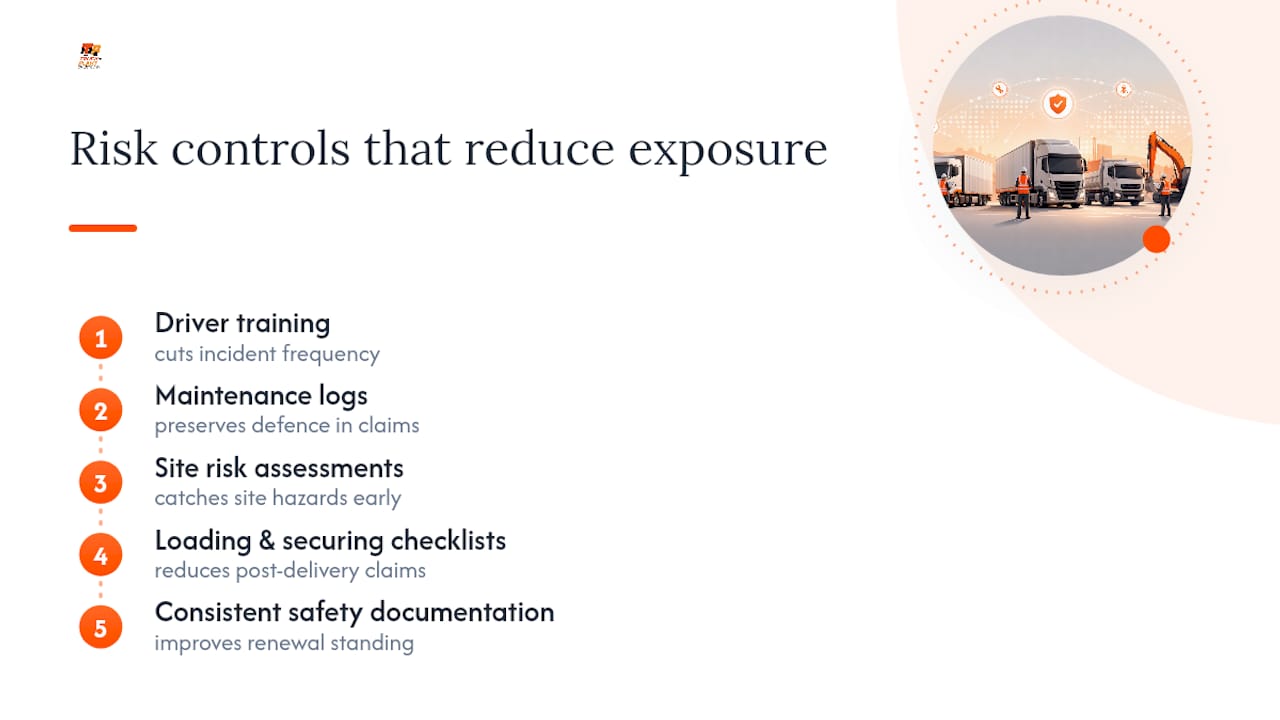
Documented site risk assessments for recurring drop-off points, especially where passengers board or disembark, catch hazards like uneven surfaces or poor lighting before they become claims. For freight operations, standardised loading and securing checklists reduce completed-operations exposure, the kind of claim that surfaces weeks after delivery.
Contract review deserves the same attention. Read indemnity and liability clauses in every shipper or client agreement before signing, since accepting contractual liability beyond what your policy covers creates a gap no insurer will fill after the fact. Strong driver files and consistent safety documentation do double duty here: they reduce actual incidents and they improve your standing at renewal. Operators working with third-party logistics partners, such as those coordinated through Envio 3PL, should extend the same scrutiny to warehouse handoffs and dock procedures, since liability exposure doesn’t stop at your own gate.
Common claims and what they reveal about real exposure
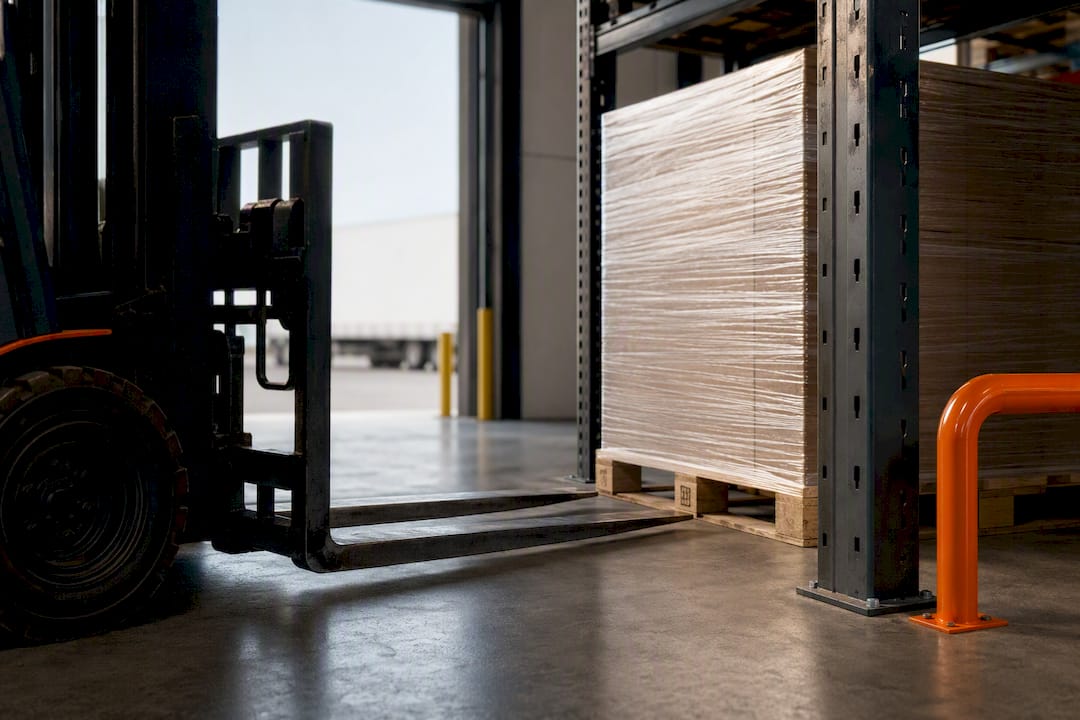
The claims that catch operators off guard tend to share a pattern: the vehicle wasn’t moving when the damage happened. A shuttle operator running airport transfers faces a passenger fall on a boarding step far more often than a road collision claim against the same policy. A freight contractor’s most expensive year rarely comes from a highway incident; it comes from a warehouse forklift damaging racking during offloading, or a completed delivery where inadequately secured cargo shifts and injures someone after the truck has already left.
Completed operations claims are the slow burn of the industry. A haulage contractor delivers steel beams that are later found to have been improperly secured during transit, and the resulting injury claim surfaces a month later, well after the job was invoiced and closed. Without a completed operations extension, that claim finds nowhere to land.
Loading dock incidents at client premises are the most frequent category for general freight and logistics operators, echoing what industry data on general liability for logistics operations consistently shows: off-road exposures at warehouses and docks rank alongside motor risk as a core protection need, not an afterthought. Passenger operators see a different pattern, concentrated around boarding, disembarking, and terminal-adjacent injuries rather than in-transit incidents. Knowing which pattern applies to your operation should shape where you put your risk management effort first.
Why public liability shapes contract negotiations and client trust
Ask any fleet manager who has lost a tender over an insurance clause, and they’ll tell you it happens quietly, often without a second chance to fix it. Corporate clients and shippers increasingly write minimum public liability limits directly into service contracts, and failing to meet that number removes you from consideration before price or service quality even enters the conversation.
Carrying visibly adequate cover does more than satisfy a contract clause. It signals to a prospective client that you understand your operational risk well enough to have priced it properly, which matters more in transport than in most industries because the client is trusting you with their goods, their passengers, or their reputation on-site. Operators who can produce a clear certificate of cover, current limits, and a clean claims history close negotiations faster than those who scramble to source proof after the fact.
The relationship extends past signing, too. A client that later needs to make a claim against your policy is watching how smoothly that process runs, and a well-documented, responsive claims history often decides whether a contract gets renewed the following year. Ground transport partnerships, of the kind detailed in this trade guide to ground transport partnerships, frequently hinge on exactly this kind of liability assurance before a single passenger is ever booked.
Where on-demand cover fits a layered liability program
On-demand insurance lets you insure specific exposures for the periods you actually need them, rather than carrying a flat annual premium for risk that fluctuates with your job book. Truck & Plant On-Demand™ works on that basis: you choose what to insure, when, and adjust as operations change.
That model suits seasonal shuttle operators scaling up for peak travel periods, short-term freight contracts that don’t justify a full annual policy, and rented plant equipment brought onto a transport job for a limited window. Underwriters assessing an on-demand submission will still want driver files and operational detail, the same documentation that improves any renewal.
Used well, on-demand cover becomes one layer in a broader program rather than a replacement for your core public liability and motor policies, filling the gaps that appear when your operations shift faster than an annual contract can follow. Explore how on-demand insurance fits construction and transport operations for a closer look at where it earns its place.
Author perspective: three immediate actions for operators
Most operators over-insure their vehicles and under-insure everything that happens around them. The claims that actually sink transport businesses tend to happen at the loading dock, not on the highway. If you take one thing from this, do it this week: map your off-vehicle exposures, pull together your driver files and loss runs, and call a broker who actually understands transport risk rather than a generalist selling a template policy. If your operations shift month to month, ask specifically about on-demand cover before you renew anything.
— Coert
Get cover that moves with your operations
Traditional annual policies force you to pay for the same limits every month, whether you’re running a full fleet or scaling down between contracts. Truckplant built Truck & Plant On-Demand™ around the opposite idea: you insure what you’re operating, when you’re operating it, and adjust cover as your job book changes.

That flexibility matters most for the exposures this article just covered, seasonal shuttle work, short-term freight contracts, and rented plant brought onto a transport job for a few weeks. Instead of locking into a flat annual premium sized for your busiest month, you control what’s insured in real time through a digital platform built for civil, construction, and transport operators. Whether you’re running one truck or managing a full fleet, the fleet insurance page walks through how on-demand cover slots alongside your public liability and motor policies. Get a quote and see what your operation would actually cost to insure the way you run it, not the way a template assumes you do.
Sources
- How to negotiate insurance premiums during tough financial times — PPS
- Essential tips for South Africans facing increasing insurance premiums — IOL
- Financial Sector Conduct Authority (FSCA)