


TL;DR:
- Insurance transfers financial risk from a business to an insurer, preserving liquidity and operational continuity. To effectively protect assets, businesses must use layered policies like liability, property, auto, and umbrella coverage, combined with legal structures such as LLCs and trusts. Regular reviews and tailored strategies, including life insurance or self-insurance reserves, optimize asset protection for high-net-worth owners.
Insurance is defined as a contractual mechanism that transfers financial risk from a business owner to an insurer, making it the foundational layer of any credible asset protection strategy. For commercial operators in construction, transport, and civil industries, this transfer is not theoretical. A single liability claim, cargo loss, or equipment write-off can deplete years of accumulated capital without adequate cover in place. The role of insurance in asset protection goes beyond paying claims. It preserves liquidity, maintains operational continuity, and keeps your balance sheet intact when the unexpected happens.
What is the role of insurance in asset protection for businesses?
Insurance functions as a financial safety net by absorbing losses that would otherwise force a business to liquidate assets. A study of 1,453 households confirms that insurance preserves investment capital during financial shocks, reducing the need to sell assets at the worst possible time. For business owners, this means your fleet, equipment, and property remain intact even when a major claim lands.

The core mechanism is risk transfer. You pay a premium, and the insurer accepts the financial consequence of a defined loss event. This frees your capital for operations and growth rather than holding large cash reserves as a buffer against every possible risk. Commercial general liability, property insurance, and umbrella policies each address different exposure points across a business.
The impact of insurance on assets is most visible during catastrophic events. A transport company that loses three trucks in a single accident faces a choice without insurance: liquidate other assets or shut down. With the right cover, the insurer absorbs that loss and the business continues. That continuity is the practical definition of asset protection.
What types of insurance are essential for asset protection?
Different asset classes carry different risks, and no single policy covers everything. The most effective asset protection strategies use a layered approach across several policy types.
Core commercial insurance policies for asset protection:
- Commercial general liability (CGL): Covers third-party bodily injury and property damage claims. Standard CGL policies typically provide $1M to $2M in coverage, which is insufficient for businesses with substantial assets.
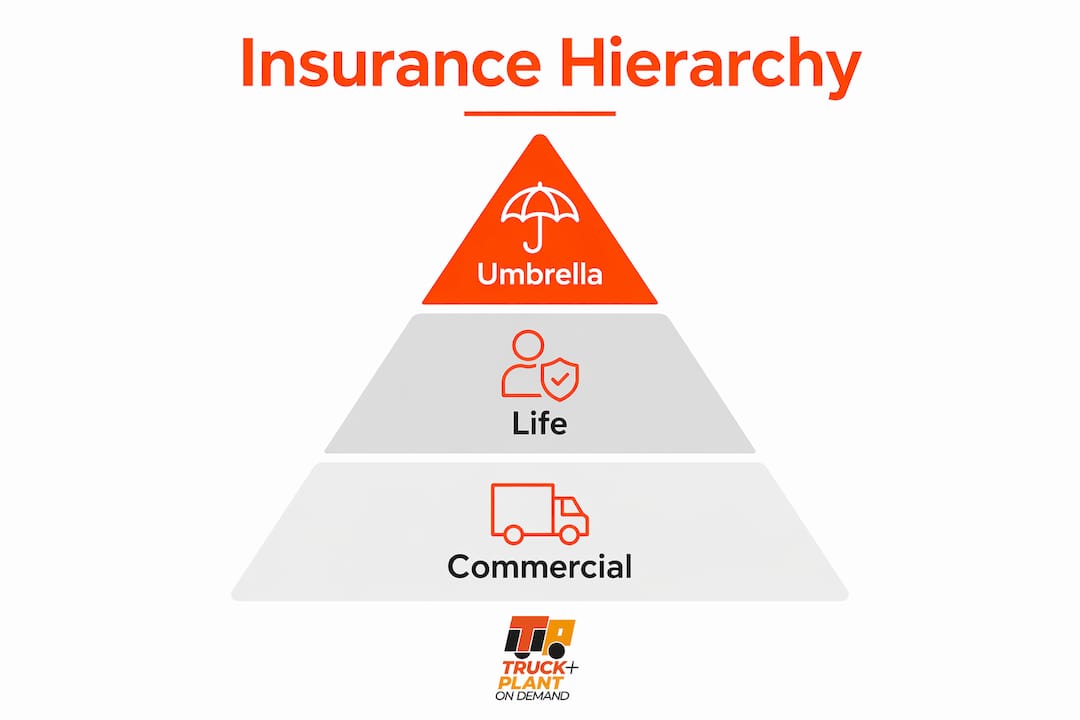
- Umbrella insurance: Extends coverage beyond primary policy limits. Business owners with significant assets should consider umbrella policies of $5M or more to guard against catastrophic claims.
- Business property insurance: Protects physical assets including buildings, machinery, and inventory against fire, theft, and damage.
- Commercial auto and fleet insurance: Covers vehicles used in business operations, including liability and physical damage. Understanding transport fleet cover is critical for operators with multiple vehicles.
- Cargo and inventory-specific cover: New inventory-specific cargo coverage launched in May 2026 offers flat deductibles as low as $10,000, enabling tailored protection without over-insuring specific stock categories.
- Professional liability insurance: Protects against claims of negligence, errors, or omissions in professional services.
Comparing primary policy types by risk coverage:
| Policy type | Primary risk covered | Typical limit range |
|---|---|---|
| Commercial general liability | Third-party injury and property damage | $1M to $2M per occurrence |
| Umbrella insurance | Excess liability beyond primary policies | $5M and above |
| Business property insurance | Physical asset loss or damage | Replacement value of assets |
| Commercial auto / fleet | Vehicle liability and physical damage | Per vehicle or fleet aggregate |
| Cargo / inventory cover | Goods in transit or storage | Declared value with flat deductibles |
Pro Tip: Review your total asset value annually and compare it against your aggregate policy limits. If your combined coverage falls short of your net asset value, you are underinsured and exposed.
How does insurance interact with legal asset protection strategies?
Insurance handles the financial consequence of a claim. It does not prevent a lawsuit from being filed, and it does not shield your personal or business assets from a plaintiff’s attorney who sees a well-insured defendant as a worthwhile target. Insurance visibility can increase your profile as a litigation target, because it signals to opposing counsel that a payout is accessible.
This is the most misunderstood aspect of commercial insurance. Many business owners treat a comprehensive policy as a complete shield. It is not. Insurance pays the claim. Legal structures prevent the claim from reaching your personal assets in the first place.
Effective asset protection combines insurance with legal and structural tools:
- Limited liability companies (LLCs): Separate personal assets from business liabilities, limiting exposure to what is held within the entity.
- Trusts: Remove assets from your direct ownership, making them harder to attach in litigation.
- Equity stripping: Reduces the visible equity in business assets, making them less attractive targets for creditors and plaintiffs.
“Umbrella insurance provides a critical first layer of defense beyond primary policies but should never be the sole asset protection strategy.” — Grit Daily
Relying exclusively on insurance creates a false sense of security. Insurance handles claims but does not prevent litigation escalation. The combination of an LLC, equity stripping, and a well-structured umbrella policy is significantly more effective than any single layer alone.
Pro Tip: Consult both a commercial attorney and an insurance broker when structuring your asset protection plan. Legal and insurance strategies must be designed together, not in isolation.
What are advanced insurance strategies for high-net-worth business owners?
For business owners managing portfolios above $3 million, standard commercial policies are a starting point, not a destination. Advanced strategies use insurance as an active financial instrument rather than a passive safety net.
Life insurance as a business asset
Life insurance for high-net-worth clients serves as a strategic asset that provides tax-efficient liquidity, funds estate taxes, equalises inheritances, and enhances wealth preservation. In a business succession context, a well-structured life policy can fund a buy-sell agreement, preventing forced asset sales when a partner or key owner dies. When structured thoughtfully, life insurance transforms from a safety net into a flexible wealth management and estate planning tool.
Self-insurance for long-term risk
High-net-worth households with portfolios exceeding $3 million can self-insure long-term care risks by setting aside approximately $400,000 to cover median care durations. This approach retains capital if the risk never materialises, unlike traditional premiums which are spent regardless of outcome. The median annual nursing home cost in 2026 is approximately $135,500, meaning reserves must grow to over $800,000 by age 85 for sustained coverage. Self-insuring works when you have the discipline to ring-fence the reserve and the asset base to absorb the risk.
Advanced coverage data for high-net-worth operators:
| Strategy | Applicable threshold | Key benefit |
|---|---|---|
| Umbrella policy ($5M+) | Assets exceeding $2M | Catastrophic liability protection |
| Life insurance (buy-sell funded) | Business with multiple owners | Succession liquidity without asset sales |
| Self-insurance reserve | Portfolio above $3M | Capital retention if risk does not occur |
| Inventory-specific cargo cover | High-value goods in transit | Flat deductibles, no over-insuring |
Pro Tip: If you are paying long-term care insurance premiums and your liquid net worth exceeds $3 million, model the self-insurance alternative with a financial adviser. The numbers often favour retaining the capital.
What practical steps should business owners take to optimise insurance for asset protection?
Knowing which policies exist is not enough. The benefits of insurance in asset safety only materialise when cover is correctly sized, regularly reviewed, and integrated with your broader financial plan.
-
Audit your asset base. List every asset the business owns or depends on, including vehicles, equipment, inventory, intellectual property, and real estate. Assign a replacement or liability value to each. This is your coverage floor.
-
Map your risk exposures. Identify the scenarios that could generate a claim: accidents, cargo loss, professional errors, third-party injury, or natural disaster. Match each risk to a specific policy type and confirm the limit is adequate.
-
Close the underinsurance gap. Underinsurance forces liquidation of investments during emergencies. Proper coverage aligns with long-term financial goals and protects portfolios. Review declared values annually, especially for fleets and equipment where replacement costs rise with inflation.
-
Layer your protection. Combine your primary commercial policies with an umbrella policy and a legal structure such as an LLC. No single layer is sufficient on its own.
-
Review annually and after major changes. Business owners must review their insurance and business structures regularly to identify gaps. A fleet expansion, new contract, or change in revenue all alter your risk profile and may require updated cover.
-
Work with specialists, not generalists. A broker who understands your specific industry, whether transport, construction, or civil contracting, will identify coverage gaps that a generalist misses. The complexities of transport insurance alone require specialist knowledge to navigate correctly.
Pro Tip: Set a calendar reminder every 12 months to review your policy schedule alongside your asset register. Treat it as a financial audit, not an administrative task.
Key takeaways
Insurance is the first and most accessible layer of asset protection, but it only works when cover is correctly sized, regularly reviewed, and combined with legal structures.
| Point | Details |
|---|---|
| Insurance transfers risk | Premiums shift financial loss from the business to the insurer, preserving capital and liquidity. |
| Umbrella cover is non-negotiable | Standard CGL limits of $1M to $2M are insufficient for businesses with substantial assets. |
| Insurance alone is not enough | Combining policies with LLCs and equity stripping prevents litigation from reaching personal assets. |
| Advanced strategies add value | Life insurance and self-insurance reserves serve as active financial tools beyond basic risk cover. |
| Regular reviews close gaps | Annual coverage audits aligned with asset values prevent underinsurance from becoming a liability. |
Why most business owners get this wrong
I have seen business owners spend months negotiating the price of a policy and zero time checking whether the limit actually covers their asset base. That is the wrong priority. A R50 saving on a monthly premium means nothing if your declared vehicle value is 30% below replacement cost when you need to claim.
The other mistake I see consistently is treating insurance as the entire strategy. A well-insured business with no legal structure is still a visible, accessible target. Plaintiffs’ attorneys are not deterred by a policy. They are encouraged by it. The businesses that genuinely protect their assets combine a correctly sized insurance programme with an LLC or trust structure and review both every year without exception.
The 2026 insurance market is offering more tailored options than ever before. Inventory-specific cargo cover with flat deductibles, on-demand fleet cover that adjusts to operational cycles, and umbrella policies structured around specific asset classes all exist today. The tools are available. The discipline to use them correctly is what separates protected businesses from vulnerable ones.
My practical advice: start with the asset audit, not the policy comparison. Know exactly what you are protecting before you decide how to protect it. Then layer your cover, add the legal structure, and review annually. That sequence works.
— Coert
Protect your commercial assets with Truckplant
If your business operates commercial vehicles or plant machinery, your fleet is likely your most significant physical asset. Losing a truck or excavator to an accident, theft, or damage without the right cover in place is not just a financial setback. It is an operational crisis.

Truckplant’s Truck & Plant On-Demand™ gives you full control over your insurance cover. You choose what to insure, when to insure it, and how to structure your cover based on your actual operational needs. Whether you run a single truck or a large fleet, fleet insurance cover through Truckplant adjusts as your business does. You only pay for the cover you need, when you need it. Explore truck insurance options tailored for South African commercial operators and start protecting your assets on your terms.
FAQ
What does insurance cover for business assets?
Commercial insurance covers physical assets against loss or damage, third-party liability claims, cargo in transit, and professional errors depending on the policy type. The specific cover depends on the policy selected and the declared value of the assets insured.
How does umbrella insurance protect business assets?
Umbrella insurance extends coverage beyond the limits of primary policies, providing protection against catastrophic claims that exceed standard commercial general liability limits. Business owners with substantial assets should consider umbrella policies of $5M or more.
Is insurance alone sufficient for asset protection?
Insurance is not sufficient on its own. Combining insurance with legal structures such as LLCs and trusts prevents litigation from reaching personal assets and reduces the risk of being targeted as a high-value defendant.
How often should business owners review their insurance cover?
Business owners should review their insurance and business structures at least annually, and after any major operational change such as fleet expansion, new contracts, or significant revenue growth. Regular reviews prevent underinsurance gaps from forming over time.
What is the difference between self-insurance and traditional insurance?
Self-insurance involves setting aside a dedicated financial reserve to cover potential losses rather than paying premiums to an insurer. It is a viable strategy for high-net-worth business owners whose asset base can absorb the risk, and it retains capital if the insured risk never materialises.