


TL;DR:
- Annual insurance offers cost-effective, comprehensive coverage for high-use, year-round fleet operations.
- On-demand insurance provides flexibility ideal for seasonal, low-mileage, or project-specific equipment needs.
- Combining both policies through a hybrid approach maximizes flexibility while ensuring contractual and regulatory compliance.
Choosing the right insurance structure for your commercial fleet or plant equipment is one of the most consequential financial decisions you make each year. Pay too much for cover you rarely use, and you drain working capital. Underinsure or choose the wrong policy type, and a single claim can cripple your operation. Fleet managers in construction, civil engineering, and transport face this dilemma constantly, especially when vehicle and machinery usage shifts with contracts, seasons, and project timelines. This article gives you a clear framework to evaluate both options and choose the structure that fits your operation.
Table of Contents
- How to evaluate your insurance needs
- Annual vehicle insurance for commercial fleets
- On-demand and short-term insurance options
- Annual vs on-demand: head-to-head comparison
- Situational recommendations for fleet and equipment managers
- What industry experts don’t tell you about flexible fleet insurance
- Flexible insurance solutions for your fleet and equipment
- Frequently asked questions
Key Takeaways
| Point | Details |
|---|---|
| Annual suits high-use fleets | Annual insurance offers reliable coverage and full compliance for continuously operated vehicles. |
| On-demand is best for gaps | On-demand cover saves costs for seasonal or short-term needs but has exclusions that limit regular use. |
| Cost difference is dramatic | Short-term rates can be up to 35 times higher per day than annual, so careful matching is essential. |
| Exclusions affect claims | Short-term policies may not cover hauling, under-dispatch or wear and tear, creating risk for managers. |
| Regulatory minimums matter | Fleet policies must meet $1M CSL and other requirements regardless of insurance model chosen. |
How to evaluate your insurance needs
Before you compare premiums, you need to understand your own operation. The right insurance choice depends on several factors that are specific to your fleet, your contracts, and your risk profile.
Start by mapping your usage patterns. Ask yourself whether your vehicles and equipment run continuously, five to seven days a week, or whether they sit idle between contracts. A tipper truck on a long-term road construction project operates very differently from a crane hired out on short-term plant hire agreements. Continuous, high-frequency operations almost always favour annual cover. Project-based or seasonal fleets are where flexible, on-demand options become worth considering.
Key evaluation criteria to work through:
- Usage frequency: How many days per year is each asset actively deployed?
- Contract requirements: Do your clients or project owners specify minimum cover levels?
- Regulatory compliance: Are you meeting statutory minimums for the routes and loads you carry?
- Fleet diversity: Do you insure trucks, yellow plant, trailers, and tools of trade under one policy or separately?
- Loss history: Have you had frequent claims in the past three years? A poor loss record affects your premium regardless of policy type.
- Risk appetite: Can your business absorb a large excess, or do you need comprehensive cover with a low deductible?
Regulatory and contractual minimums are non-negotiable. Contracts require $1M CSL (combined single limit) regardless of vehicle model or usage frequency. This means even a low-mileage seasonal vehicle must meet the same liability threshold as a daily long-haul truck if it operates under a formal contract.
Pro Tip: Before you request any quote, list every asset in your fleet alongside its average annual operating days. This single step will immediately clarify whether annual or on-demand cover makes financial sense for each unit. You can find more guidance on optimizing fleet premiums and review practical insurance tips for SMEs in construction and transport.
With your evaluation framework established, let’s look at each insurance option in detail.
Annual vehicle insurance for commercial fleets
Annual fleet insurance is the traditional approach. You pay a fixed premium once a year, or in monthly instalments, and your vehicles are covered continuously for the full policy period. For most commercial transport and construction operations, this remains the most practical and cost-effective structure.
What annual cover typically includes:
- Third-party liability up to the required CSL limits
- Physical damage cover (collision and rollover)
- Comprehensive cover including fire, theft, and weather events
- Cargo or goods in transit cover (sometimes as an add-on)
- Cover for named or unnamed drivers within agreed parameters
Annual commercial truck insurance typically costs between $10,000 and $30,000 per truck per year, which prorates to approximately $14 per day. That rate includes liability, physical damage, and cargo cover for continuous operations. When you consider what full coverage costs on a per-day basis, annual policies are significantly more efficient for vehicles that operate regularly.
| Coverage type | Annual cost (per truck) | Prorated daily rate |
|---|---|---|
| Liability only | $5,000 to $10,000 | $14 to $27 |
| Comprehensive (liability + physical damage) | $10,000 to $20,000 | $27 to $55 |
| Full cover (including cargo) | $15,000 to $30,000 | $41 to $82 |
Annual policies are the preferred choice for high-frequency operations because they offer:
- Regulatory certainty: Your cover is always active, so you never risk an uninsured period during a routine inspection or roadblock.
- Contractual compliance: Most large construction contracts and government tenders require proof of continuous annual cover.
- Claims simplicity: There is no ambiguity about whether cover was active at the time of an incident.
- Driver flexibility: Annual policies can be structured to cover multiple drivers, which is essential for fleet operations with shift drivers.
Pro Tip: If your fleet includes both road vehicles and yellow plant machinery, ask your insurer about a combined fleet schedule. Grouping assets under one annual policy often reduces your total premium compared to insuring each unit separately. Explore fleet insurance in South Africa to understand local structuring options, and read more about fleet insurance optimization to identify where you may be overpaying.
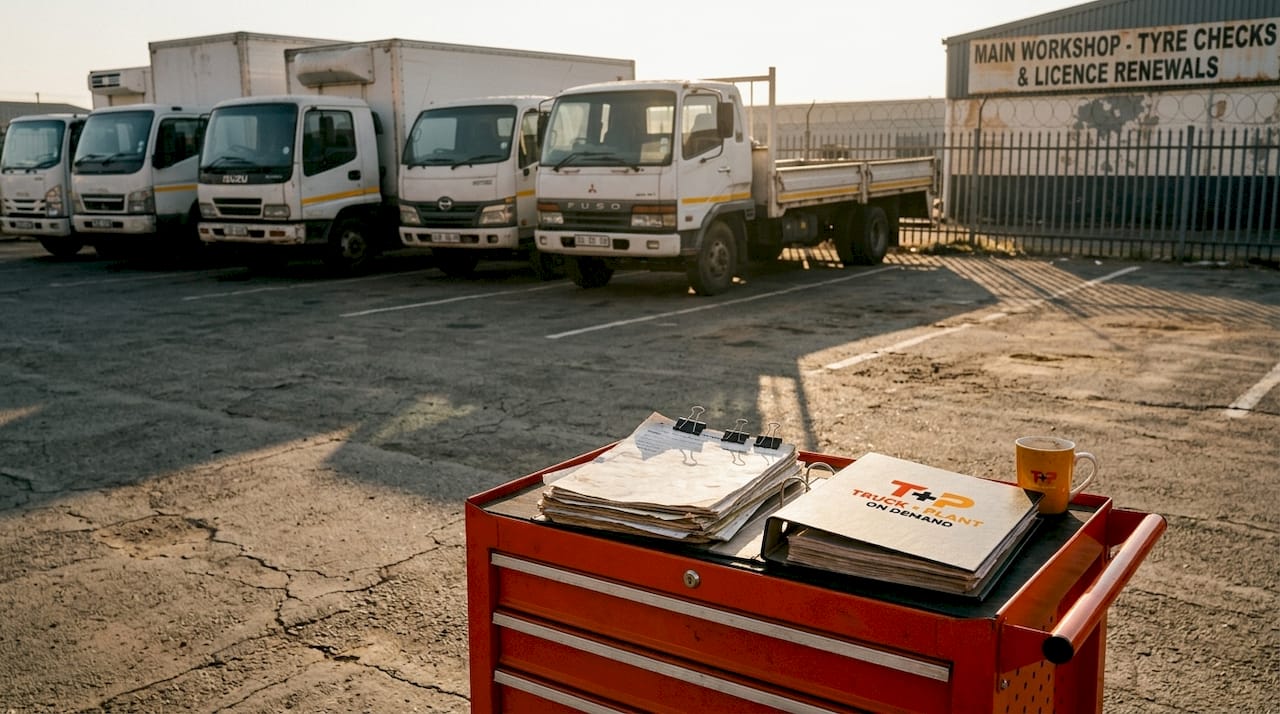
The main downside of annual cover is straightforward: you pay for 365 days whether your assets work 365 days or 90. For businesses with predictable, year-round operations, this is not a problem. For those with significant idle periods, it represents real money left on the table. This is where insurtech for fleet protection is changing the conversation.
Now, let’s examine the alternative: on-demand insurance.
On-demand and short-term insurance options
On-demand insurance, sometimes called short-term or usage-based insurance (UBI), allows you to activate cover for a specific period, typically one to seven days, and pay only for that window. For plant hire companies, seasonal contractors, or businesses covering equipment gaps, this model has genuine appeal.
What on-demand cover typically includes:
- Third-party liability for the activated period
- Optional physical damage cover (at a higher daily rate)
- Cover for a single named driver or operator
- Specified asset cover (one vehicle or piece of plant per activation)
Short-term truck insurance for a one to seven day period costs between $100 and $200 per day for liability only, rising to $500 to $1,500 per day for full coverage. That makes on-demand cover 7 to 35 times more expensive per day than the prorated annual rate. For occasional use, this is still cost-effective. For regular operations, the maths turns against you quickly.
| Coverage type | On-demand daily rate | Annual prorated daily rate | Difference |
|---|---|---|---|
| Liability only | $100 to $200 | $14 to $27 | 4x to 7x higher |
| Full coverage | $500 to $1,500 | $41 to $82 | 7x to 35x higher |
Best-fit scenarios for on-demand cover:
- A civil engineering contractor activating cover for a hired-in excavator for a two-week project
- A transport business covering a borrowed or rented truck during a peak delivery period
- A plant hire company providing short-term cover for a machine dispatched on a short contract
- Seasonal agricultural transport operations that run for three to four months per year
Pro Tip: If you are using on-demand cover for flexible short-term needs, always confirm in writing that the specific use case is covered before activating the policy. The most common cause of claim denials in short-term policies is a mismatch between declared use and actual use at the time of the incident.
The critical limitation of on-demand cover is its exclusions. Short-term policies exclude hauling freight and vehicles operating under dispatch, which creates serious claim denial risk for transport operators. If your truck is carrying goods for reward and you are using a short-term liability policy, you may have no valid cover at all. Understanding the importance of on-demand insurance in construction and transport means understanding these boundaries clearly. For goods in transit cover, always verify that your policy explicitly includes cargo liability.
With both options detailed, it’s time for a direct head-to-head comparison.
Annual vs on-demand: head-to-head comparison
Here is a direct comparison across the factors that matter most to fleet and equipment managers.
| Factor | Annual insurance | On-demand insurance |
|---|---|---|
| Cost per day | Low ($14 to $82) | High ($100 to $1,500) |
| Coverage depth | Comprehensive, broad | Narrower, activation-specific |
| Regulatory compliance | Full, continuous | Conditional, period-specific |
| Exclusions | Fewer, well-defined | More, including freight/dispatch |
| Contractual suitability | High | Variable |
| Flexibility | Low | High |
| Ideal fleet type | High-use, continuous | Seasonal, project-based |
Annual cover suits high-use fleets in transport and construction for full compliance and limits. On-demand and usage-based insurance is ideal for seasonal or low-mileage assets, such as project-based civil engineering equipment, and can cut costs by 20 to 40 percent. However, the narrower scope and behavioural risks of on-demand cover must be weighed carefully.
“The cheapest daily rate is not always the cheapest insurance. A denied claim on an under-insured asset can cost more than a full year of annual premiums.”
Key takeaways from the comparison:
- Annual cover wins on cost for any vehicle operating more than 100 days per year
- On-demand cover wins on flexibility for assets deployed fewer than 60 days per year
- For assets in the 60 to 100 day range, the decision depends on exclusions and contractual requirements
- Neither option replaces the need to verify cover against your actual operational use
Explore a more detailed breakdown of comparing insurance options to see how different fleet profiles map to the right cover structure.
Let’s make your decision process even more practical with specific recommendations.
Situational recommendations for fleet and equipment managers
Use this step-by-step framework to make your insurance decision based on your operational profile.
- Identify your high-use assets. Any vehicle or machine operating more than 150 days per year should be on an annual policy. The cost savings are significant and the compliance benefits are clear.
- Identify your low-use or seasonal assets. Machines or vehicles deployed fewer than 60 days per year are candidates for on-demand cover, provided the exclusions do not conflict with your use case.
- Check your contracts. If a client contract requires continuous annual cover with a specific CSL limit, on-demand cover will not satisfy that requirement regardless of cost.
- Review your exclusions carefully. If your vehicles haul freight for reward or operate under dispatch, short-term policies will likely exclude your most common risk scenarios.
- Consider a hybrid approach. Many fleet operators use annual cover for their core fleet and activate on-demand cover for hired-in equipment, overflow vehicles, or seasonal additions.
- Assess your claims history. If you have had multiple claims in the past three years, on-demand or usage-based insurance may actually cost you more due to premium loading based on behavioural data.
“The most dangerous assumption in fleet insurance is that cover is active. Always verify before you deploy.”
Common edge cases to watch:
- Under-dispatch exclusions: Short-term policies frequently deny claims for vehicles operating under a transport dispatch agreement. This catches many transport operators off guard.
- UBI data risk: Usage-based insurance tracks driving behaviour. Poor data, such as harsh braking or speeding events, can trigger premium increases at renewal.
- Machinery exclusions: Plant machinery policies exclude wear and tear, mechanical breakdown, and consequential losses such as project delays caused by equipment downtime.
For a deeper look at how these considerations apply specifically to your sector, review our guidance on on-demand insurance for construction.
With this actionable guidance, let’s now share a candid industry perspective.
What industry experts don’t tell you about flexible fleet insurance
Here is something the mainstream insurance conversation rarely addresses directly: on-demand insurance is often more expensive than it appears, and the savings are frequently overstated.
The 20 to 40 percent cost reduction cited for usage-based insurance applies to specific, low-utilisation scenarios. It does not apply to most active construction or transport fleets. When you factor in the higher daily rate, the activation friction, and the narrower coverage scope, many operators who switch to on-demand cover for cost reasons find themselves either paying more or discovering coverage gaps at the worst possible time.
The real value of on-demand cover is not in replacing annual policies. It is in supplementing them. The smartest fleet operators we see use annual cover as their foundation and activate short-term cover for specific situations: a hired-in machine, a borrowed vehicle, a peak-season overflow truck. This hybrid approach captures the flexibility benefit without exposing core operations to coverage risk.
There is also the behavioural data question. Usage-based insurance products collect telematics data on how your drivers operate. In theory, good behaviour lowers your premium. In practice, any data anomaly, a hard brake on a gravel road, a speed event on a downhill gradient, can be flagged and used to justify a premium increase. If your operation involves rough terrain, heavy loads, or challenging road conditions, UBI data may work against you even when your drivers are operating correctly.
The exclusions issue is the most underappreciated risk. Operators in transport and construction often assume that having some insurance means they are covered. But a policy that excludes freight hauling or under-dispatch operations provides no protection for the most common risk events in those sectors. Understanding the fine print is not optional. It is the difference between a paid claim and a financial crisis.
The insurtech revolution in fleet protection is genuinely changing what is possible in commercial insurance. But technology does not remove the need for careful policy selection. It makes it more important.
Flexible insurance solutions for your fleet and equipment
If you are managing a fleet of commercial vehicles, trucks, or yellow plant machinery and you are tired of paying for cover that does not match your actual operations, Truck & Plant On-Demand™ was built specifically for you.
We offer both annual and on-demand cover tailored to the civil, construction, and transport industries. Whether you need continuous cover for a high-use fleet or flexible activation for seasonal plant equipment, you stay in control of what you insure, when you insure it, and how much you pay. Our platform lets you switch, adjust, and activate cover as your operational needs change, so you never pay for a day of cover you do not need. Explore our fleet insurance options or get a tailored quote for truck insurance in South Africa today.
Frequently asked questions
How is on-demand fleet insurance priced compared to annual cover?
On-demand truck insurance costs between $100 and $200 per day for liability only and up to $1,500 per day for full coverage, making it 7 to 35 times more expensive per day than annual policies prorated. It is cost-effective only for infrequent or short-term deployments.
What coverage exclusions apply to short-term insurance?
Short-term policies exclude hauling freight and vehicles operating under dispatch, and machinery policies commonly exclude wear and tear, mechanical breakdown, and consequential losses such as project delays. Always verify your specific use case is covered before activating.
When should I choose annual insurance for my fleet?
Annual insurance is the right choice for vehicles used regularly and continuously throughout the year, and for any fleet that must demonstrate full compliance with contractual CSL requirements or statutory coverage limits for transport and construction operations.
Can on-demand policies be used for seasonal or project-based work?
Yes, on-demand cover suits seasonal assets and project-based civil engineering equipment well, with potential cost savings of 20 to 40 percent compared to annual cover. However, always confirm that contractual minimum cover requirements are met before relying on short-term activation alone.