


TL;DR:
- Proper risk understanding and documentation are crucial to avoid insurance gaps and costly claims.
- Choosing between annual and specific CAR policies depends on project volume and value.
- Verifying cover for hired plant, exclusions, and accurate sum insured protects against underinsurance and liabilities.
Running a construction business in South Africa means navigating real financial exposure every single day. The sector reached R47 billion in 2024, and with growth comes greater risk. Theft alone cost the industry R1.2 billion in 2023, and that figure doesn’t account for storm damage, third-party liability, or equipment breakdowns. Getting your insurance right isn’t just about ticking a compliance box. It’s about making sure every rand you spend on premiums delivers real, targeted protection. This checklist walks you through the decisions that matter most, from choosing the right policy type to verifying your sum insured.
Table of Contents
- Build your checklist: Key criteria and first steps
- Annual vs. specific CAR cover: Which fits your projects?
- Checklist item: Verify cover for hired plant and equipment
- Review exclusions, sum insured, and escalation clauses
- Final checklist: Broker comparison, documentation, and renewal
- Our perspective: What most checklists miss about construction insurance in South Africa
- Protect your projects with tailored insurance solutions
- Frequently asked questions
Key Takeaways
| Point | Details |
|---|---|
| Assess project coverage | Choose between annual or specific insurance based on project volume and value. |
| Disclose full details | Provide accurate project, location, and equipment info to avoid reduced payouts. |
| Understand exclusions | Check for gaps like wear, faulty design, and hired plant so risks aren’t left uncovered. |
| Use escalation clauses | Add escalation so rising costs don’t leave you underinsured if disaster strikes. |
| Regularly compare options | Review brokers, terms, and sums insured yearly—or per project—to stay protected and competitive. |
Build your checklist: Key criteria and first steps
To lay the groundwork for tailored cover, let’s kick off your checklist with the essential first steps.
Before you request a single quote, you need to know exactly what you are insuring, how your business operates, and what risks you carry. Skipping this step is where most construction businesses go wrong. They end up with either too much cover they don’t need or critical gaps they only discover during a claim.
Here’s how to start building your checklist:
- Identify your project types. Do you run multiple smaller projects throughout the year, or do you take on one or two large contracts? This distinction directly determines which type of contractors all risk (CAR) policy suits you.
- Document project details accurately. Full disclosure is not optional. Include project size, physical location, timeline, subcontractor involvement, and any unusual risk factors. Incomplete information can void a claim.
- Research brokers who work with major insurers. South Africa’s market is served by major underwriters like Santam and Hollard. Working with brokers who have access to these insurers gives you more competitive options.
- Review common exclusions before you sign. Most policies exclude wear and tear, faulty design, and unlawful acts. Understanding what isn’t covered is just as important as knowing what is.
- Verify your sum insured. Your cover amount must reflect the actual rebuild cost of your project, not the original budget estimate. If costs escalate mid-project and your sum insured doesn’t keep pace, you face pro-rata payouts on any claim.
Understanding these essential construction cover types upfront saves you from costly surprises later. Many business owners treat insurance as a commodity purchase rather than a risk management decision. That mindset is expensive.
Pro Tip: Before speaking to any broker, prepare a one-page project summary. Include your annual contract value, the average number of active projects at any time, the types of plant and equipment you use, and your typical subcontractor arrangements. This gives brokers what they need to provide accurate quotes rather than broad estimates.
It also helps to apply the same discipline you would use with a warehouse risk checklist to your on-site operations. Systematic risk identification before you get to the insurance conversation always produces better outcomes.
Annual vs. specific CAR cover: Which fits your projects?
With the basics in place, the next key question is the type of CAR policy that matches your business model.
Contractors all risk insurance comes in two primary structures, and choosing the wrong one can cost you significantly. Each has a clear use case depending on your business model and project profile.
| Feature | Annual CAR policy | Specific CAR policy |
|---|---|---|
| Best for | Multiple projects per year | Single high-value project |
| Premium range | R20,000 to R100,000 per year | R5,000 to R50,000 per project |
| Admin load | Low (one policy covers all) | Higher (new policy per project) |
| Flexibility | Moderate | High for unique risk profiles |
| Risk customisation | General across all projects | Tailored to one site |
The premium ranges and policy structures reflect real differences in how risk is calculated. An annual policy smooths out the administrative burden for contractors who are always busy. A specific policy lets you price the cover precisely to the risks of one site without carrying unrelated risk in the same policy.
Key factors to weigh when deciding:
- Project value. A single contract worth R50 million warrants its own dedicated policy with specific terms.
- Location-specific risks. Coastal projects carry flood and corrosion risk. Urban sites face higher third-party liability exposure. Both affect premium calculations differently under annual versus specific policies.
- Subcontractor relationships. If subcontractors carry their own cover, your risk profile under an annual policy changes. Make sure your broker understands this.
- Cash flow. Annual premiums spread the cost predictably. Specific policies concentrate the premium cost at project start, which matters for smaller businesses managing cash flow carefully.
Staying current with insurance trends for risk management in the construction sector helps you anticipate how these choices evolve. Insurers are updating their pricing models as climate risk data improves, which affects coastal and flood-prone project quotes in particular.
Pro Tip: If you use a specific policy as a top-up for an exceptionally high-value project on top of your existing annual cover, make sure both policies clearly define which one responds first in a claim. Overlapping cover without clear priority terms creates disputes at the worst possible time.
For businesses exploring how construction sector risk management intersects with insurance decisions, the choice between annual and specific cover is often the most consequential one you’ll make in your insurance review.
Checklist item: Verify cover for hired plant and equipment
Having decided your main policy type, let’s ensure you don’t overlook an area where liability risks are rising fast: hired plant and equipment.
This is one of the most common gaps we see in construction insurance arrangements. A contractor hires an excavator for a six-week project. The machine is damaged on site. The hire company’s own insurance doesn’t cover the damage because the liability transferred to the contractor at the point of hire. The contractor’s CAR policy also doesn’t respond because hired plant wasn’t explicitly included.
The result: an uninsured loss that could run into hundreds of thousands of rands.
Here are the questions your checklist must address for hired plant:
- Does your current CAR policy include hired plant? Many standard policies exclude it or limit cover to owned equipment only.
- What does your hire contract say? The Construction Plant Hire Association (CPHA) standard conditions shift liability to the contractor for loss or damage from the moment equipment leaves the hire company’s yard.
- Do you need a policy extension? If hired plant isn’t covered, ask your broker specifically about adding a hired-in plant extension to your existing policy.
- What is the replacement or repair value of the equipment? Your extension cover needs to match this figure, not an estimate.
“The CPHA standard conditions are widely used in South Africa’s plant hire industry. Under these terms, the contractor takes on full responsibility for the hired equipment from collection to return. This liability doesn’t disappear just because you have a CAR policy. You need to verify the extension explicitly covers hired plant.”
Review your plant hire insurance options carefully, especially if your business regularly relies on hired equipment rather than owned assets. The distinction matters enormously when a claim arises.
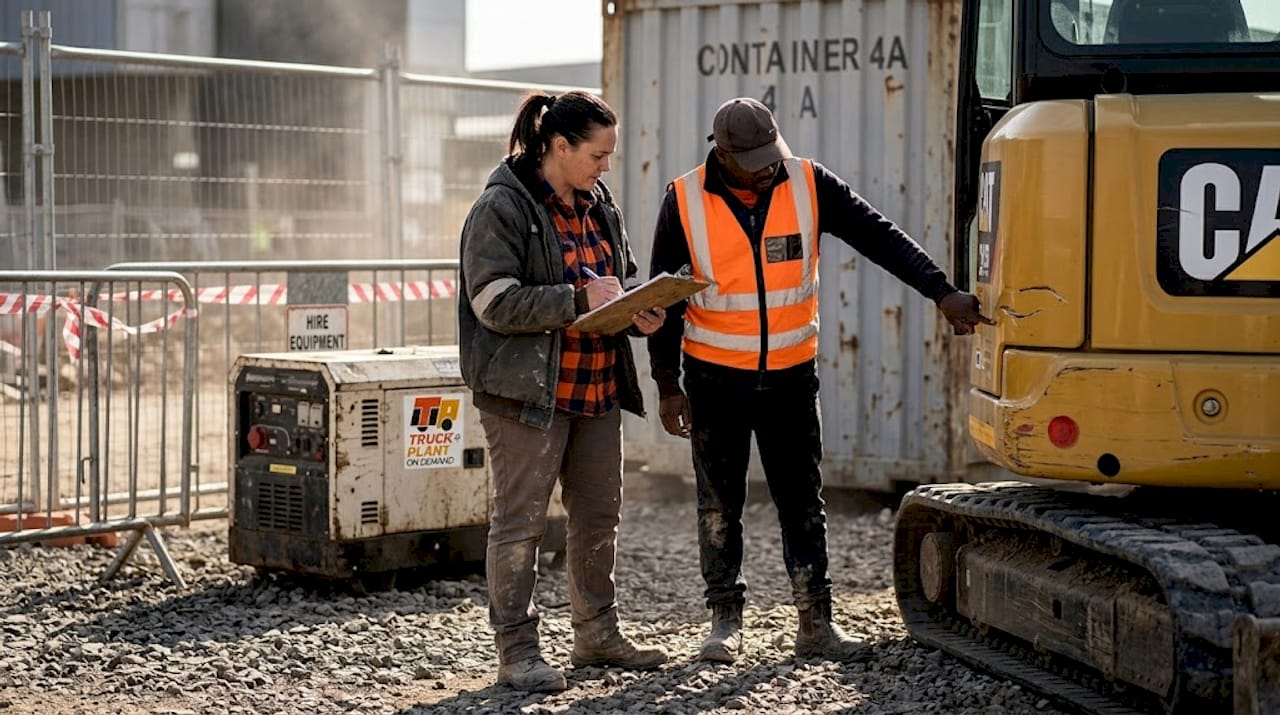
Pro Tip: Request a copy of the hire company’s standard terms before any project begins. Hand these to your broker and ask them to confirm in writing whether your policy responds to the liabilities in those terms. This takes ten minutes and can prevent enormous disputes later.
Understanding why on-demand construction insurance is gaining traction makes sense in this context. When your hired equipment exposure changes project to project, fixed annual cover structures don’t always reflect your actual risk at any given time.
Review exclusions, sum insured, and escalation clauses
Once cover types and add-ons are squared away, it’s critical to examine the details that could undermine your protection when it matters most.
Even a well-structured policy can leave you exposed if the fine print contradicts your expectations. Three areas deserve particularly close attention: exclusions, the sum insured, and escalation clauses.
Common exclusions to review:
| Exclusion type | What it means for your claim |
|---|---|
| Wear and tear | Gradual deterioration is not covered, even if equipment fails on site |
| Faulty design | Damage caused by design errors is excluded from most standard CAR policies |
| Unlawful acts | Any loss arising from illegal activity on site will not be paid |
| Consequential loss | Loss of income or delay costs from an insured event are usually excluded unless specified |
| War and civil unrest | Relevant in some South African contexts depending on project location |
How to manage your sum insured correctly:
- Base it on rebuild cost, not market value. For plant and equipment, insure the replacement cost, not what you’d get selling it today.
- Apply an escalation clause. A 10% annual escalation clause protects you from underinsurance as material and labour costs rise during a long project.
- Review annually. Construction costs in South Africa have risen sharply. A sum insured that was accurate 18 months ago may already be inadequate.
- Understand pro-rata consequences. If you are insured for R8 million but your rebuild cost is R10 million, any claim payout is reduced proportionally. A R2 million claim becomes a R1.6 million payout.
This is not a technicality. It is a real financial risk that catches businesses off guard regularly. Your insurance checklist for transport and plant assets should include a formal annual valuation review as a standard line item.
Pro Tip: Ask your broker to explain the underinsurance clause in plain language before you sign. If they can’t explain it clearly, that’s a signal to ask more questions or consider a different broker.
Final checklist: Broker comparison, documentation, and renewal
With all aspects explored, here’s a unified, actionable checklist for implementation.
This section brings together everything covered above into a sequence you can follow for any new project or annual renewal.
Your implementation checklist:
- Select and compare brokers. Get a minimum of three quotes. Ensure each broker can access major insurers and confirm cover against rebuild costs. Don’t compare only premiums. Compare what each policy actually covers.
- Gather your documents. You’ll need project specifications, site plans, equipment schedules, subcontractor details, and proof of ownership or lease agreements for all plant.
- Review policy exclusions in detail. Read the exclusions list before accepting any quote. If something critical to your operations is excluded, negotiate or find a different insurer.
- Confirm your sum insured. Apply current rebuild cost estimates, not original budget figures. Add your escalation clause.
- Clarify hired plant cover. Confirm in writing whether your policy covers hired equipment and under what conditions.
- Set renewal reminders. Annual policies should be reviewed 60 days before renewal, not the week before. This gives you time to compare the market properly.
- Store documents accessibly. Keep policy documents, certificates of insurance, and claim contact details in a central, accessible location. A shared digital folder works well for teams.
| Checklist item | Action owner | Timing |
|---|---|---|
| Broker comparison | Business owner | 60 days before renewal |
| Document preparation | Site manager/admin | Before policy application |
| Sum insured review | Owner with broker | Annually and per new project |
| Exclusions review | Owner with broker | Before signing |
| Hired plant confirmation | Owner with broker | Each new hire arrangement |
Reviewing comparing construction insurance types each renewal cycle ensures your cover keeps pace with how your business evolves. A business that has grown from three to eight active projects needs a fundamentally different insurance structure than when it started.
Pro Tip: Assign one person in your business as the insurance administrator. This person manages renewal dates, stores documents, liaises with your broker, and owns the checklist. Distributed responsibility means no responsibility.
Our perspective: What most checklists miss about construction insurance in South Africa
Bringing together these steps, it’s worth sharing a candid perspective from the ground.
Most insurance checklists focus on what to buy. Very few focus on what to verify. That’s where the real risk lives.
The biggest losses we see aren’t from catastrophic events. They’re from underinsurance discovered at claim time, liability transferred through subcontracting arrangements that nobody read carefully, and hired plant damage that fell through the gap between two policies.
Standard checklists also overlook the difference between a generalist broker and a specialist broker. A generalist can get you covered. A specialist in practical risk management for construction understands the nuances of CAR policies, CPHA hire conditions, and project-specific risk profiles. That knowledge translates directly into better cover at more competitive premiums.
The uncomfortable truth is that many South African construction businesses are paying for cover that doesn’t match their operations. They’ve never had a claim, so they assume everything is fine. The checklist isn’t there to make insurance more complicated. It’s there to make sure that when you do need your cover to respond, it actually does.
Protect your projects with tailored insurance solutions
If you’re ready to put your checklist into practice and want peace of mind for your site, the right partner makes all the difference.
At Truck & Plant On-Demand™, we built our platform specifically for the civil, construction, and transport industries. You pay for cover when you need it and adjust your protection as your projects change. No fixed premiums for assets that aren’t active. No gaps when your exposure increases.
Whether you need fleet insurance options for your commercial vehicles, truck insurance cover for your haulage fleet, or tool of trade insurance for your on-site equipment, we have tailored solutions ready for you. Get in touch today and let’s build a cover structure that matches how your business actually operates.
Frequently asked questions
How do I choose between annual and specific construction insurance?
Select annual cover if you manage multiple projects throughout the year. Opt for specific cover for a single high-value site or as an additional layer on top of existing cover.
What is usually excluded from construction insurance policies?
Most policies exclude wear and tear, faulty design, unlawful acts, and often hired plant equipment unless a specific extension is added.
Why is an escalation clause important in construction insurance?
An escalation clause ensures your sum insured keeps pace with rising material and labour costs, protecting you from pro-rata payout reductions if you need to claim.
How big is the construction sector’s risk in South Africa?
South African construction firms faced R1.2 billion in theft losses in 2023, and with the sector valued at R47 billion in 2024, the financial exposure for uninsured or underinsured businesses is substantial.
What key documents do I need for my insurance application?
You’ll need project specifications, equipment ownership or lease documentation, site plans, subcontractor details, and broker comparison quotes to support a complete and accurate application.