


Crane collapse insurance claims typically draw on several policies at once, including builder’s risk, commercial general liability, contractor’s equipment cover, and workers’ compensation. The party or parties liable often only become clear after investigation, so notify every insurer that may have been on risk, preserve the scene and every log before cleanup starts, and get legal or broker guidance before signing anything an adjuster hands you.
TL;DR:
- All insurers involved in a crane collapse claim must be notified immediately to preserve evidence and avoid coverage disputes, including past-policy carriers if applicable.
- Understanding which policies respond to specific damages is crucial, as builder’s risk covers structural loss, CGL addresses third-party injuries, and equipment coverage applies to the crane itself.
- Most disputes hinge on exclusion clauses, but an ensuing loss exception may cover damages caused by initial defects if properly documented with clear timelines and expert opinions.
- Collecting pre-collapse documents such as lift plans, maintenance logs, and witness statements early on is essential to determine causation and support recovery efforts.
- On-demand insurance models that track actual site activity improve claims documentation readiness, minimizing gaps and delays during the critical first 72 hours after an incident.
Table of Contents
- Immediate steps after a crane collapse: the first 24 to 72 hours
- Which insurance policies can respond and what each typically covers
- Policy exclusions and the ensuing loss exception
- How investigations work: the evidence that decides your claim
- Liability, remedies, and realistic damages after a crane collapse
- Responding to a reservation of rights or denial letter
- Claim-preparation checklist: what strengthens your case
- Why on-demand cover changes how claims get documented
- What actually matters in the first 72 hours
- Get cover that matches how you actually operate
- Sources
Immediate steps after a crane collapse: the first 24 to 72 hours
What you do in the first three days shapes the entire claim. Insurers, engineers, and regulators will all ask the same question later: was the scene preserved before anyone touched it?
Start with safety, not paperwork. Once the site is secure, move fast on evidence and notice.
- Call emergency services and regulators where required. A collapse involving injury or significant property damage usually triggers mandatory reporting duties under local occupational health and safety rules.
- Secure and preserve the scene. Cordon off the area, stop cleanup, and resist the urge to move debris until photographs and measurements are taken.
- Notify your broker and every insurer that could be on risk. This includes past-year carriers if the failure may trace back to work performed earlier, since construction insurers expect immediate notice and delayed reporting can jeopardize coverage under claims-made policies.
- Collect the human and mechanical evidence. Witness names and contact details, weather conditions at the time of the lift, the lift plan, and the operator’s daily log all matter.
- Put everything in writing. Follow up phone calls to insurers with an email summary and ask for written confirmation of receipt.
A few supporting habits make the difference between a clean claim and a drawn-out dispute:
- Photograph the crane, the load, rigging, outriggers, and ground conditions from multiple angles before anything moves.
- Pull maintenance and inspection records for the crane going back at least twelve months.
- Identify every contractor, subcontractor, and equipment owner on site, since notifying all potentially involved insurers across policy years protects your position if the root cause predates the collapse.
- Keep a single, dated log of every call, email, and document exchange related to the incident.
Pro Tip: Assign one person on your team to own communications with insurers from hour one. Mixed messages from different employees are one of the fastest ways to give an adjuster a reason to dispute your account of events.
Which insurance policies can respond and what each typically covers
Crane accident claims rarely rest on a single policy. Understanding which cover applies to which loss lets you push the right claim toward the right carrier instead of waiting on one insurer to sort it out for you.
- Builder’s risk insurance covers physical loss to the structure or materials under construction. It typically responds to collateral damage from a collapse but can exclude the cost of redoing defective work itself, which is worth understanding before you assume full coverage.
- Commercial general liability (CGL) covers third-party bodily injury and property damage caused by the project, including damage to neighboring buildings, vehicles, or pedestrians struck by falling equipment or debris.
- Contractor’s plant and equipment cover (a form of inland marine insurance) responds to physical loss or damage to the crane itself, separate from any liability the collapse creates for third parties.
- Workers’ compensation covers medical costs and lost wages for employees injured in the collapse, generally regardless of fault, though it usually caps what an injured worker can recover directly from their employer.
Because these policies were often written by different insurers, notify all of them rather than guessing which one will pay. Specialized construction claims teams exist precisely because complex losses like a crane collapse frequently touch multiple coverage lines at once, and sorting out which policy pays for what is easier when every relevant insurer already has notice. Reviewing your construction insurance policy types before a loss happens, rather than after, makes this step far less stressful.
Policy exclusions and the ensuing loss exception
Most disputes in crane collapse claims come down to exclusion language, not the collapse itself. Insurers routinely exclude faulty workmanship, wear and tear, and damage to the contractor’s own tools or equipment.
Here’s the exception that changes outcomes for many claimants: an ensuing loss carve-out. If defective rigging causes a crane to fail, and that failure then damages otherwise sound work or property, the resulting damage may still be covered even though the original defect would not be. Builder’s risk policies commonly pair a faulty workmanship exclusion with this ensuing-loss language, and proving the distinction is often where the real negotiation happens.
Practical evidence that supports an ensuing-loss position includes:
- A clear timeline separating the initial defect from the subsequent covered peril.
- Engineering opinion tying the collapse to a specific mechanical or structural cause distinct from the excluded workmanship.
- Photographs showing damage to property that was not part of the defective work itself.
Crane failures carry real stakes. National data on fatal occupational injuries involving cranes shows why insurers scrutinize these claims so closely: the severity of typical crane accidents means both sides usually bring engineers and legal counsel to the table early.
How investigations work: the evidence that decides your claim
Crane collapse investigations lean heavily on documents that existed before the collapse, not just what happened afterward. Whoever preserves that paper trail first usually controls the narrative.
Engineers and accident reconstruction specialists will want the crane’s load chart, the site-specific lift plan, and any deviation from either. Maintenance logs, inspection certificates, and operator training and certification records often prove decisive, since these documents frequently determine whether the failure traces to mechanical defect, operator error, or ground condition.
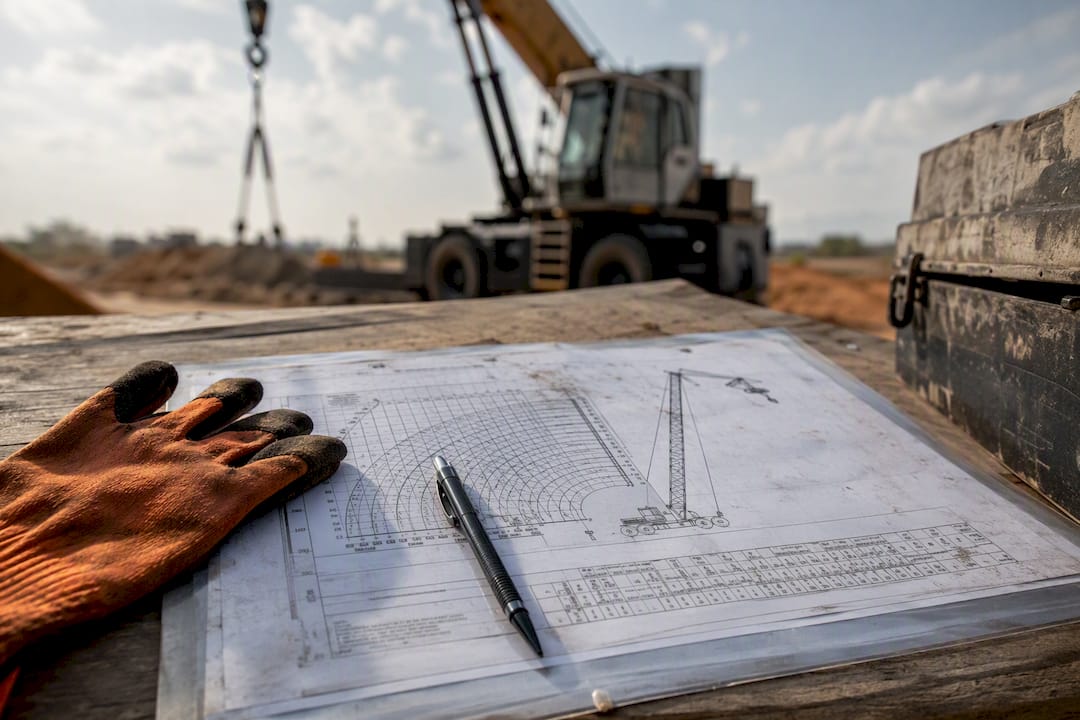
Regulatory inspection history adds another layer. OSHA’s cranes and derricks standards set out specific requirements for assembly, ground preparation, and operator qualification, and any documented violation against those standards becomes powerful evidence of negligence.
Round out the evidence file with:
- CCTV footage from the site or neighboring properties.
- Radio or communication logs between the operator, signal person, and site supervisor.
- Weather data for the exact time of the lift, since wind speed is a frequent factor in tip-overs.
- Signed witness statements taken while memories are still fresh.
Liability, remedies, and realistic damages after a crane collapse
Liability for crane failures rarely lands on one party. Investigators typically look at the crane operator, the crane owner or rental company, the rigging contractor, the general contractor, the maintenance provider, and occasionally the manufacturer if a mechanical defect is suspected.
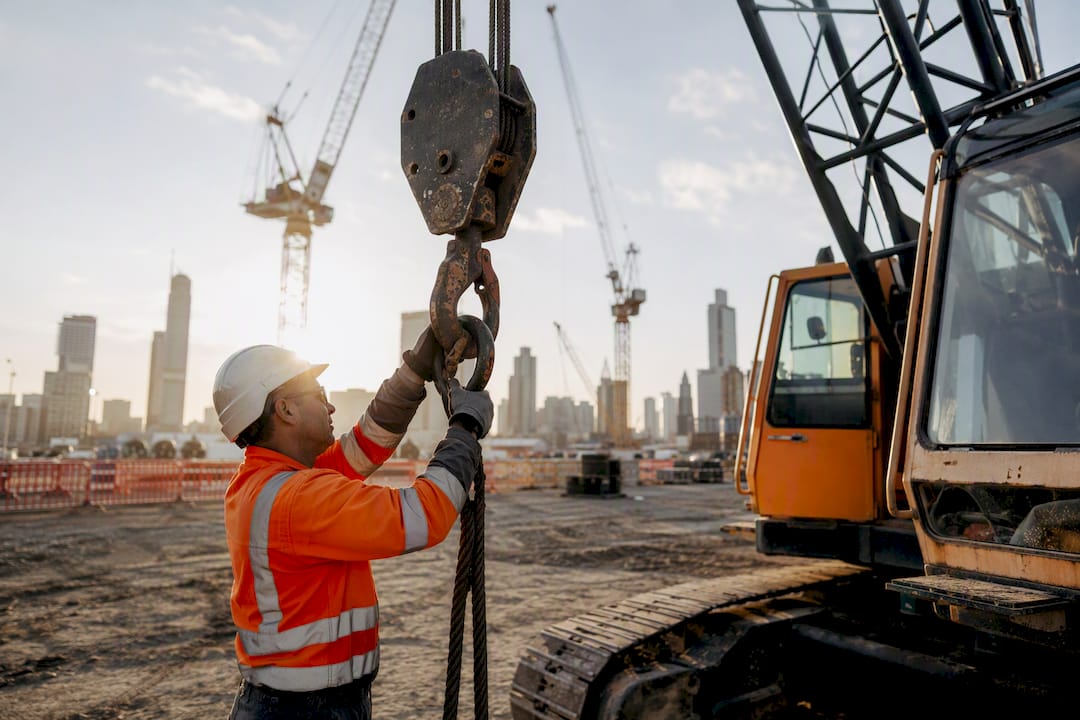
Claimants in serious incidents often pursue several of these parties simultaneously to maximize recovery, since aggregating claims across multiple defendants and their respective insurers is standard practice in complex crane litigation.
Recoverable damages generally fall into these categories:
- Property damage, covering repair or replacement of the crane, structure, and any collateral damage.
- Bodily injury, including medical costs, future care needs, and lost earning capacity.
- Economic loss, such as project delay costs and business interruption.
- Punitive damages, in the rarer cases where gross negligence or willful safety violations are proven.
Workers’ compensation usually pays first for injured employees, but that does not always bar a separate third-party claim against a non-employer defendant like a crane rental company. Watch your statute of limitations closely. It varies by jurisdiction and claim type, and missing prompt-notice deadlines under your own policy can undercut a valid claim before liability is even settled.
Responding to a reservation of rights or denial letter
A reservation of rights letter is not a denial. It is procedural, and insurers send them routinely on complex construction losses to preserve their own options while they investigate.
- Respond in writing without waiving your position. Acknowledge receipt, but do not concede facts the letter assumes.
- Retain coverage counsel early if the reservation raises exclusion issues. Formally challenging a reservation or denial rather than accepting it as final is standard practice, and many disputes resolve once independent engineering evidence is on the table.
- Use appeals, mediation, or litigation as the dispute escalates. Most policies also allow a complaint to your state’s insurance regulator if you believe the insurer acted in bad faith.
- Keep every communication dated and in writing. This record becomes critical if the dispute moves toward litigation.
Claim-preparation checklist: what strengthens your case
The strongest crane collapse claims are built on paper, not persuasion. Gather these before you sit down with an adjuster or attorney.
- All relevant contracts, insurance policies, and endorsements covering the project.
- The lift plan, load chart, and any engineering pre-approval for the lift.
- Maintenance, inspection, and operator certification records.
- A commissioned engineering or accident reconstruction report where causation is disputed.
- A single point of contact coordinating your broker, legal counsel, and any experts, since scattered communication is one of the most common causes of subrogation opportunities getting lost.
Pro Tip: Ask your attorney early whether expert costs can be advanced under a contingency arrangement. Waiting until midway through a dispute to figure out who pays for the engineering report often stalls the whole claim.
Why on-demand cover changes how claims get documented
Truck & Plant On-Demand™ was built around a simple observation: fixed annual premiums rarely match how equipment actually gets used on site, and that mismatch shows up again at claim time when coverage gaps surface. Because cover adjusts to what you’re actually operating, your policy data, lift schedules, and equipment logs stay current rather than buried in last year’s renewal paperwork.

That matters more than it sounds. Digital claims workflows that centralize logs and notices help satisfy the prompt-notice obligations discussed earlier, since the record insurers ask for during a reservation of rights review is often the same record your on-demand cover already tracks.
What actually matters in the first 72 hours
The conventional advice on crane collapse claims spends too much time on liability theory and not enough on the boring mechanics of preservation. Lawyers and engineers can sort out fault later. What they cannot do is recreate a lift plan that got thrown away or reconstruct weather data nobody recorded.
I’d push back on one common assumption: that notifying “your insurer” is a single action. It rarely is. Crane collapse claims routinely touch four or five policies across different carriers and different policy years, and the biggest coverage losses I see traced back to claims come from someone waiting to see who’s at fault before telling anyone else’s insurer. That backwards sequencing is the single most avoidable mistake in this entire process.
Prioritize documentation over conclusions in the first three days. You don’t need to know who is liable yet. You need the evidence to exist when someone does the deciding.
— Coert
Get cover that matches how you actually operate
Fixed annual premiums leave gaps precisely when a crane, a rigging contractor, or a piece of hired plant needs coverage that reflects real site activity, not last year’s estimate. Truckplant’s Truck & Plant On-Demand™ lets you adjust cover as your operations change, so you’re not paying for equipment sitting idle and not underinsured when a machine is working flat out.

That flexibility matters most in exactly the situations this article covers: when multiple policies need to respond fast, and when the documentation behind your cover has to be ready the moment an insurer asks for it. Truckplant suits owner-run operators, construction firms, and large fleet businesses alike, all working from the same principle: cover the equipment you’re using, when you’re using it. Check your fleet and plant insurance options and get a quote built around your actual operation, not a generic annual estimate.
This article is general information, not a substitute for advice from a qualified lawyer. Consult a qualified legal professional about your own circumstances before acting on anything here.
Sources
Consult OSHA’s cranes and derricks standards for regulatory detail, and review Truckplant’s guides on claims management and accident reporting for practical next steps.
- 3 Things to Know About Construction Insurance Claims | Hylant
- Measure Once, Cut Twice (AGC CLE materials) — discussion of faulty workmanship exclusions and ensuing loss exception
- Cranes and derricks | OSHA
- Construction Insurance Claims | Travelers Insurance
- Fatal occupational injuries involving cranes — BLS factsheet