


Digital policy management for commercial fleets and plant hire means issuing, adjusting, and administering insurance policies for trucks, trailers, and equipment through online platforms, with telematics platforms like Geotab feeding driving data directly into underwriting, scoring tools like Milliman AccuRate Fleet producing regulator-approved risk scores, and products like Truck & Plant On-Demand™ letting you activate, change, or cancel cover in real time.
TL;DR:
- Instead of annual fixed premiums, digital systems let you issue cover for a single vehicle, adjust limits mid-term, and file proof of insurance without a broker call.
- A 30–90 day telematics pilot typically produces enough data for a scored renewal; behavior-based discounts run 5–20% and safe-driving programs can reach up to 20% savings.
- Your immediate next step: connect your telematics platform or request a usage-based quote to start a baseline scoring window.
Run a 30–90 day operational pilot on your highest-exposure vehicles first. The data will show whether your fleet qualifies for meaningful premium credits at renewal, and the cost of the pilot is the cost of hardware you likely already own.
Key takeaways
Digital policy management for commercial fleets means replacing fixed annual premiums with real-time, telematics-driven cover that you issue, adjust, and administer online, with behavior-based discounts of 5–20% available to qualifying fleets.
| Point | Details |
|---|---|
| Start with documents | Prepare VINs, MVRs, loss runs, and BMC-91 confirmation before requesting a telematics-based quote. |
| Run a 30–90 day pilot | A full scoring window produces reliable data and gives drivers time to improve before renewal pricing is set. |
| Savings range: 5–20% | Behavior-based PHYD programs deliver 5–20% premium reductions; safe-driving programs can reach up to 20%. |
| Require data portability | Insist on API access and data export rights in your contract to avoid telematics vendor lock-in. |
| Truckplant on-demand cover | Truck & Plant On-Demand™ lets you activate, adjust, and cancel cover per vehicle or unit in real time. |
Table of Contents
- What does digital policy management mean for on-demand fleet insurance?
- Why digital policy management pays off for fleets and plant hire
- How the end-to-end workflow actually runs
- Implementation checklist for operations, IT, and safety teams
- Data sharing, privacy, and U.S. regulatory considerations
- How to compare digital policy management platforms
- How Truck & Plant On-Demand™ handles digital policy management
- The case for moving now, not at the next renewal
- Truckplant’s on-demand cover: a practical next step
- Sources
What does digital policy management mean for on-demand fleet insurance?
In the fleet and plant-hire context, digital policy management is the end-to-end online administration of commercial vehicle and equipment insurance. It covers every stage from first quote to final claim, without paper forms or broker intermediaries slowing the process down.
The scope includes:
- Quoting and underwriting via online portals using fleet data, loss runs, and telematics inputs
- Telematics integration through OBD-II devices, OEM-embedded systems, or API connections to platforms like Geotab
- On-demand activation of cover for individual vehicles or plant units as operational needs change
- Mid-term amendments such as adding a hired excavator or removing a truck that is off the road
- Proof-of-insurance delivery digitally, on demand, for DOT roadside checks or job-site compliance
- Digital claims intake with dash-cam footage, GPS event logs, and driver statements submitted online
What this does not cover: organizational policy lifecycle tools used by HR or compliance teams to manage internal procedures and governance documents. That is a separate software category with a different audience entirely.
Why digital policy management pays off for fleets and plant hire
The financial case is straightforward. Fixed annual premiums price your fleet on historical averages. Digital, telematics-driven cover prices it on what your drivers actually do.
- Usage-based premium savings: PHYD programs deliver behavior-based discounts of roughly 5–20%, with video-augmented claims reductions of 10–30% in vendor case studies. Geotab reports fleets can earn up to 20% savings through safe driving behavior.
- Faster issuance: Online platforms bind cover in hours, not days. Commercial auto carriers now let businesses add vehicles, update drivers, and download ID cards without a phone call.
- Operational flexibility: Owner-operators and plant-hire companies can switch cover on or off as equipment moves between jobs, paying only for active exposure.
- Improved claims handling: Dash-cam footage submitted digitally exonerates drivers faster and reduces disputed claims costs.
- Reduced admin: Eliminating paper endorsements and manual certificate requests frees your operations team for higher-value work.
Owner-operators benefit most from on-demand activation. Regional fleets with variable seasonal loads gain most from mid-term flexibility. Plant-hire companies running short-term equipment contracts get the clearest ROI from per-unit, per-period cover. Carrier-technology partnerships reinforce this: a GEICO and Motive partnership offers policyholders up to 10% savings for installing integrated dash-cams and telematics hardware, showing how quickly the market is moving toward hardware-linked incentives.
Stat callout: Behavior-based telematics discounts typically range from 5–20%, and safe-driving programs can reach up to 20% savings for qualifying fleets.
How the end-to-end workflow actually runs
Understanding the steps helps you plan what changes internally before you go live.
- Inventory and document collection. Gather VINs, motor vehicle records (MVRs), three to five years of loss runs, DOT/MC numbers, and confirmation of FMCSA filings such as the BMC-91. Preparing these documents upfront accelerates quoting and compliance binding significantly.
- Telematics connection. Connect via OBD-II plug-in, OEM-embedded data, or an API from your existing fleet platform. Integrating through an existing platform like Geotab eliminates the need for extra hardware in most commercial UBI programs.
- Quoting and underwriting. The insurer uses your submitted documents as a proxy baseline, then layers in telematics data as it accumulates. Scoring tools like Milliman AccuRate Fleet produce a risk score after a short driving-history window, allowing more accurate pricing at renewal.
- Issuance and proof-of-insurance delivery. Once bound, digital certificates and ID cards are available immediately. No waiting for mail.
- Mid-term changes and on-demand activations. Add a vehicle for a new contract, reduce cover on equipment in storage, or activate short-term plant cover for a specific site. All done through the platform portal.
- Claims and event reconstruction. Submit dash-cam clips, GPS event logs, and driver statements digitally. Video evidence speeds resolution and supports driver exoneration.
Pro Tip: Stage your data collection period deliberately. Set a coaching cadence at 30 and 60 days into the pilot. Drivers who receive feedback on harsh braking and speeding events early in the window improve their scores before the data is used for renewal pricing, which is where the discount is actually calculated.
Implementation checklist for operations, IT, and safety teams
Getting ready for a digital policy management rollout takes coordination across three teams. Here is what each one needs to prepare.
Hardware and data:
- OBD-II devices, OEM telematics, or API credentials from your existing fleet management platform
- Forward-facing and in-cab dash cameras with cloud upload capability
- ELD data access if your fleet operates under FMCSA hours-of-service rules
Documents and administrative items:
- VINs for every vehicle and unit to be covered
- MVRs for all drivers (typically three years)
- Loss runs for three to five years from your current carrier
- DOT/MC numbers and BMC-91 filing confirmation
- Driver consent forms authorising telematics and video data sharing
- A written data retention policy specifying how long records are kept
Roles and timeline:
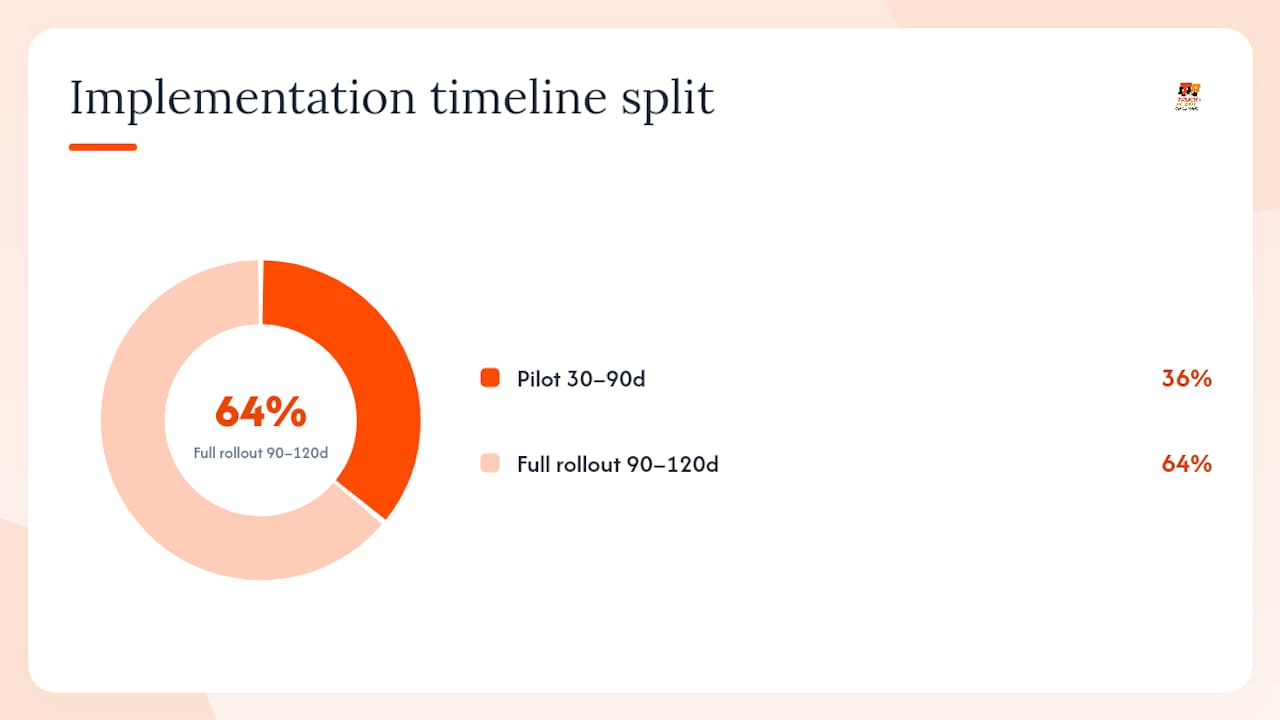
A 30–90 day pilot produces reliable scoring data. Full production rollout, including renewal negotiation, typically completes within 90–120 days of go-live. For a step-by-step setup guide, Truckplant’s resource on setting up on-demand fleet insurance walks through the pilot design in detail.
Data sharing, privacy, and U.S. regulatory considerations
Sharing telematics and video data with an insurer raises legitimate questions. Here is what to put in place before you sign a data-sharing agreement.
Privacy and consent practices:
- Obtain written, signed consent from every driver before collecting telematics or video data
- Define retention windows in your policy (90–180 days is a common commercial standard)
- Restrict insurer data access to underwriting and claims purposes only, in writing
- Require the vendor to confirm data is not sold to third parties
State regulatory considerations:
State insurance regulators review and approve the scoring models carriers use for ratemaking. Pre-filed telematics scores like Milliman AccuRate Fleet have received multi-state regulatory approval, which reduces filing risk for carriers and gives fleet managers confidence that the scoring methodology has been independently reviewed. When evaluating a carrier’s telematics program, ask for evidence of state filing approval in the states where your fleet operates.
Pro Tip: Request a copy of the carrier’s data use agreement before connecting any telematics feed. The agreement should specify exactly which data fields are shared, for what purpose, and for how long. If the carrier cannot produce this document, treat it as a red flag.
How to compare digital policy management platforms
Not all platforms deliver the same capabilities. Use these dimensions to evaluate any carrier or insurtech offering a telematics-driven commercial program.
Evaluation dimensions:
- Data integration options: Does the platform support API connections to Geotab, Samsara, or Verizon Connect, or does it require proprietary hardware?
- Scoring transparency: Can the carrier show you the scoring model and explain how specific behaviors affect your premium?
- State-filed scoring evidence: Has the telematics score been approved by regulators in your operating states?
- Claims workflow integration: Can dash-cam footage and GPS logs be submitted directly through the same platform used for policy changes?
- Pricing model: Is it pay-as-you-drive (PAYD, mileage-based), pay-how-you-drive (PHYD, behavior-based), or a hybrid? Each suits different fleet profiles.
- Security and SLA: What uptime guarantees and data encryption standards does the vendor commit to in writing?
Red flags to watch for:
- Opaque scoring with no explanation of how events translate to premium changes
- Vendor lock-in clauses that prevent you from exporting your telematics data
- No written guarantee limiting data use to underwriting and claims
- Inability to produce filed scoring evidence for your states
Require API access and data export rights in your contract. This preserves your ability to move telematics data between insurers or analytics platforms without starting from zero. For a structured comparison of on-demand versus annual policy options, Truckplant’s guide on comparing flexible fleet coverage provides a practical framework.
How Truck & Plant On-Demand™ handles digital policy management
Truck & Plant On-Demand™ is built specifically for commercial vehicles, trailers, and plant machinery. The platform lets you activate, adjust, and administer cover in real time, without the fixed-premium structure of a traditional annual policy.
Core platform capabilities:
- On-demand cover activation for individual vehicles or plant units
- Telematics and dash-cam integration for usage-based pricing and claims support
- Mid-term cover changes processed through the platform portal
- Digital proof-of-insurance delivery for roadside and job-site compliance
- Claims support with digital document and footage submission
Typical customer workflows:
A tool-hire company activates short-term cover for a specific excavator the moment it leaves the yard on hire, then deactivates it on return. A construction fleet adds a hired crane for a three-week site contract without calling a broker. A regional trucking operation scales cover up for peak season and reduces it when trucks are parked, paying only for active exposure throughout.

Truckplant publishes practical guides for fleet operators on telematics integration, fleet insurance analytics, and optimising premiums with flexible cover, giving operations teams the technical depth to run a pilot with confidence.
The case for moving now, not at the next renewal
The conventional wisdom in fleet insurance is to wait for renewal before making changes. That instinct costs money.
The scoring window for a telematics-based program needs 30–90 days of driving data before it produces a reliable risk score. If you wait until 60 days before renewal to start, you are submitting thin data and likely getting a conservative price. Fleets that start a pilot at least 90 days before renewal give their drivers time to improve scores through coaching, submit a full data set, and negotiate from a position of demonstrated performance rather than historical averages.
The other underestimated factor is claims exoneration. Dash-cam footage resolves disputed liability claims faster than any other evidence. Fleets that have integrated video before an incident occurs recover that cost in the first disputed claim. Fleets that install cameras after a costly claim are always one incident behind.
Truckplant’s on-demand cover: a practical next step
Truckplant gives fleet operators, plant-hire companies, and construction businesses a direct route to usage-based, on-demand cover without the fixed-premium structure that charges you for cover you are not using.
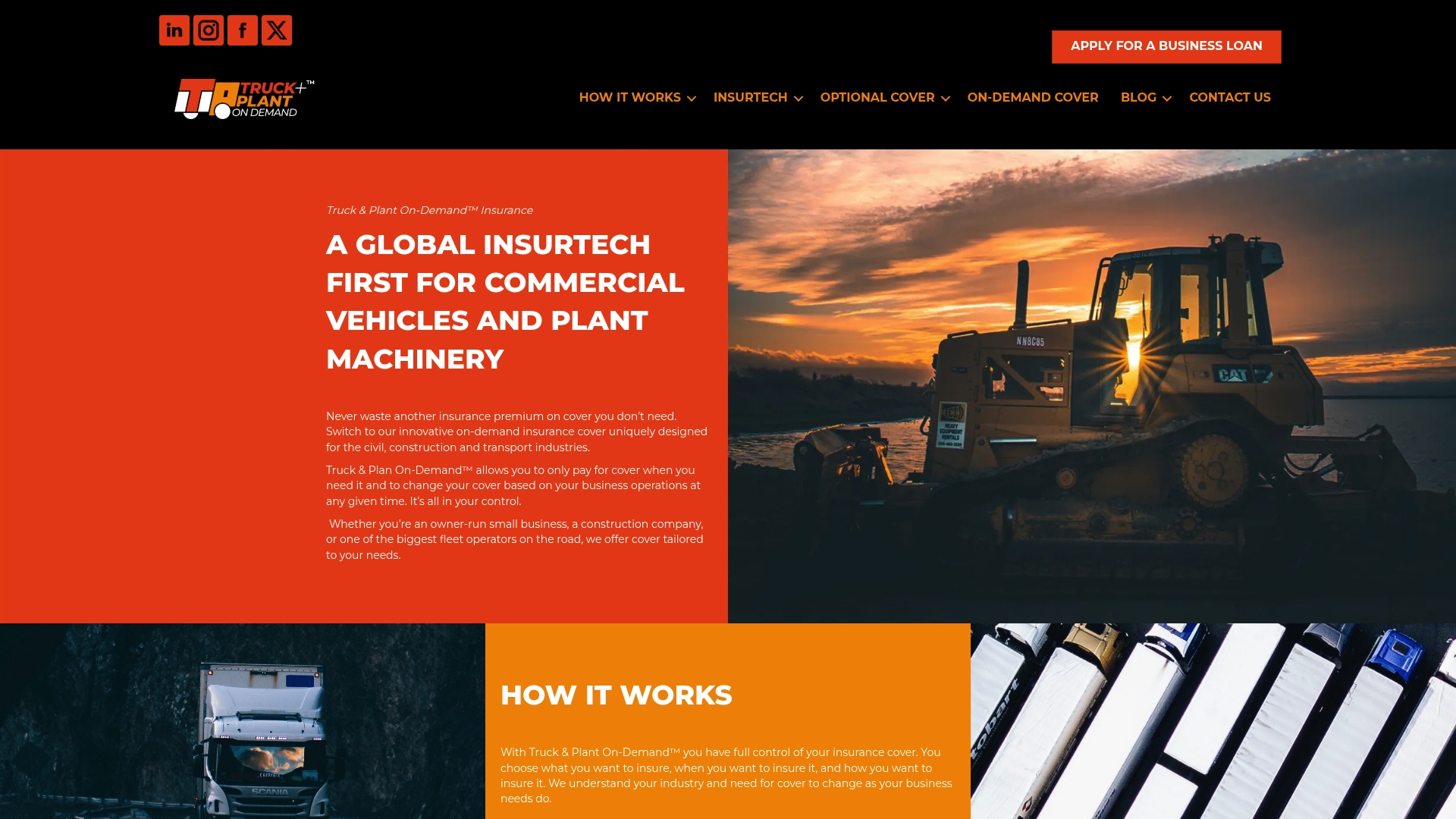
A pilot with Truck & Plant On-Demand™ includes a data review of your current loss runs and telematics feed, a 30–90 day scoring plan, and renewal negotiation support based on your actual driving and claims record. You pay for cover when you need it, adjust it as your operations change, and access proof of insurance digitally at any time. Visit the Truck & Plant On-Demand™ fleet insurance page to review the platform features and request a pilot quote for your fleet.
Sources
- Commercial fleet insurance | Geotab
- Usage based insurance technology
- Pay-how-you-drive programs for carriers: UBI models that impact trucking insurance premiums – Insurance Curator
- Step-by-step online guide to buying trucking fleet insurance
- Commercial auto insurance – GEICO