


TL;DR:
- Having the right civil industry insurance is crucial for securing tenders, preventing project delays, and protecting against claims. Proper selection and active management of CAR, PAR, and civil liability policies ensure compliance with contract and lender requirements while covering evolving project and asset risks. Treat insurance as an integral part of business operations and risk governance to enhance project success and financial stability.
If you run a civil, construction, or transport business in South Africa, you already know that winning a tender or securing equipment finance is rarely just about price or capability. Getting the contract often depends on having the right essential civil industry insurance in place before you even set foot on site. The wrong cover, a missed endorsement, or an outdated sum insured can stall a project, trigger a lender default, or leave you personally exposed to a claim that wipes out months of margin. This article walks you through the key insurance types, how to select them, and how to make them work harder for your business.
Table of Contents
- Key criteria for choosing essential civil industry insurance
- Contractors all risk (CAR) insurance: the backbone of project protection
- Plant all risk (PAR) insurance: safeguarding your essential machinery
- Civil liability insurance: protection against third-party claims
- How essential civil industry insurance types compare: a quick reference
- Choosing the right insurance combination for your civil industry business
- Why insurance should be your contract-performance partner, not just a cost
- Flexible insurance solutions designed for South African civil and transport businesses
- Frequently asked questions
Key criteria for choosing essential civil industry insurance
Before you buy any policy, you need to align your insurance decisions with the actual demands of your operations. That means reading your contract clauses first. Standard South African construction contracts, including JBCC, NEC, and GCC, include specific insurance requirements that are non-negotiable. Missing them is not just a compliance issue; it is a grounds-for-termination issue.
Insurance compliance in construction is more than a box-ticking exercise. Think of it as a technical function that supports your insurance role in South African construction at every stage of project delivery. As one industry resource notes, insurance enables contract performance and ensures bankability and compliance with standard industry clauses like SASRIA and public liability.
Here are the key criteria to evaluate when selecting your cover:
- Contract requirements: Identify the exact clauses in your JBCC, NEC, or GCC contract that specify insurance types, indemnity limits, and joint names requirements.
- Lender and financier conditions: Banks financing your equipment will require noted interest on Plant All Risk policies. Confirm this before signing any finance agreement.
- Dynamic asset tracking: Construction values change constantly. Your sums insured must keep pace with scope changes, variations, and added plant on site.
- SASRIA inclusion: South Africa’s exposure to civil unrest means SASRIA cover for riot, strike, and public disorder is frequently mandatory and always advisable.
- Public liability limits: Your contract will specify minimum limits. Low limits expose your business to uncovered shortfalls on major claims.
- Tender readiness: Insurers who understand construction can issue compliance certificates quickly, keeping your tender submissions competitive and complete.
Contractors all risk (CAR) insurance: the backbone of project protection
Contractors All Risk insurance is the cornerstone policy for any civil or construction project in South Africa. It covers the works themselves while they are being built, surrounding property that could be damaged during construction, public liability for third parties on or near the site, and a range of other site-related risks. One policy, multiple layers of protection across the full construction period.
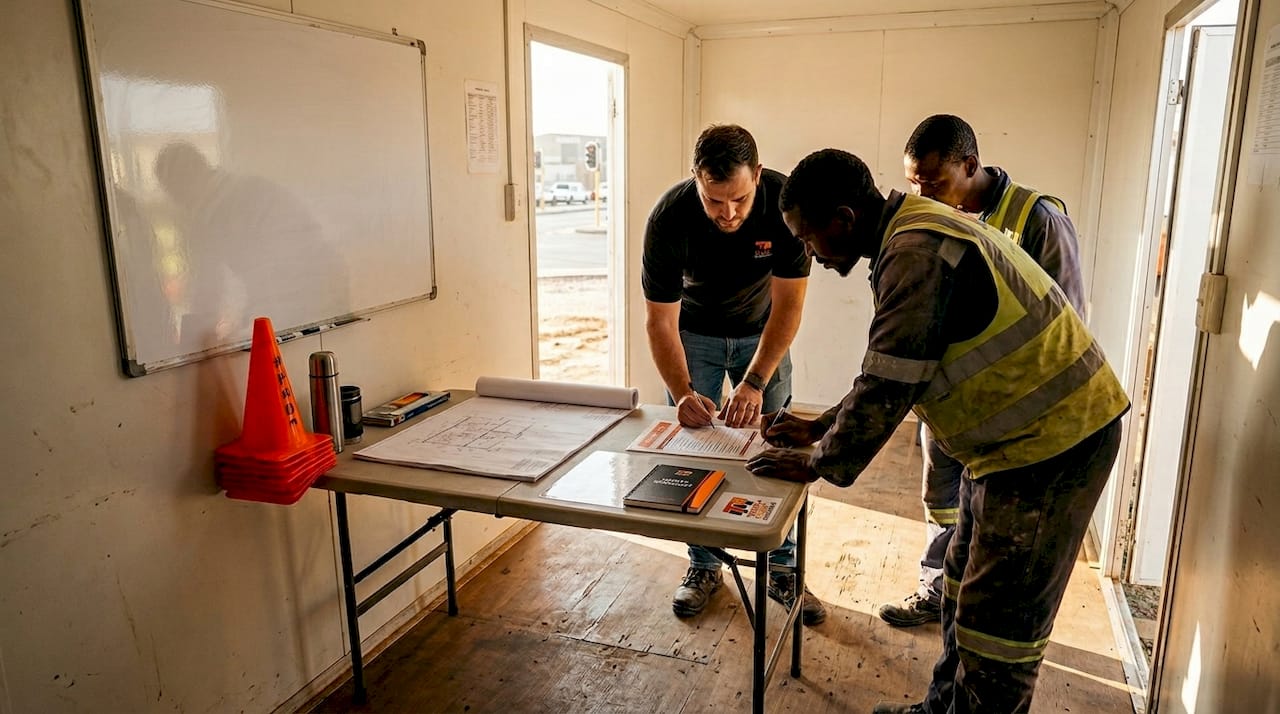
A critical feature of CAR is the joint names structure. This means the employer, main contractor, and subcontractors are all named on the same policy. There are no gaps between parties arguing about whose insurer covers what. One claim, one policy, one process. For large civil projects with multiple subcontractors, this structure prevents expensive disputes that can delay project close-out.
Essential insurance for construction guidance consistently highlights CAR as the first policy to arrange when mobilising for a new contract. The reason is straightforward: CAR policies cover contract works, surrounding property, and public liability, while also meeting tender requirements and supporting project bankability. A CAR policy without current sums insured is almost as dangerous as no policy at all.
Key features to confirm in your CAR policy:
- Contract works section: Covers damage to the works in progress from fire, flood, storm, accidental damage, and malicious acts.
- Surrounding property: Protects adjacent structures, services, and third-party assets that your operations could damage.
- Public liability: Covers bodily injury or property damage claims from members of the public affected by your site activities.
- Joint names endorsement: Confirms employer, contractor, and sub-contractors share the policy, removing coverage gaps.
- Endorsements for variations: Allows you to update the policy as project scope or value changes occur.
Pro Tip: Work with an insurer who actively tracks contract values and flags endorsement requirements as variations arise. A policy that is out of date on day one of a claim will not pay what you expect.
When reviewing CAR, also integrate it with your civil and construction risk management protocols to ensure site safety and coverage work together.
Plant all risk (PAR) insurance: safeguarding your essential machinery
Your yellow metal is often your single largest business asset. Excavators, TLBs, graders, compactors, and cranes represent significant capital. Plant All Risk insurance (PAR) protects each individual machine whether it is working on site, being transported between projects, or sitting in storage between contracts.
This matters enormously in the South African civil industry, where equipment is frequently moved between sites, hired out to other contractors, or financed through banks. Construction equipment insurance covers theft, damage, fire, and transit and is a firm requirement from most South African banks before they release finance for equipment purchases. If your excavator is financed and uninsured, you are in breach of your finance agreement, full stop.
PAR coverage typically includes:
- Accidental damage: On-site collisions, rollover incidents, and operational accidents.
- Fire and explosion: Coverage for the machine and ancillary attachments.
- Theft: Including hijacking and component theft, which is a serious risk in South Africa.
- Transit damage: Protection while equipment moves between sites on low-beds or trailers.
- Hired-in and hired-out plant: Extended cover for machines you rent in or lease to others.
- Financier interest endorsement: A cession or first-loss payee clause that protects the bank’s security interest in the asset.
Without a valid PAR policy noting your bank’s interest, your financier can demand immediate repayment of the outstanding loan balance if a total loss occurs. That is a business-ending scenario for most contractors. Review your insurance policy types for construction to confirm PAR is structured correctly for each financed asset.
Civil liability insurance: protection against third-party claims
Civil liability insurance covers your business for unintentional damage or injury caused to third parties as a result of your operations, errors in management, or incidents during cargo handling and site activities. It is distinct from the public liability section in a CAR policy, which is project-specific. Civil liability insurance travels with your business across all operations.
“Civil liability insurance protects business assets and operations against third-party damage claims, covering compensation and legal defense costs.”
This matters for transport operators and plant hire businesses especially. If your truck damages a bridge, your civil liability cover responds. If your crane operator damages a neighbouring building on a project not covered by a CAR policy, civil liability is what stands between you and a six-figure claim. The importance of this insurance role cannot be overstated for businesses operating across multiple sites and project types simultaneously.
Civil liability insurance typically covers:
- Third-party property damage: Physical damage to another party’s property caused by your operations.
- Bodily injury to third parties: Medical costs, loss of earnings, and general damages for injuries.
- Legal defense costs: Attorney fees, court costs, and settlement negotiations.
- Operational errors: Management decisions or omissions that result in financial loss to a third party.
- Cargo handling incidents: Damage during loading, off-loading, or transit operations.
How essential civil industry insurance types compare: a quick reference
Understanding each policy type individually is useful. Seeing them side by side makes your decision far easier. Here is a direct comparison of the three essential cover types for South African civil and construction businesses.
| Feature | Contractors all risk (CAR) | Plant all risk (PAR) | Civil liability |
|---|---|---|---|
| Primary focus | Contract works and project site | Individual machines and equipment | Third-party claims across all operations |
| Coverage trigger | Damage during construction period | Damage, theft, or loss of equipment | Unintentional harm to third parties |
| Joint names | Yes, employer and contractors | No, single asset owner or financier | No, policyholder’s business operations |
| SASRIA inclusion | Recommended or required | Recommended or required | Not typically required but available |
| Lender requirement | Sometimes required by project funder | Mandatory for financed equipment | Rarely required but good practice |
| Transit cover | Limited to site movements | Full transit between sites included | Not applicable |
| Policy duration | Project-specific, expires on completion | Annual or per-asset, ongoing | Annual, rolling renewal |
| Indemnity limit | Based on contract sum | Based on replacement value of asset | Based on limit of indemnity selected |
As the evidence confirms, CAR and PAR serve distinct but complementary roles, and SASRIA is frequently required in both. Civil liability adds a third layer that operates independently of your project portfolio. Review construction insurance trends to see how leading contractors are integrating all three effectively.
Choosing the right insurance combination for your civil industry business
Now that you understand the options, here is how to build the right coverage package for your business. The sequence matters.
- Read your contracts first. Before approaching any insurer, pull out the insurance clauses in every active JBCC, NEC, or GCC contract. List the required policy types, minimum indemnity limits, and any specific endorsements required.
- List your assets and their current replacement values. This includes all plant, vehicles, and equipment. Underinsurance is one of the most common and costly mistakes in the civil industry.
- Arrange CAR for every active construction project. Confirm joint names, SASRIA inclusion, and that sums insured match the current contract value including variations.
- Set up PAR for every financed or high-value machine. Note your financier’s interest on each policy. Keep a register of policy numbers linked to each asset and finance agreement.
- Secure a standalone civil liability policy. Choose an indemnity limit that reflects your worst realistic single-event exposure across all operations.
- Add SASRIA to both CAR and PAR. South Africa’s socio-political environment makes this non-negotiable for businesses with site or yard exposure.
- Build a subcontractor insurance gate. Before granting any subcontractor access to your site, verify their CAR and public liability cover meets your minimum requirements. This transfers risk back to them and protects your project.
- Schedule quarterly insurance reviews. Update your insurance compliance guide and asset register every time a project starts, ends, or changes scope.
Pro Tip: Treat your insurance register as a live project document, not an annual file. Managing insurance as part of delivery governance reduces claim uncertainty and protects programme and cash flow outcomes. Link it to your project management system so scope changes automatically trigger an insurance review.
Use this SA construction insurance guide as a reference when building your insurance schedule for new tenders.
Why insurance should be your contract-performance partner, not just a cost
Most business owners in the civil industry think about insurance once a year at renewal. That is the wrong frame entirely. The contractors who manage projects without surprises are the ones who treat insurance as an active part of their delivery system, not a grudge purchase they revisit when something goes wrong.
Here is the uncomfortable truth: a poorly structured insurance programme costs you more than the premium. A coverage gap on a CAR policy can freeze a project while the parties argue about liability. An underinsured PAR claim means your bank gets paid first and you absorb the shortfall. A missing SASRIA endorsement after a protest delays a bridge contract by months. None of these are theoretical risks in South Africa.
The best approach treats insurance as a technical function. It manages complex contract clauses, dynamic asset values, and risk governance to ensure projects stay bankable and compliant. That requires active engagement with your insurer or broker, not just a once-a-year signature.
We have seen this clearly in how the most resilient civil contractors operate. They maintain live insurance registers, brief their site managers on coverage scope, and run subcontractor compliance checks as part of their tender gate process. Insurance integrates with how they run their business. It is part of how they win work and finish it profitably.
The insurance role guide reinforces this point well. Insurance is not a passive expense. When managed properly, it is a direct enabler of contract performance and financial continuity.
Flexible insurance solutions designed for South African civil and transport businesses
You have the knowledge. Now you need cover that keeps pace with how your business actually operates.
Truck & Plant On-Demand™ was built specifically for civil, construction, and transport businesses in South Africa that need flexible, tailored insurance without paying for cover they do not need. Whether you are protecting a single financed excavator or managing a fleet of commercial vehicles across multiple active sites, you can control exactly what is insured, when it is insured, and how it is structured. Our fleet insurance for commercial vehicles covers everything from light delivery vehicles to heavy haulage rigs, while our truck insurance in South Africa and plant hire insurance options are tailored to meet lender, contract, and compliance requirements. You only pay for what you need, when you need it.
Frequently asked questions
What is Contractors All Risk (CAR) insurance and why is it essential?
CAR insurance covers contract works, surrounding property, and public liability under a single joint-names policy, ensuring your project meets South African construction contract requirements. CAR policies comply with tender requirements and protect your project from financial exposure during the full construction period.
Do I need Plant All Risk insurance if I finance equipment through a bank?
Yes. South African banks and finance providers consistently require comprehensive Plant All Risk insurance noting their financial interest before releasing funds. Banks require PAR coverage with a noted financier interest as a standard condition of equipment finance agreements.
What does civil liability insurance cover for civil industry businesses?
Civil liability insurance covers unintentional third-party damage or injury caused by your business operations, including legal defense costs and compensation. It provides protection that operates independently of project-specific CAR policies, covering your business across all operational liability claims.
How can I ensure my insurance keeps pace with changing project values and risks?
Update your asset register and review your sums insured at every project milestone, variation order, or scope change. Dynamic asset tracking maintains accurate sums insured and prevents underinsurance claims at the worst possible time.
Why is SASRIA cover important for civil industry insurance in South Africa?
SASRIA covers losses from riots, strikes, public disorder, and terrorism, all of which are excluded from standard insurance policies. Given South Africa’s history, SASRIA cover is strongly recommended and often contractually required for civil and construction projects across the country.