


TL;DR:
- South African fleet insurance faces high risks, especially from theft and hijacking, impacting premiums.
- Telematics technology can reduce insurance costs by providing real-time data to insurers.
- Flexible, on-demand insurance solutions help fleet managers adapt coverage to changing operational needs.
Essential insurance concepts for fleet managers in South Africa
South African fleet managers operate in one of the most demanding insurance environments in the world. Motor premiums total ZAR 110B annually, and the risks behind that number are real: hijackings, collisions, and third-party liability claims hit fleets hard every day. If you manage commercial vehicles or plant machinery, understanding the core insurance concepts that drive your premiums and your protection is not optional. It is the difference between a business that absorbs a major loss and keeps moving, and one that does not recover. This guide gives you the practical knowledge to make better decisions and get the cover your business actually needs.
Table of Contents
- Understanding core insurance concepts for fleets
- Key risks and claims drivers for SA fleet operators
- Flexible insurance solutions: meeting changing fleet needs
- Making insurance work for your fleet: best practices and actionable steps
- What most fleet managers miss about insurance in a dynamic market
- Flexible insurance solutions for South African fleets
- Frequently asked questions
Key Takeaways
| Point | Details |
|---|---|
| Core concepts matter | Understanding insurance terms and structures is vital for smart fleet management and cost control. |
| Target risk reduction | Focusing on major risk drivers like theft and hijacking can prevent losses and reduce premiums. |
| Leverage technology | Telematics, insurtech, and usage-based policies can deliver significant savings and stronger protection. |
| Keep strategies dynamic | Regularly reviewing and customizing insurance coverage ensures you keep pace with a changing fleet and market. |
Understanding core insurance concepts for fleets
To master the challenges of fleet risk, you first need to understand the building blocks of fleet insurance. These are the terms, structures, and mechanics that shape every policy you sign.
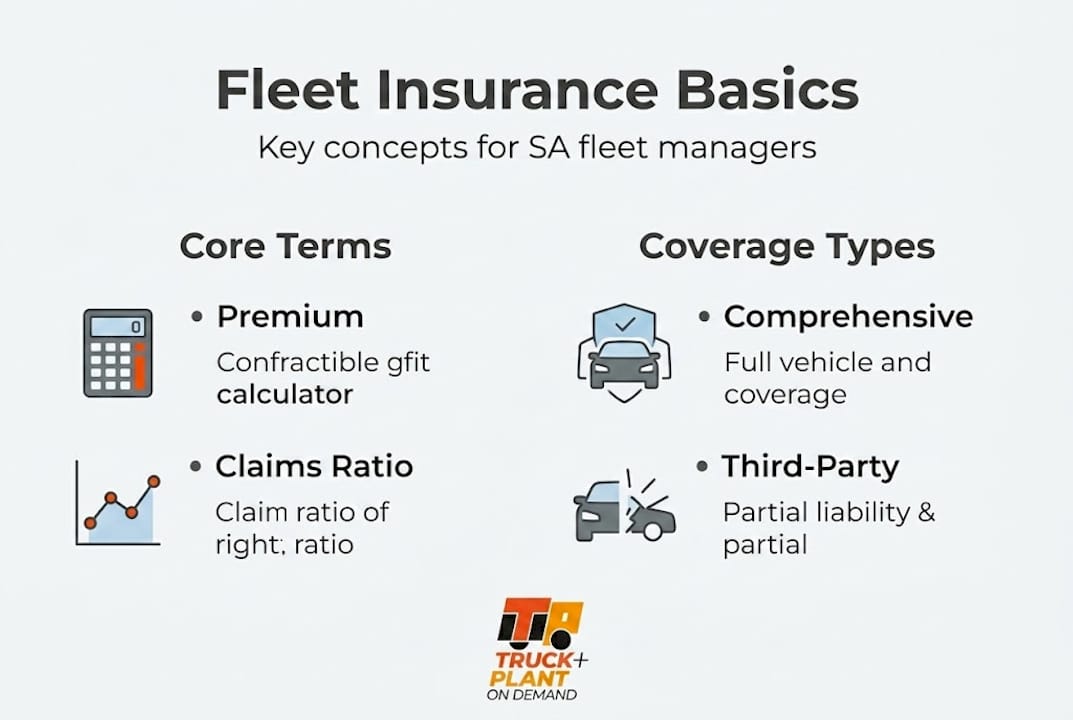
Premium is the amount you pay, usually monthly or annually, to maintain cover. It is calculated based on your fleet’s risk profile, which includes vehicle types, usage patterns, driver records, and geographic routes. Excess (also called a deductible) is the portion of a claim you pay out of your own pocket before your insurer covers the rest. A higher excess usually means a lower premium, but it also means more exposure when something goes wrong.
Claims ratio is a figure that tells you how much insurers pay out in claims relative to the premiums they collect. The South African general insurance sector’s claims ratio sits at 68%, meaning for every ZAR 100 collected in premiums, ZAR 68 is paid in claims. This is a useful benchmark for understanding why premiums are priced the way they are.
Risk pooling is the core principle of insurance: many policyholders contribute premiums into a shared fund, and claims are paid from that fund. The larger and more diverse the pool, the more stable it becomes. For fleet operators, this means your claims history directly affects how the insurer views your risk and what you pay.
Coverage types for fleets in South Africa typically fall into two broad categories:
| Feature | Comprehensive cover | Third-party only cover |
|---|---|---|
| Own vehicle damage | Yes | No |
| Theft and hijacking | Yes | No |
| Third-party liability | Yes | Yes |
| Natural disasters | Yes | No |
| Monthly premium cost | Higher | Lower |
| Best suited for | High-value, active fleets | Older or lower-value vehicles |
Comprehensive cover protects your vehicles against damage, theft, and third-party claims. Third-party only cover is the legal minimum and only pays out when your vehicle causes damage or injury to someone else. For fleets carrying expensive cargo or operating heavy plant machinery, comprehensive cover is almost always the right choice.

It is equally important to understand how fleet insurance terminology translates into real policy clauses. A policy may list exclusions that void your cover under specific circumstances, such as vehicles operated outside agreed geographic zones or by drivers not listed on the policy. These gaps can be costly if you do not spot them upfront.
Common policy pitfalls South African fleet managers face include:
- Underinsuring vehicles by not updating replacement values as inflation rises
- Failing to declare all drivers, leaving claims at risk of rejection
- Choosing a high excess without sufficient cash flow to cover it
- Overlooking third-party liability limits that are too low for large fleet operations
- Not reading exclusion clauses carefully before signing
Motor insurance comprises 42% of general insurance in South Africa, which tells you how significant this sector is. Getting your policy structure right from the start protects not just your vehicles, but your entire operation.
Key risks and claims drivers for SA fleet operators
A strong grasp of insurance concepts must be paired with knowledge of your biggest risks in order to protect your fleet effectively. South Africa presents a unique set of challenges that directly shape your claims exposure and your premiums.
The four major risk categories for fleet operators in South Africa are:
- Vehicle theft and hijacking — This is the single biggest driver of claims. In 2020, 1,202 trucks were hijacked, and theft claims across the sector reached ZAR 15B. These numbers represent not just financial loss but operational disruption that can cripple a business.
- Collisions and accidents — High traffic volumes, poor road conditions in rural areas, and driver fatigue all contribute to a high collision rate for commercial fleets.
- Third-party liability — When your vehicle is involved in an accident that injures another person or damages their property, the costs can be significant. Commercial vehicles often cause more damage than passenger cars.
- Cargo loss — For transport operators, loss or damage to cargo adds another layer of financial exposure beyond the vehicle itself.
| Risk category | Relative claims frequency | Estimated annual financial impact |
|---|---|---|
| Theft and hijacking | Very high | ZAR 15B+ |
| Collisions | High | Varies by fleet size |
| Third-party liability | Moderate | Potentially unlimited |
| Cargo loss | Moderate | Depends on cargo value |
The claims ratio of 68% in the general insurance sector reflects how active the claims environment is. For fleet operators, a high claims frequency directly raises your premium at renewal. Insurers track your loss ratio, which is your own claims paid versus your premiums, very closely.
Proven steps to lower your high-cost risks include:
- Install approved tracking and immobiliser devices on all vehicles
- Use vetted, experienced drivers with clean records
- Plan routes to avoid high-risk hijacking hotspots, particularly at night
- Train drivers in defensive driving and emergency response protocols
- Report all incidents promptly to preserve your right to claim
Statistical callout: Telematics technology can reduce fleet insurance premiums by 10 to 20% by providing real-time data that proves your risk management efforts to your insurer.
For more detail on managing these exposures proactively, reviewing fleet risk reduction strategies is a practical next step. Understanding the factors influencing fleet insurance costs in the South African market will also help you anticipate premium movements before renewal.
Flexible insurance solutions: meeting changing fleet needs
With a clear picture of your risks and claims, let’s focus on the flexible, tech-first solutions available to manage both. Traditional insurance models were designed for static businesses, but fleet operations are anything but static. A construction company may have 20 pieces of equipment active on one site in March and only 5 in August. A transport operator may scale up during peak season and scale back when contracts end.
On-demand insurance allows you to activate and deactivate cover for specific vehicles or equipment as your operational needs change. Usage-based insurance (UBI), also called pay-as-you-drive, ties your premium directly to how much and how safely your fleet is actually used. Both models are made possible by modern insurtech, which is the application of technology to insurance processes.
Benefits of flexible insurance for civil, construction, and transport fleets:
- Cost control — You pay only for the cover you need, when you need it, eliminating wasted premiums on inactive vehicles
- Cash flow management — Variable premiums align with revenue cycles, reducing financial pressure during slow periods
- Operational fit — Cover scales with your fleet, whether you are adding vehicles for a new contract or winding down after project completion
- Faster adjustments — Technology-enabled policies allow you to change cover through an app or platform in real time, without waiting for a broker
- Better risk data — Telematics integration means your insurer sees your actual risk, not just a generic fleet profile
Telematics strategies deliver ROI through premium reductions of 10 to 20%, making the technology investment worthwhile for most medium to large fleets. The data collected, including speed, braking patterns, route histories, and idle times, gives insurers the evidence they need to price your policy more accurately and reward good fleet management.
Pro Tip: When evaluating a technology-enabled policy, ask your insurer exactly which telematics data points they use to calculate your premium. Understanding this lets you focus driver training and monitoring on the behaviours that actually move your rate.
Exploring flexible insurance premium solutions gives you a starting point for comparing what is available in the South African market. You can also read more about insurtech for flexible fleet protection to see how technology is reshaping what fleet cover looks like. When you are ready to weigh your options side by side, learning how to compare flexible fleet coverage will save you significant time and money.
Making insurance work for your fleet: best practices and actionable steps
You are ready to put this knowledge into practice. Here is how to execute the right insurance strategy for your fleet, step by step.
Step-by-step guide to selecting and customising your fleet policy:
- Audit your fleet — List every vehicle and piece of plant machinery, including current market value, usage frequency, and operational routes.
- Identify your risk profile — Consider your industry (civil, construction, or transport), geographic exposure, driver demographics, and cargo types.
- Choose the right coverage type — Match comprehensive or third-party cover to each vehicle based on its value and risk level. High-value active assets need comprehensive cover.
- Set your excess carefully — Choose an excess level that lowers your premium without exposing you to an amount you cannot pay out of pocket when a claim arises.
- Incorporate telematics — If you do not already use telematics, factor it into your policy evaluation. The data it generates supports both safety management and premium negotiation.
- Review exclusions in detail — Read every exclusion clause and confirm your operations do not fall into any of them. Ask your insurer to clarify anything that is ambiguous.
- Plan for claims handling — Know exactly what your claims process involves before an incident happens. Fast, accurate claims filing minimises downtime and financial loss.
Best practices for annual policy review include comparing your current premium to your actual claims history over the past 12 months. If your claims frequency has dropped, use that data to negotiate. If it has risen, identify the cause before renewal and take corrective action.
“A high claims ratio puts upward pressure on premiums across the entire sector. Fleet managers who actively manage their own loss ratio are in a far stronger position to negotiate competitive rates at renewal.”
The general insurance claims ratio of 68% is a sector-wide figure. Your individual loss ratio is what your insurer focuses on. Keeping it low through active risk management is one of the most effective ways to cut costs and boost coverage at the same time.
Pro Tip: Request a claims data report from your insurer every six months, not just at renewal. Spotting trends early, such as a spike in collision claims on a specific route, allows you to act before the problem affects your premium.
When a claim does arise, speed and accuracy matter. Efficient claims filing requires clear incident documentation, including photos, driver statements, police case numbers where applicable, and a full vehicle inspection report. Understanding the claims process for faster settlements reduces the time your asset is off the road. Learning efficient insurance claims filing as a standard operating procedure, not just a crisis response, keeps your fleet productive and your insurer confident in your management standards.
What most fleet managers miss about insurance in a dynamic market
Most fleet managers approach insurance as an annual task. They get quotes, choose the best price, sign the policy, and file it away until next renewal. The problem is that your fleet, your risks, and your operations change constantly throughout the year, and your insurance strategy should change with them.
The mindset shift that makes the biggest difference is treating insurance as a strategic asset, not just a line-item cost. When you view cover as a tool for managing business risk rather than a compulsory expense, you start making decisions that build long-term resilience. You review your policy when you win a new contract. You update your declared vehicles when you add or remove assets. You use telematics data not just for safety, but as evidence to present to your insurer.
Premiums shift as your risk profile changes and as operational data from telematics accumulates. Fleet managers who provide consistent, accurate data to their insurers are rewarded with more accurate pricing. Those who do not tend to pay rates that assume the worst.
Pro Tip: Build an insurance review into your quarterly business planning cycle. Include a check on fleet changes, driver records, claims history, and any new telematics insights. This keeps your cover aligned with reality and gives you leverage in conversations with your insurer. Reviewing advanced fleet insurance strategies annually ensures your approach stays ahead of market changes.
The South African fleet environment will not get simpler. Theft risks, road conditions, and regulatory requirements all evolve. The managers who build flexibility and continuous review into their insurance approach are the ones who stay protected and profitable.
Flexible insurance solutions for South African fleets
Ready to turn insurance knowledge into real savings and stronger protection for your fleet?
At Truck & Plant On-Demand™, we designed our cover specifically for the civil, construction, and transport industries in South Africa. You choose what to insure, when to insure it, and how. Whether you manage a single truck or a large mixed fleet, our platform puts you in control of your fleet insurance in South Africa without locking you into premiums that no longer match your operations. If you also manage plant machinery, our plant hire insurance gives you the same on-demand flexibility. Stop paying for cover you are not using. Start paying only for what your business actually needs.
Frequently asked questions
What is the most common insurance claim type for South African fleets?
Theft and hijacking are the most common claim types for South African fleets, with theft claims reaching ZAR 15B annually across the sector.
How does telematics technology impact fleet insurance premiums?
Telematics can reduce your premiums by 10 to 20% by giving insurers accurate, real-time data about driver behaviour and actual risk exposure rather than relying on generalised fleet profiles.
What is the general insurance claims ratio in South Africa?
The general insurance claims ratio in South Africa is 68%, meaning ZAR 68 is paid out in claims for every ZAR 100 collected in premiums across the sector.
Why is flexible insurance important for fleet managers?
Flexible insurance adapts to changing fleet sizes, seasonal demand, and project-based operations, giving you cost control and tailored cover that static annual policies cannot provide.