


Fleet claims automation uses telematics, dashcams and artificial intelligence to turn a crash or theft report into an authorised repair and settlement in days rather than weeks. It works by capturing evidence automatically, scoring severity without waiting on a human queue, and routing straightforward cases straight to approval. For fleet managers, the payoff is fewer trucks parked idle, lower admin overhead per claim, and a smaller window for fraudulent or inflated claims to slip through.
TL;DR:
- Nearly all fleets already have telematics systems in place, which capture incident data that speeds up claims severity assessment and damage estimation.
- Automating claims reduces costs by minimizing manual handling, shrinks claims leakage, and shortens downtime through faster damage recognition and repair scheduling.
- Implementation involves a pilot phase of three to six months focusing on straightforward claims, with full fleet rollout taking an additional six to twelve months.
- Proper data flow, driver consent, and cautious automation of complex claims are critical to prevent delays, fraud, and over-reliance on AI.
- Insurance claims automation benefits most from speed-focused policies like Truck & Plant On-Demand™, which align coverage with actual fleet utilization.
Table of Contents
- What is fleet claims automation and why does it matter?
- Which technologies power automated fleet claims?
- How does the automated claims workflow run start to finish?
- How should fleets plan an automation rollout?
- What POPIA and salvage rules apply to automated claims data?
- Why Truckplant’s approach to claims matters for fleet uptime
- What actually slows down a fleet automation rollout
- Getting rapid authorisation without the paperwork drag
- Sources
- FAQ
What is fleet claims automation and why does it matter?
Fleet claims automation covers commercial vehicles, trailers and plant machinery, replacing manual, paper-heavy claims intake with software that pulls data straight from the incident. Instead of a driver phoning a call centre and waiting for a loss adjuster to schedule a site visit, the vehicle’s own telematics unit or dashcam often reports the event before the driver does.
That shift changes the numbers fleet managers actually track. Cost per claim drops because fewer people touch the file manually. Claims leakage, the value lost to overpayment, fraud or processing errors, shrinks when evidence is captured objectively at the moment of impact rather than reconstructed from memory days later. Downtime, the metric that hurts most, falls because authorisation no longer waits on a paper trail.
The operational gains tend to show up in a few consistent places:
- Faster first notice of loss, often automatic rather than driver-initiated
- Shorter authorisation cycles because severity scoring happens instantly
- Lower administrative cost per claim across the fleet
- Reduced fraud exposure through objective telematics and video evidence
- Better repair scheduling because the claims team knows the damage extent before the truck reaches the workshop
Vendor and industry case studies on digital claims management report meaningful reductions in both claims admin load and vehicle downtime once a fleet moves from manual intake to automated processing.
Which technologies power automated fleet claims?
Automation isn’t one tool. It’s a stack of technologies, each handling a different part of the problem, that need to talk to each other cleanly.
Telematics and dashcams sit at the front of the chain. They capture GPS position, speed and G-force at the moment of an incident, plus visual footage that either confirms or disputes a driver’s account. Telematics install rates in commercial fleets already sit at 63%, and FIA reporting projects active systems to grow 12.6% to reach 3.6 million units by 2026. That kind of scale means most fleets already have the raw data source in place. Dashcam footage also discourages fraudulent claims simply by existing, since drivers and third parties know the event was recorded.
Computer vision and OCR take over once evidence arrives. Computer vision assesses photographed panel damage and estimates repair scope. OCR reads police reports, repair quotes and driver statements, converting scanned paper into structured fields a claims system can act on.
Model-fusion and NLP combine all of that into one coherent claim file. An academic model-fusion approach that unifies images, documents and audio inputs has demonstrated improved accuracy and faster processing when paired with human review for edge cases, rather than full automation end to end.
Before choosing a platform, weigh these factors:
- API availability for two-way data flow with your existing fleet management software
- Audit trail depth, since insurers and regulators will ask for it
- Accuracy benchmarks on damage assessment specifically, not just intake speed
- Data handling that respects South African privacy obligations
Pro Tip: Ask any vendor to show you a failed claim, not just a successful one. How the system flags uncertainty tells you more about reliability than a polished demo ever will.
How does the automated claims workflow run start to finish?
A working fleet claims process follows a fixed sequence, even when software handles most of the steps. Skipping stages, or automating one without the next, is where most implementations lose the time they were meant to save.
- Incident detection and evidence capture. Telematics units and dashcams should trigger automatically on impact, sudden deceleration or an accelerometer threshold, routing raw data (G-force, GPS, speed) and footage to a central system before the scene clears and details fade.
- Automated intake and triage. The system extracts driver statements, location and vehicle ID, then applies severity scoring based on impact force and visible damage, sorting claims into fast-track and complex-review lanes.
- Human-in-the-loop review. Low-severity, clear-liability claims can proceed without a person touching the file. Anything ambiguous, high-value, or involving injury gets escalated to an adjuster, who reviews the same evidence the algorithm used.
- Repair coordination and authorisation. Once severity is confirmed, the system routes the vehicle to an approved repairer, issues authorisation, and tracks parts and labour against the estimate.
- Settlement and closed-loop records. Payment releases on completion, and the vehicle’s claim history, including any salvage flag, updates in a record that follows the asset for its next claim or resale.
A fleet’s incident reporting workflow and claim process guide are worth mapping against this sequence to spot where manual handoffs are still slowing things down.
How should fleets plan an automation rollout?
Start small, measure honestly, then expand. A pilot covering ten to twenty vehicles across one depot gives you enough incident volume to test the workflow without risking a fleet-wide failure if the integration is wrong.
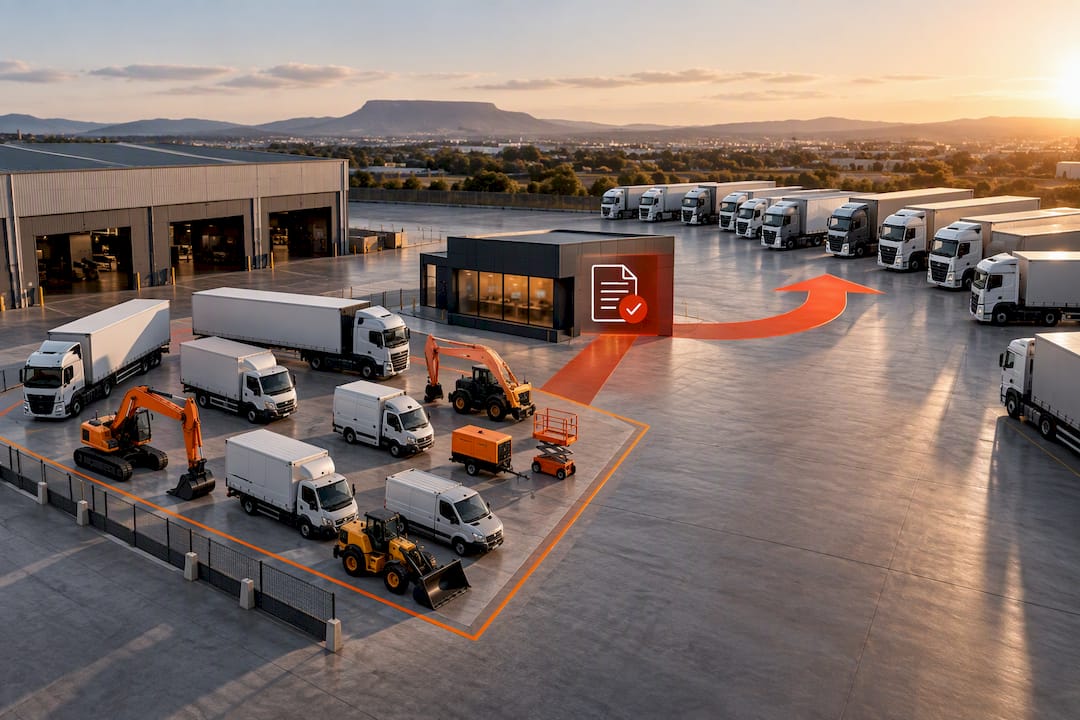
Before the pilot starts, confirm your telematics and dashcam data actually flows into a format the claims software can read. Data integration readiness kills more automation projects than any algorithm weakness does. You also need documented consent records for the personal information the system will process, since POPIA compliance isn’t optional once driver and incident data starts moving through third-party software.
A practical vendor checklist should cover:
- Confirmed API access to your existing fleet management platform
- Clear service-level agreements on turnaround time, not just uptime
- A defined human-in-the-loop trigger for high-value or disputed claims
- Evidence storage duration and retention policy stated in writing
- A processing agreement that names exactly what data the vendor can access
Pro Tip: Run your pilot through one full claims cycle, including a disputed or complex case, before deciding to scale. A pilot that only sees straightforward fender-benders will overstate how ready the system really is.
Change management matters as much as the technology. Drivers need training on why the dashcam matters, not just that it’s there, and your claims team needs a working relationship with the insurer so escalated cases don’t stall waiting on manual sign-off.
What POPIA and salvage rules apply to automated claims data?
Automating claims means moving personal and vehicle data through more systems, which raises the compliance bar rather than lowering it. POPIA requires explicit consent before processing driver and incident data, minimisation so vendors only receive what a claim actually needs, and prompt breach reporting if that data is exposed.
Practical controls worth building into any automated workflow:
- Pseudonymise driver identifiers where the claims engine doesn’t need a name attached to run its severity scoring
- Set fixed retention limits on dashcam footage and telematics logs rather than storing everything indefinitely
- Put a signed processing agreement in place with every claims vendor before data starts flowing
- Log every access point for audit purposes, since regulators will ask who touched a file and when
Salvage cases add another layer. SAIA’s Vehicle Salvage Data system holds VIN and owner records for written-off vehicles, and access to that register is itself constrained by POPIA. If your automated workflow flags a total loss, notify your insurer promptly so the salvage record updates correctly, since a delayed report can complicate resale or future claims on that vehicle.
Why Truckplant’s approach to claims matters for fleet uptime
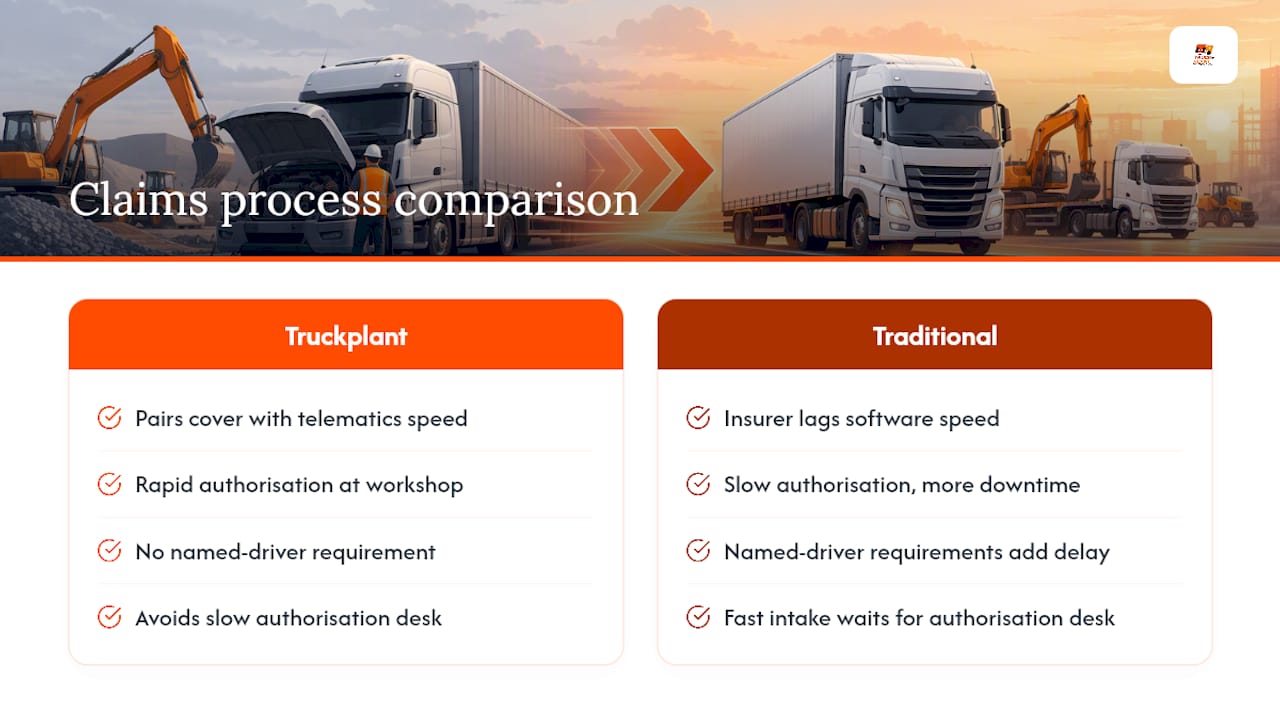
Automation only helps if the insurer behind it can move as fast as the software does. That’s the gap Truckplant was built to close. Truck & Plant On-Demand™ pairs usage-based cover with a claims process designed for the same speed that telematics and dashcam evidence now make possible, rather than forcing a fast intake system to wait on a slow authorisation desk.
Rapid authorisation matters most in the moment a truck is sitting in a workshop instead of on the road. Simplified admin, with no named-driver requirements to untangle before a claim can move, removes one more delay point that traditional cover routinely adds. Fleet managers building or auditing their own incident workflow can review Truckplant’s guidance on telematics data requirements and faster settlement steps for practical detail beyond what any general overview covers.
What actually slows down a fleet automation rollout
Most delays trace back to the same three mistakes: skipping a proper data check before the pilot, treating consent as paperwork to handle later, and trying to automate every claim type at once instead of starting with the straightforward ones. A realistic timeline runs three to six months for a focused pilot, then six to twelve months to scale across a full fleet once the workflow has survived a genuinely messy claim, not just an easy one.
Over-automation is the quieter risk. Removing a human from every decision, including the disputed and high-value cases where judgment still matters, tends to create the exact fraud exposure the technology was meant to close.
— Coert
Getting rapid authorisation without the paperwork drag
Faster claims processing only pays off if your insurer can authorise repairs at the same speed your telematics system reports the incident. That’s where Truck & Plant On-Demand™ changes the equation: you pay for cover only when assets are working, you adjust it as your fleet changes, and claims move through a process built for speed rather than layered sign-off.
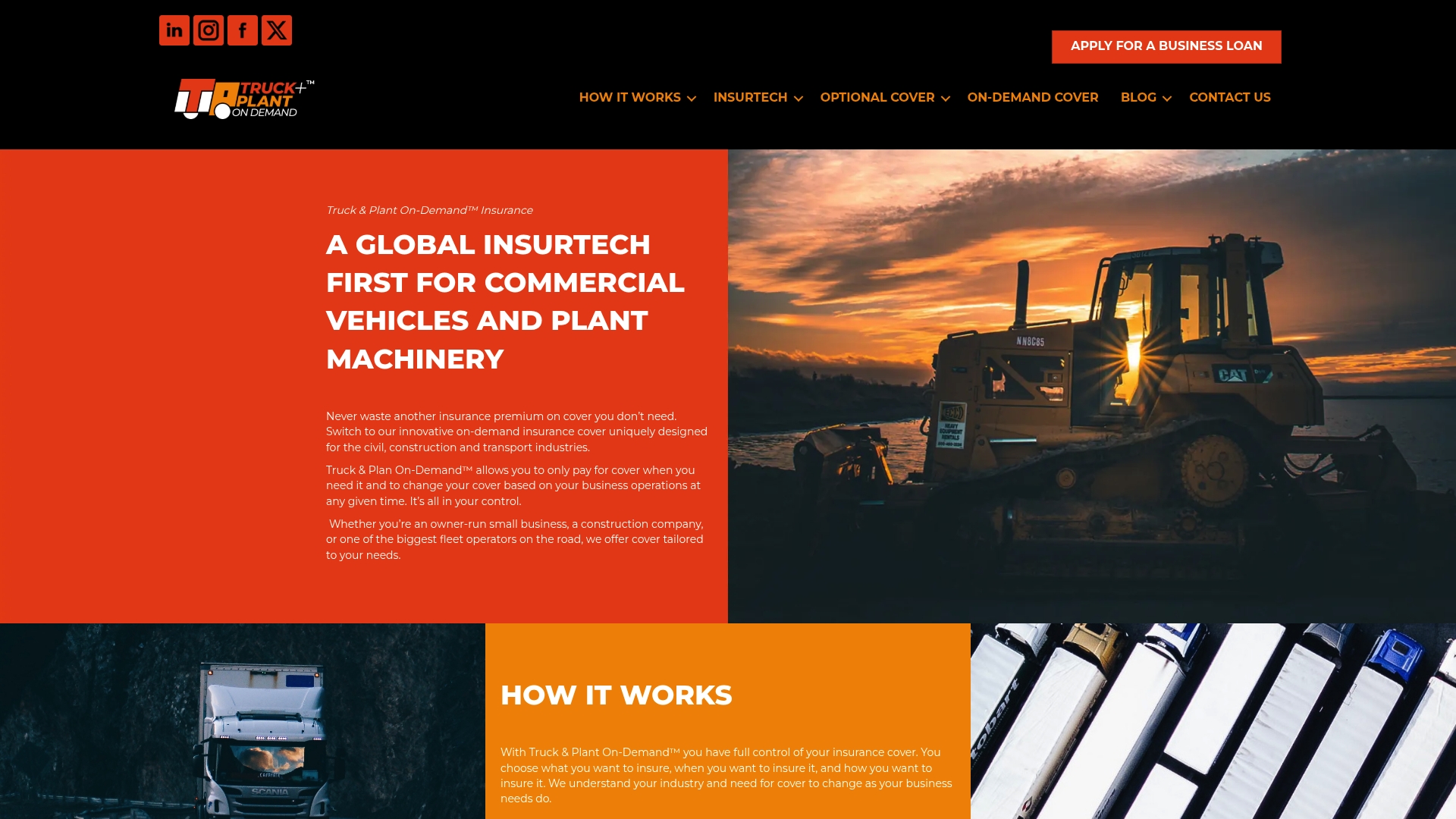
Whether you’re running a handful of trucks or managing plant machinery across multiple sites, Truck & Plant On-Demand™ gives you cover that matches how your business actually operates, not a fixed annual policy that ignores idle equipment. If your fleet already runs telematics or dashcams, that evidence feeds directly into a claims process designed around rapid authorisation instead of a lengthy manual review. Explore Fleet Insurance built for commercial vehicle operators, or get in touch to talk through how a pilot integration would work for your specific mix of vehicles and equipment.
Sources
FAQ
How can I automate claims processing?
Start by connecting your telematics or dashcam data to a claims intake platform that can score severity automatically and route straightforward cases for fast-track approval. Keep a human review step for disputed, high-value, or injury-related claims rather than automating every decision from the outset.
What are the 5 pillars of fleet management?
Fleet management commonly rests on vehicle acquisition and financing, maintenance, fuel and cost control, driver and safety management, and telematics or data tracking. Claims automation sits inside the data tracking and safety pillar, since it depends on the same telematics feed fleets already use for route and driver monitoring.
Can AI handle insurance claims?
AI can handle intake, damage assessment and document analysis reliably for straightforward, low-severity claims, and academic model-fusion research shows improved accuracy and faster processing when combined with human review. Complex or disputed claims still need an adjuster to confirm liability and settlement terms.
What does Truckplant charge for fleet insurance?
Truckplant’s pricing for Truck & Plant On-Demand™ and its fleet cover isn’t published, since premiums are usage-based and adjust to how your fleet actually operates. Current rates are available directly through the Truckplant site.
What are the top fleet management software features to look for?
Look for telematics integration, automated incident intake, damage assessment through computer vision, API access for your existing systems, and clear audit trails for compliance. Claims processing software that can’t connect to your telematics feed will always lag behind one that reads it automatically.