


TL;DR:
- Construction insurance must be tailored and flexible to match project and fleet fluctuations.
- Underinsurance can significantly reduce payout and expose firms to financial loss.
- Regular review and on-demand policies improve risk management and business resilience.
A single insurance policy rarely covers everything a construction site demands. Many South African construction business owners operate under the assumption that one policy is enough, only to discover critical gaps when a claim is filed. The SA commercial insurance market reached USD 6.92 billion in 2025, driven partly by a booming R238 billion infrastructure pipeline. Yet exposure outpaces coverage for many firms. This guide breaks down the policies that matter, how to avoid common pitfalls like underinsurance, and how to secure cover that actually matches the fluid demands of your projects and fleet.
Table of Contents
- Why insurance matters in construction projects
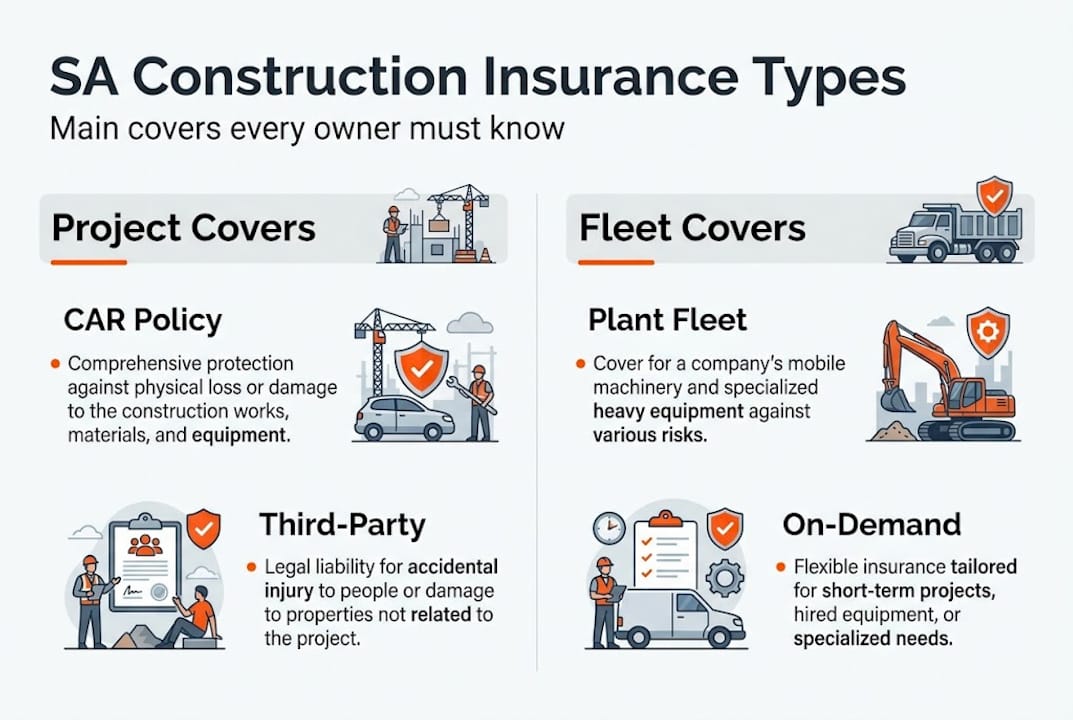
- The major types of insurance for South African construction
- Avoiding underinsurance and common pitfalls
- How to get flexible insurance for modern construction needs
- Our take: what most articles miss about insurance in South African construction
- Get the right cover for your fleet and projects
- Frequently asked questions
Key Takeaways
| Point | Details |
|---|---|
| Comprehensive cover is essential | Insuring for the full value including fees and escalation prevents costly out-of-pocket losses due to underinsurance. |
| Flexible insurance matches project needs | On-demand insurance options help you adjust cover as your site and fleet demands change. |
| Third-party and statutory covers are non-negotiable | Liability and COID insurance are mandatory for legal and contractual compliance in South African construction. |
| Review policies regularly | Frequent policy reviews ensure your cover keeps pace with project scope, equipment changes, and new risks. |
Why insurance matters in construction projects
Construction is one of South Africa’s most risk-dense industries. Every project brings together heavy machinery, large workforces, hazardous materials, and third parties, all in one place. A fire, unexpected storm, equipment theft, or a third-party injury can halt a project within hours. The financial fallout from even a single uninsured incident can include penalties for project delays, legal action, and permanent reputational damage.
The regulatory environment adds another layer. The Compensation for Occupational Injuries and Diseases Act (COID) makes statutory cover for employee injuries a legal requirement. Third-party liability is also non-negotiable on most project contracts. Failing to meet these obligations is not just a financial risk; it can disqualify you from tenders.
The key risks South African construction operators face include:
- Fire and storm damage to structures, materials, and plant
- Theft of tools, equipment, and vehicles from sites
- Accidental damage to works in progress
- Third-party liability for injury or property damage caused by site operations
- Project delays triggered by insured events, affecting revenue and contracts
Understanding essential insurance in construction is increasingly urgent as project values grow and contract terms become more demanding. Clients and main contractors routinely require proof of specific insurance policies before site access is granted. The construction sector is a primary driver of demand in the South African commercial insurance market, and the infrastructure pipeline shows no sign of slowing.
Keeping up with construction insurance trends is not a luxury. It is a practical necessity for any business that wants to protect its assets, people, and cash flow.
Now that we have set the stage for the importance of insurance, let us break down the major policy types and where they fit for South African construction business owners.
The major types of insurance for South African construction
Understanding which policy covers which risk is the first step to proper protection. The main insurance policy types in the South African construction context are:
- Contractors All Risks (CAR): Covers physical damage to the works, materials, and temporary structures during construction. Third-party liability is included. Core covers are fire, storm, flood, theft with forcible entry, and accidental damage.
- Commercial fleet and motor insurance: A dedicated policy for trucks, TLBs, excavators, and other vehicles or plant that move on or off site. This is separate from a CAR policy and covers vehicle damage, third-party motor liability, and in some cases hijacking.
- Third-party liability: Covers legal costs and compensation if your operations injure someone or damage their property. Many projects require a standalone limit in addition to what a CAR policy provides.
- COID (Compensation for Occupational Injuries and Diseases Act): This is statutory cover managed by the government. It handles employee injuries, so you do not need to include worker injuries in your commercial insurance.
According to CAR policy specifications, CAR policies exclude wear and tear, poor workmanship, and employee injuries, all of which fall under other legal frameworks.
| Policy type | What it covers | Key exclusions | Best for |
|---|---|---|---|
| Contractors All Risks | Works, materials, third-party liability | Wear/tear, poor workmanship, COID events | Active construction projects |
| Fleet/motor insurance | Vehicles, plant, motor liability | Driver negligence (if not declared) | Fleets on and off site |
| Third-party liability | Injury or damage to others | Own property or own vehicle damage | All site operations |
| COID | Employee injuries | Non-employment injuries | Statutory obligation only |
Pro Tip: Do not assume your CAR policy automatically extends to vehicles leaving the site. Your fleet insurance for vehicles must be separate and kept current as your fleet composition changes.
With the main policy types established, let us unpack the unnoticed pitfalls and practicalities that trip up even seasoned operators.
Avoiding underinsurance and common pitfalls
Underinsurance is one of the most costly mistakes a construction business can make, and it happens more often than most owners realise. It occurs when the sum insured on a policy is lower than the actual replacement value of the asset or project. This seems like a minor shortfall, but the consequences are significant.
“Underinsurance triggers the average clause, meaning payouts are reduced on a pro-rata basis. Sums insured must include the full replacement value plus professional fees, debris removal, and cost escalation.” CAR insurance risks
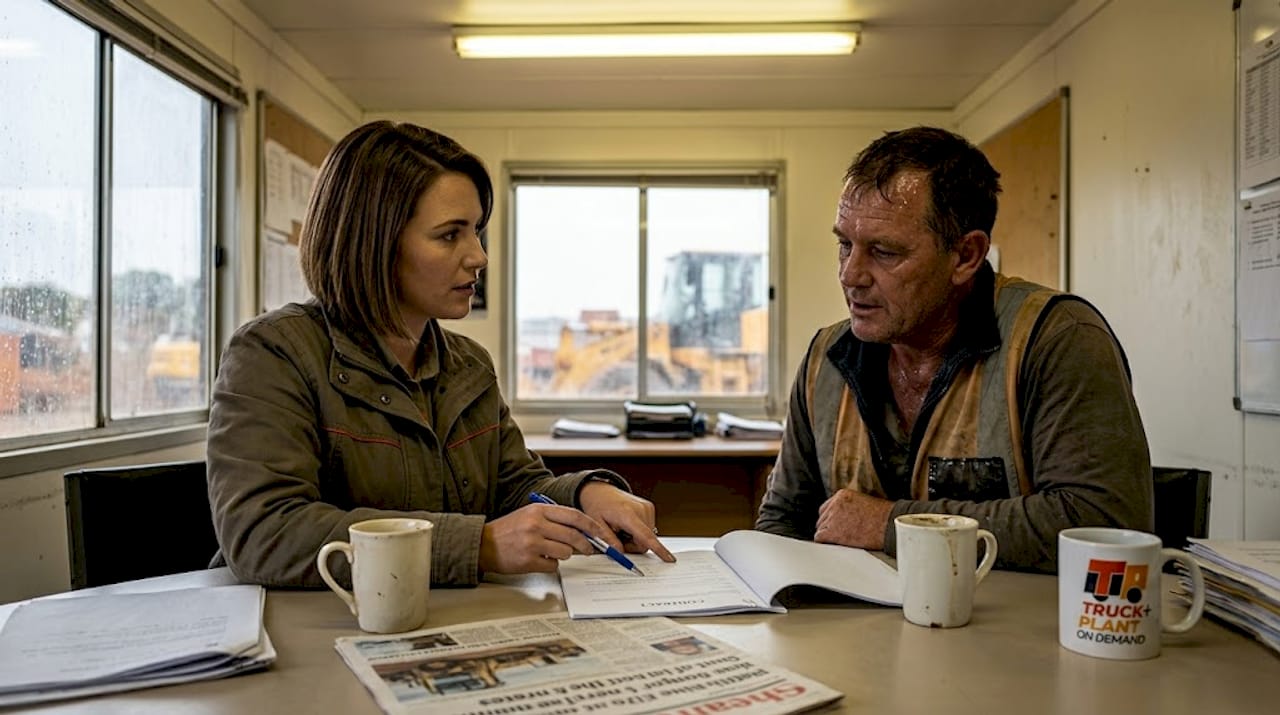
Here is how the average clause works in practice. If you insure a project for R10 million but the correct value is R15 million, you are only covering 67% of the risk. When a R3 million loss occurs, your insurer only pays out 67% of that, which is R2 million. You absorb the remaining R1 million out of pocket, even though you paid premiums throughout the project.
| Scenario | Project value | Sum insured | Loss amount | Payout received | Shortfall |
|---|---|---|---|---|---|
| Underinsured | R15 million | R10 million | R3 million | R2 million | R1 million |
| Correctly insured | R15 million | R15 million | R3 million | R3 million | R0 |
Items that are frequently left out of sums insured include:
- Professional fees (engineers, architects, project managers)
- Debris removal costs after a loss event
- Escalation to account for cost increases over the project timeline
- Advance Loss of Profits (ALOP) or Delay in Startup (DSU) cover for revenue loss and penalties caused by an insured delay
Pro Tip: Review your declared values at every project phase, not just at inception. Material and labour costs shift, and your sum insured must keep pace. On-demand insurance solutions make it easier to adjust cover as your project progresses.
Understanding the third party liability process is equally important. Leaving liability limits too low can expose your business to court-ordered settlements that exceed your cover, leaving you personally liable for the balance.
Now that you know what not to do, let us look at ways to secure insurance that truly matches your site and fleet’s fluctuating demands.
How to get flexible insurance for modern construction needs
The biggest mismatch in construction insurance is simple: most policies are rigid, but construction projects are not. Your fleet size, site risks, and contract values change constantly. Your insurance should too.
Santam holds over 30% of the South African heavy vehicle insurance market, but a growing number of operators are turning to on-demand insurance solutions that allow genuine flexibility. These solutions let you adjust cover as your project scope evolves, removing the pressure to either overinsure or leave gaps.
When choosing a provider for flexible construction insurance, check for:
- Digital access and self-service: Can you add or remove vehicles and plant items yourself, without lengthy admin?
- Adjustable cover periods: Can you activate cover for specific equipment only when it is deployed on a project?
- Fast claims response: Does the insurer understand construction timelines and the cost of delays?
- Industry-specific policies: Are policies designed for construction fleets and plant machinery, not just standard commercial vehicles?
- Transparent pricing: Do premiums reflect actual usage and risk, or is it a flat rate regardless of activity?
Routine policy reviews are not optional; they are part of sound project management. As you bring new equipment onto a project, scale up your fleet, or wind down on completion, your cover must match. This is especially true for owner-operated businesses where the fleet doubles as both a project asset and a business income stream.
Staying current with trends in construction insurance helps you anticipate regulatory shifts and market changes before they affect your premiums or cover.
Pro Tip: Set a calendar reminder at each project milestone to review your insurance schedule. Compare what is insured against what is actually on site. Even a 30-minute check can prevent a six-figure shortfall.
To close, let us turn from industry rules and technicalities to what really makes insurance work for South African construction on the ground.
Our take: what most articles miss about insurance in South African construction
Most guides stop at explaining what a CAR policy covers. That is useful, but it misses a larger operational truth: traditional, fixed-premium policies are structurally mismatched with how construction businesses actually operate.
Projects scale up and down. Equipment moves between sites. Contracts start and end. Yet most policies lock you into a fixed sum and a fixed premium for 12 months. You end up paying for cover you do not need on idle assets, while potentially being underinsured on active ones.
We have seen this pattern consistently. The firms that manage risk most effectively are not necessarily the largest; they are the ones that treat insurance as a live management tool, not a once-a-year admin task. They review cover at project milestones, add assets when deployed, and reduce exposure when equipment is off-site or dormant.
The on-demand insurance perspective is not just about saving money, though that matters. It is about maintaining the discipline to keep your cover accurate. Accurate cover means faster claims, fewer disputes with insurers, and a business that stays financially resilient even when projects do not go to plan.
Ignoring regular insurance reviews is not a passive risk. On complex projects, it is an active choice to carry unprotected exposure.
Get the right cover for your fleet and projects
If this guide has highlighted gaps in your current cover, now is the right time to act. Construction projects move fast, and insurance that does not keep pace is insurance that may not pay when you need it most.
Truck & Plant On-Demand™ is built for exactly this reality. Whether you need fleet insurance for construction vehicles, cover for your plant hire insurance equipment, or protection for your tool of trade insurance needs, you can activate, adjust, and manage cover on your terms. No paying for cover on dormant assets. No locked-in premiums that ignore your actual risk. Just tailored, flexible protection designed for the way South African construction businesses operate.
Frequently asked questions
What is Contractors All Risks (CAR) insurance in South Africa?
CAR insurance covers physical damage to works, materials, temporary structures, and third-party liability during construction. Employee injuries are excluded because they are handled under COID.
How does the average clause work in underinsurance scenarios?
If your sum insured is lower than the true project value, the average clause reduces your payout proportionally, meaning you personally absorb the difference between what you should have insured and what you did.
Why is flexible or on-demand insurance important for South African construction fleets?
Construction fleets change size and composition throughout a project’s life. On-demand cover lets you match your premium to your actual active assets, reducing waste and maintaining accurate protection at every stage.
Is third-party liability required for all construction projects?
Yes. Third-party liability is both a legal and contractual requirement on virtually all South African construction sites, covering injury or property damage caused to others by your operations.
Does COID insurance replace the need for regular insurance policies?
No. COID covers employee injuries only. All other risks, including project damage, vehicle loss, materials, and third-party liability, require separate commercial insurance policies.