


The essential mounted crane insurance bundle is five policies working together: commercial general liability, rigger’s/on-hook liability, equipment physical damage or inland marine, commercial auto, and umbrella coverage for the gaps beneath a major claim. Most contractors overpay for cover they rarely use, which is exactly where on-demand, adjustable insurance like Truck & Plant On-Demand™ earns its place for intermittent, high-risk lifts.
TL;DR:
- Cranes often involve multiple exposures such as third-party damage, load damage, equipment damage, and business interruption, each requiring specific coverage.
- Rigger’s liability insurance is essential to cover loads under control, as general liability policies exclude property in care, custody, or control during lifts.
- Limits should match project size, with higher coverage for large lifts and umbrella policies, to prevent costly delays from underinsurance.
- Proper certificates of insurance must include accurate policy details, additional insured status, and specific lift coverage clauses to avoid project delays or claims disputes.
- On-demand, adjustable insurance like Truck & Plant On-Demand™ provides flexible coverage scaled to particular jobs, saving money during idle periods and reducing risk gaps.
Table of Contents
- What mounted crane insurance covers: the exposures you must insure against
- Core cover types explained: what each policy actually protects
- Common exclusions, gaps and high-risk triggers that cause denials
- Valuation and limits: choosing ACV vs replacement cost
- Certificates, endorsements and proof of cover clients commonly require
- How to choose a policy or provider: a checklist and broker questions
- Why flexible on-demand cover fits mounted crane operations
- How Truck & Plant On-Demand™ covers mounted cranes
- Sources
What mounted crane insurance covers: the exposures you must insure against
A mounted crane isn’t one risk. It’s four or five separate exposures stacked on top of each other, and standard commercial policies rarely cover all of them.
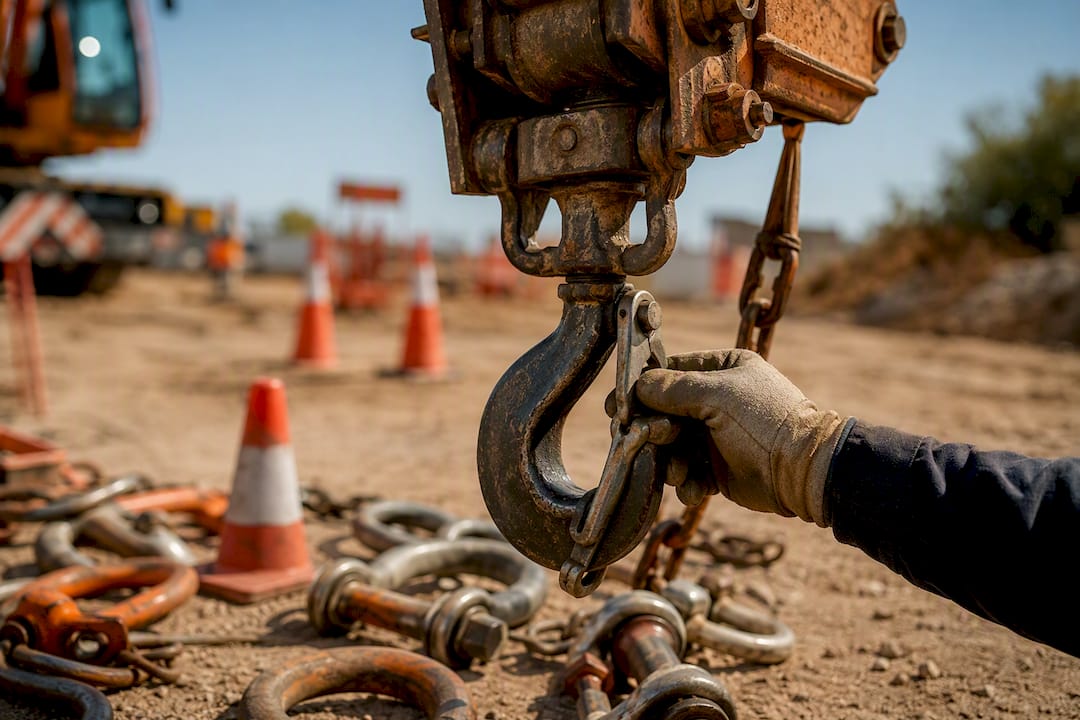
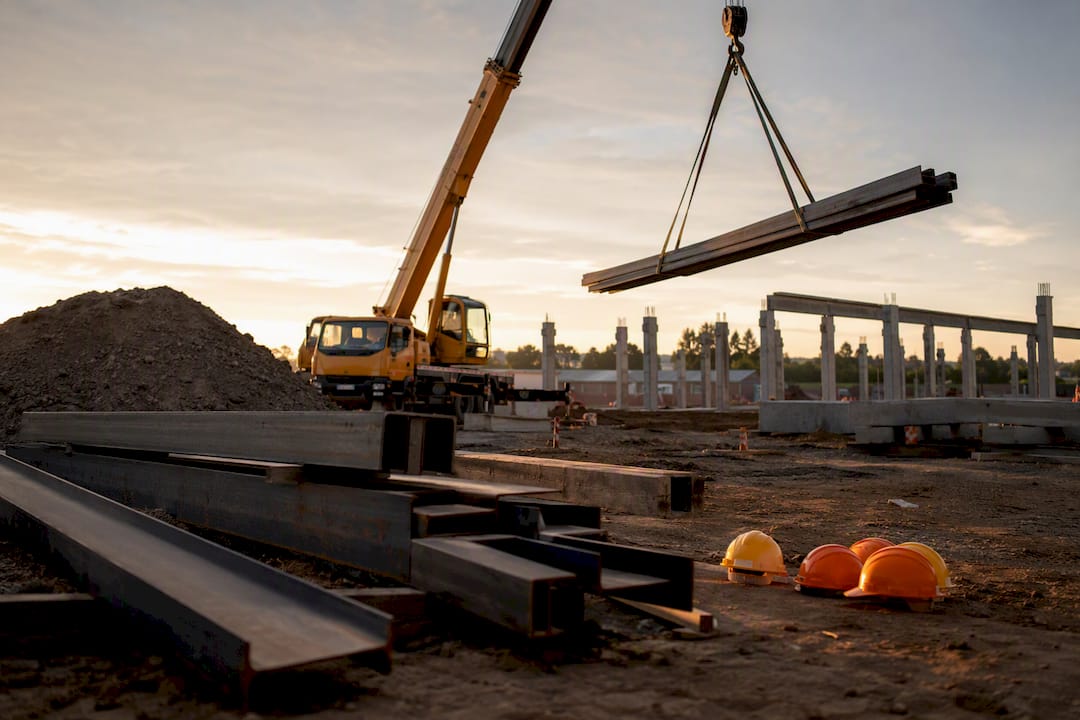
Think about a single lift on a construction site. The crane moves a beam over a public sidewalk, a pedestrian is struck by debris, and the beam itself is damaged when the rigging slips. That single incident touches liability, cargo, equipment, and possibly your own downtime, all at once. A single crane incident can generate multimillion-dollar liability and business interruption costs, which is why insurers price mounted crane risk differently from a standard commercial auto or general liability policy.
The exposures you’re actually insuring against include:
- Third-party injury and property damage during lifts, mobilization, or while the crane is parked on-site.
- Damage to the load itself, a gap most general liability policies exclude outright once you touch, lift, or control someone else’s property.
- Physical damage to the crane and its components, whether it happens mid-lift, during transit, or from a mechanical failure.
- Business interruption and loss-of-use, since a sidelined crane often means a stalled project and lost revenue on top of repair costs.
Core cover types explained: what each policy actually protects
Essential crane insurance programs typically bundle five distinct policy types, and each one answers a different question about your risk.
- Commercial general liability (CGL) handles third-party bodily injury and property damage on-site, but it excludes property in your “care, custody, or control.” The moment your crane lifts someone else’s material, CGL stops covering that load.
- Rigger’s liability, or on-hook coverage, fills exactly that gap. It insures the load while it’s suspended or under your control, and you can typically buy it as an annual policy or a per-lift policy for a single high-value job.
- Equipment physical damage, often written as inland marine, covers the crane itself against collision, tip-over, fire, and theft. Valuation matters here: actual cash value and replacement cost produce very different payouts after a total loss.
- Commercial auto liability covers the crane and carrier vehicle in transit. Once the crane starts operating (outriggers down, boom extended), coverage may shift from the auto policy to general liability, and carriers vary in how they define that transition.
- Umbrella or excess liability sits above all four, adding limits when a catastrophic claim exceeds your underlying policies, which happens more often than most operators expect on large lifts.
Common exclusions, gaps and high-risk triggers that cause denials
Most claim denials trace back to one of a handful of predictable causes, and nearly all of them are preventable with paperwork you should already be keeping.
- Care, custody, and control exclusion: your CGL policy won’t pay if the damaged property was under your crane’s control, which is why rigger’s/on-hook coverage isn’t optional for lift work.
- Faulty rigging and workmanship exclusions: rigger’s liability policies often exclude damage caused by improper rigging technique, so your documented lift plan becomes your proof that procedure was followed.
- Mechanical breakdown: inland marine policies are frequently written on an all-risk basis, yet mechanical breakdown remains a common carve-out that needs its own endorsement.
- Late notification: insurers commonly expect same-day notice of an incident, and delayed reporting is one of the most frequent reasons claims get denied.
Pro Tip: Keep a rigging photo log for every lift over a set weight threshold. It costs you two minutes and becomes your strongest evidence if a claim ever gets disputed.
Valuation and limits: choosing ACV vs replacement cost
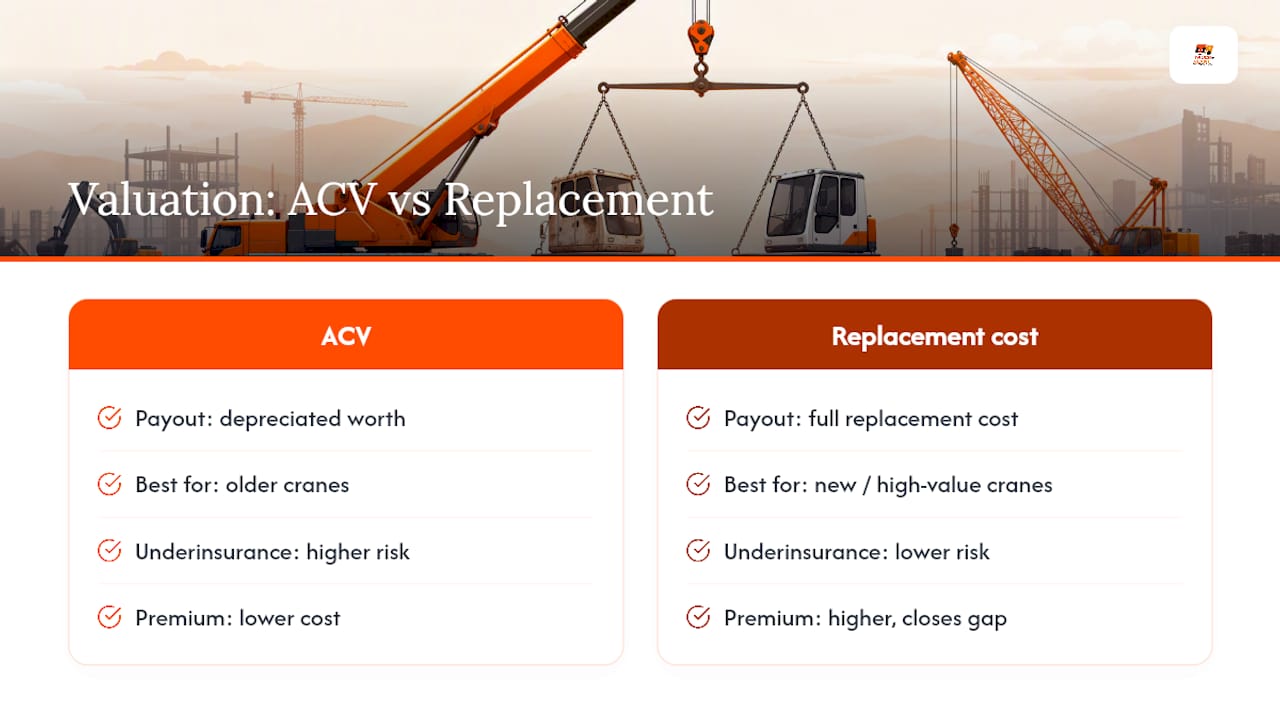
Actual cash value pays out the crane’s depreciated worth after a loss. Replacement cost pays what it actually takes to put an equivalent crane back into service. For newer or high-value cranes, choosing replacement cost valuation meaningfully reduces the risk of being underfunded after a total loss, and the premium difference rarely matches the exposure gap it closes.
Limits should scale with project size. Mid-size projects often require CGL at $1 million per occurrence with a $2 million aggregate, with higher rigger’s limits for large lifts and umbrella coverage stacked on top. Underinsuring your equipment doesn’t just cost you at claim time. It stretches your downtime, since a shortfall often delays repairs while you scramble to cover the gap yourself.
Certificates, endorsements and proof of cover clients commonly require
General contractors won’t let you on site without a certificate of insurance that reads correctly, and getting the wording wrong causes more project delays than the underlying coverage gap ever would. Properly issued COIs and endorsements prevent contract disputes before they start.
A COI that will actually satisfy a GC includes:
- Named insured and policy numbers matching the entity performing the work, not a parent company or affiliate.
- Per-occurrence and aggregate limits stated clearly, plus separate rigger’s/on-hook limits if the lift involves a third party’s property.
- Additional insured endorsement, naming the GC or property owner on your liability policy for the project’s duration.
- Waiver of subrogation, which stops your insurer from pursuing the client after paying a claim.
- Primary and non-contributory wording, confirming your policy pays first, ahead of the GC’s own coverage.
For single high-value lifts, ask your broker to issue project-specific, per-lift value limits on the COI rather than relying on your standard annual language.
How to choose a policy or provider: a checklist and broker questions
Getting the right mounted crane insurance policy isn’t about finding the cheapest quote. It’s about confirming the policy actually responds when a real lift goes wrong.
- Verify on-hook wording explicitly covers the load types and weight classes you actually lift.
- Confirm your valuation method, replacement cost versus actual cash value, matches your crane’s age and rebuild cost.
- Check that your limits match what your typical GC contracts require, including umbrella triggers.
- Review COI templates in advance so your broker can issue contract-ready documents same-day.
- Ask about claims-handling timelines and what documentation the insurer expects on day one.
Questions worth putting to your broker directly: does the rigger’s policy cover per-lift sublimits or only annual aggregates? What maintenance records does the insurer require to avoid a denial? What’s the average turnaround on a physical damage claim?
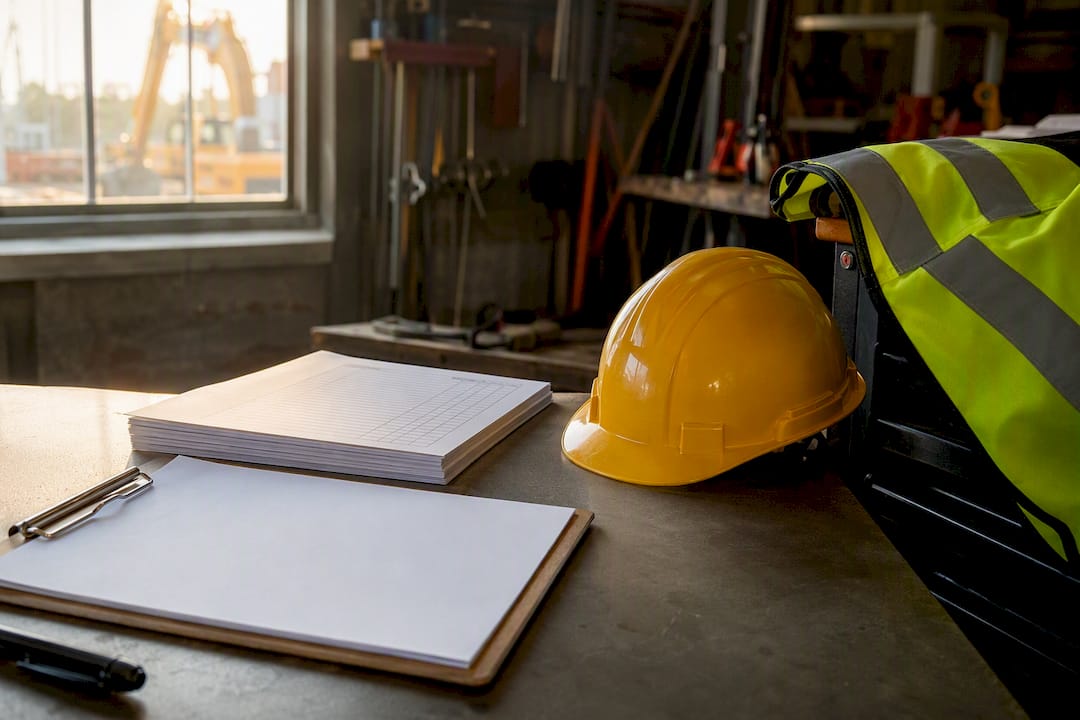
Have your equipment spec sheets, maintenance logs, lift plans, operator certifications, and prior loss runs ready before that call. Brokers move faster, and quote more accurately, when they’re not chasing paperwork.
Pro Tip: Loss runs from your last three years carry more underwriting weight than almost anything else you can hand a broker. Request them from your current insurer well before renewal, not after.
Why flexible on-demand cover fits mounted crane operations
Most mounted crane operators don’t lift heavy loads every day. They have a few weeks of intense, high-value work, then stretches where the crane sits mostly idle or handles routine, lower-risk jobs. Paying a flat annual premium sized for your busiest week, every week, wastes money on the slow months.
That’s the practical case for on-demand cover. Specialist programs already bundle loss-control resources like lift planning and operator training that reduce total risk beyond the premium itself, and adjustable cover extends that logic to timing. Picture a single-week bridge girder lift requiring a $5 million on-hook limit you don’t carry the other 51 weeks of the year. Toggling that coverage on for the job, then back down afterward, is the difference between paying for a risk you actually have and paying for one you don’t.
— Coert
How Truck & Plant On-Demand™ covers mounted cranes
Truckplant built Truck & Plant On-Demand™ around exactly the problem mounted crane operators face: risk that spikes for a job, then drops off. You adjust your cover, your limits, and your on-hook exposure as your lift schedule changes, instead of carrying one flat premium all year.

The product suits owner-operators running a single crane truck, rental fleets moving equipment between sites, and subcontractors who need contract-ready COIs turned around fast. You get adjustable equipment physical damage and inland marine options, on-hook coverage you can scale to a specific lift, and digital certificates your GC can verify without a phone call. If you’re quoting a project this month, start with Truckplant’s fleet insurance for commercial vehicles and get a quote scoped to your actual lift schedule, not a generic annual estimate.
This article is general information, not a substitute for advice from a qualified financial advisor. Consult a qualified financial professional about your own circumstances before acting on anything here.
Sources
- Crane Insurance Requirements: Liability Coverage, Inland Marine & Riggers Insurance Guide
- Meeting insurance needs — Crane Hotline
- Inland marine insurance: new realities when insuring cranes and lifts
- Insurance Coverage Q&A: Coverage for boom crane