


TL;DR:
- Dynamic insurance recalculates premiums in near real-time using telematics, IoT data, and AI models. It benefits construction and transport businesses by aligning costs with actual risk and encouraging safer behavior. Implementing it requires strong data governance, regulatory compliance, and technology readiness.
Dynamic insurance is defined as a coverage model that recalculates premiums in near real-time based on continuous data about actual risk and usage, rather than fixed annual rates. The industry term for this approach is “usage-based insurance” or “dynamic pricing,” and it is reshaping how construction and transport businesses manage their coverage costs. Technologies like telematics, IoT sensors, and AI predictive models feed live operational data directly into pricing engines. Safe drivers often receive discounts ranging from 10% to 30% compared to standard fixed-rate policies. For businesses running commercial vehicles or heavy plant equipment, where risk exposure changes daily, this model is a direct answer to the problem of paying for cover you do not always need.
What is dynamic insurance and how does it differ from static cover?
Dynamic insurance replaces the traditional “set it and forget it” premium with a rate that moves in response to real-world conditions. A standard fixed policy charges the same monthly amount whether your fleet runs 20,000 kilometres or sits idle for two weeks. Dynamic cover charges based on what actually happens.
The core difference is data. Traditional static policies rely on historical averages, vehicle class, and driver age to set a rate at renewal. Dynamic pricing uses continuous data streams from telematics devices, GPS trackers, and IoT sensors fitted to vehicles and equipment. That data feeds AI predictive models, which recalibrate your premium as conditions change.
This distinction matters for construction and transport operators because your risk profile is genuinely variable. A tipper truck hauling aggregate on a mine haul road carries a different risk profile than the same truck parked over a weekend. Static policies ignore that difference. Dynamic cover prices it accurately.
How does dynamic insurance work in practice?
The mechanism has three stages: data collection, risk modelling, and premium adjustment.

Data collection is the foundation. Telematics units in your vehicles record speed, braking force, cornering behaviour, mileage, and engine hours. IoT sensors on plant equipment log operating hours, load cycles, and proximity to hazard zones. Construction and transport applications monitor real-time factors like vehicle mileage and hazard proximity to proactively reduce risk and adjust terms.
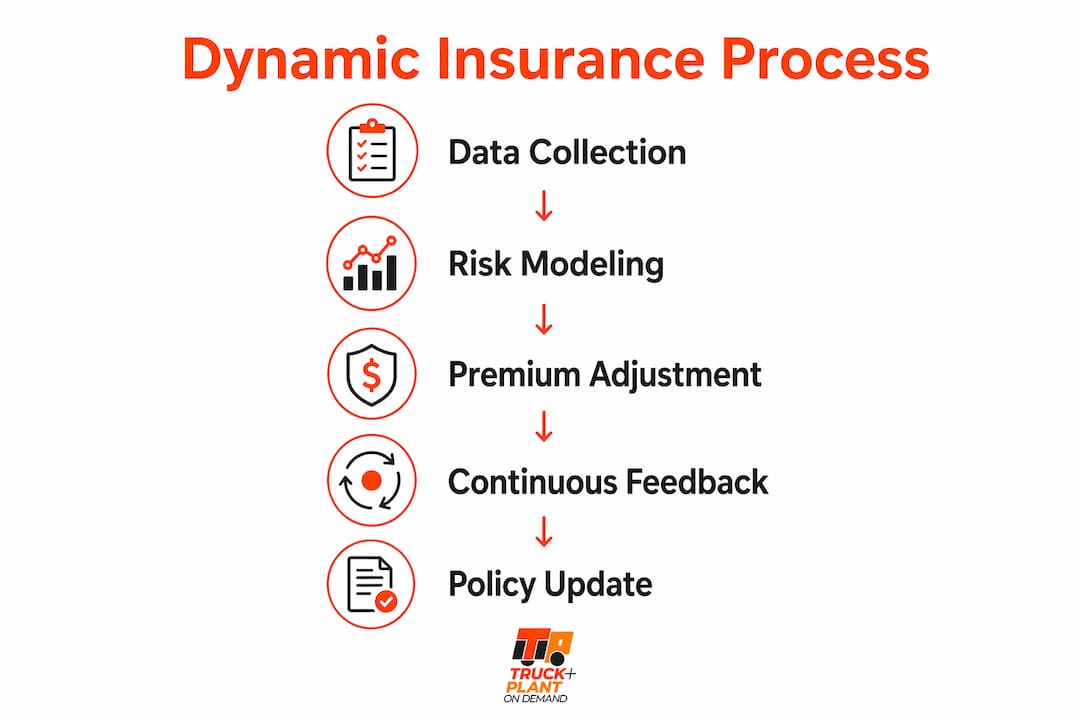
Risk modelling is where AI does the heavy work. AI predictive models process high-volume streaming data to recalibrate premiums quickly, aligning insurance costs with actual risk exposure. The model does not wait for your annual renewal. It updates continuously, sometimes daily or even per trip.
Premium adjustment closes the loop. Your insurer receives the recalculated risk score and adjusts your rate accordingly. Good behaviour lowers your cost. Risky behaviour raises it. This feedback loop creates a direct financial incentive to operate safely.
Key data inputs that drive dynamic pricing include:
- Vehicle speed and acceleration patterns
- Braking frequency and severity
- Total kilometres driven per period
- Equipment operating hours and load data
- Geographic risk zones and route hazard scores
- Driver identification and shift patterns
Pro Tip: Fit telematics to your highest-value assets first. The data you generate in the first 90 days gives your insurer a baseline risk score, and a clean baseline is your strongest negotiating tool at the next rate review.
Dynamic insurance platforms also enable insurers to test and launch products with instant premium recalculations, which means new cover options reach the market faster. For fleet managers, that translates to more tailored products and faster policy changes when your operational needs shift.
What are the benefits of dynamic insurance for construction and transport businesses?
The benefits of dynamic insurance go well beyond cost savings, though the savings are real and measurable. The model changes how you think about risk across your entire operation.
-
Cost alignment with actual usage. You pay for the cover you use, not a flat rate built on industry averages. A construction company that parks its excavators over the December shutdown period does not pay full operating-rate premiums for those weeks.
-
Incentives for safer operations. Dynamic pricing improves fairness by rewarding low-risk behaviour with lower premiums and charging more for higher risk. That financial signal reaches drivers and operators directly, encouraging better habits on site and on the road.
-
Real-time risk visibility. The telematics and IoT data that drives your premium also gives you a live picture of fleet health and driver behaviour. You can identify high-risk drivers before an incident occurs, not after a claim. For more on how this data works in practice, see Truckplant’s guide to telematics in fleet insurance.
-
Flexibility when your operations change. Construction projects start and finish. Transport contracts expand and contract. Dynamic coverage options let your insurance follow those changes without waiting for an annual renewal window.
-
Potential for meaningful premium reductions. Safe drivers often receive discounts of 10% to 30% under dynamic models. For a fleet of 20 vehicles, that reduction represents a significant annual saving.
The advantages for construction fleets specifically are well documented. Truckplant’s analysis of dynamic insurance for construction fleets shows that the combination of usage-based pricing and real-time data access changes how fleet managers approach both budgeting and risk control.
Dynamic insurance also redefines what cover is for. Rather than functioning purely as compensation after a loss, it becomes an active risk management tool. Insurers and policyholders share data and share the goal of preventing incidents, not just settling them.
How to implement dynamic insurance: key considerations
Switching from a fixed policy to a dynamic model requires preparation. The technology is straightforward. The operational and governance changes take more thought.
The practical steps and considerations include:
- Data governance. Transitioning to dynamic insurance requires strong data governance and privacy management due to continuous data feeds from telematics. You need clear policies on who owns the data, how it is stored, and how long it is retained.
- Regulatory compliance. Regulators require insurers using dynamic pricing to ensure transparency, prevent algorithmic bias, and maintain thorough documentation. As a policyholder, you benefit from asking your insurer how their pricing model is audited.
- Accounting adjustments. Embedded insurance models shift coverage costs from fixed monthly expenses to variable operational costs. Your finance team needs to account for premium variability in cash flow planning.
- Premium volatility management. Dynamic insurance can cause premium volatility. Successful users manage risk behaviour proactively rather than expecting automatic cost reductions. Proactive driver training and equipment maintenance are your best tools for keeping premiums stable.
- Technology readiness. Telematics units and IoT sensors must be installed, calibrated, and maintained. Budget for this infrastructure as part of your implementation cost.
Pro Tip: Before you sign a dynamic insurance policy, ask your insurer for a sample data report. If they cannot show you clearly how your behaviour data translates into a premium figure, their model lacks the transparency you need to manage your costs.
For transport businesses managing cargo risk alongside vehicle cover, understanding cargo insurance for logistics operations can help you see how dynamic principles apply across the full supply chain.
How does dynamic insurance compare to traditional static policies?
The table below sets out the core differences between static and dynamic insurance across the attributes that matter most to fleet and plant operators.
| Attribute | Static insurance | Dynamic insurance |
|---|---|---|
| Pricing frequency | Annual or monthly fixed rate | Continuous, near real-time adjustment |
| Data used | Historical averages at inception | Live telematics, IoT, and behavioural data |
| Flexibility | Low. Changes require policy amendments | High. Cover adjusts with operational changes |
| Risk alignment | Approximate, based on vehicle class | Precise, based on actual usage and behaviour |
| Cost predictability | High. Same amount each period | Variable. Linked to operational performance |
| Incentive for safe behaviour | None built in | Direct financial reward for lower risk |
Static policies suit businesses with highly predictable, stable operations where risk does not vary much month to month. Dynamic cover suits businesses where fleet size, equipment use, and operational risk change regularly.
Real-time, data-driven pricing models are driving the industry shift from static policies to autonomous, continuously adaptive insurance coverage. This is not a distant trend. Insurers are already building the platforms that make this possible, and the construction and transport sectors are among the first to benefit given the volume and quality of telematics data available from commercial fleets.
The question of whether dynamic insurance is worth it depends on one factor above all others: how variable is your actual risk exposure? If the answer is “very,” the case for dynamic cover is strong.
Key takeaways
Dynamic insurance is the most cost-efficient model for construction and transport businesses whose risk exposure changes with operations, not with the calendar.
| Point | Details |
|---|---|
| Core definition | Dynamic insurance recalculates premiums in near real-time using telematics, IoT, and AI data. |
| Savings potential | Safe operators can receive premium discounts of 10% to 30% compared to fixed-rate policies. |
| Risk management benefit | Live data gives fleet managers visibility into driver behaviour before incidents occur. |
| Implementation priority | Strong data governance and privacy management are required before switching to dynamic cover. |
| Best fit | Businesses with variable fleet use, seasonal operations, or fluctuating equipment deployment benefit most. |
Why dynamic insurance is the mindset shift construction and transport needs
I have spent years watching construction and transport businesses treat insurance as a fixed overhead, something to budget once a year and forget. That mindset costs money, and it costs more than most operators realise.
The real value of dynamic insurance is not the 10% to 30% premium discount, though that matters. The real value is what happens when your drivers know their behaviour directly affects the company’s insurance bill. That knowledge changes how people operate on site and on the road. It creates accountability that no safety poster or toolbox talk can replicate.
The challenge I see most often is data anxiety. Business owners worry about handing continuous operational data to an insurer. That concern is legitimate. Effective use of dynamic insurance requires robust management of continuous data streams to ensure privacy, accuracy, and compliance. The answer is not to avoid dynamic cover. The answer is to choose an insurer who can show you exactly how your data is used and protected.
Insurers investing early in real-time data platforms will lead the shift to continuously adaptive insurance products. The businesses that partner with those insurers early will carry a cost and risk advantage over competitors still paying flat rates for cover they do not fully use. The 2026 insurance trends for commercial fleets make this direction very clear.
My advice is direct: treat your insurance premium as a performance metric, not a fixed cost. If it does not move when your risk improves, your insurer is not working hard enough for you.
— Coert
Truckplant’s on-demand cover for fleets and plant equipment
Truckplant built its Truck & Plant On-Demand™ product on exactly the principles that make dynamic insurance work. You choose what to insure, when to insure it, and how to insure it. Your premium reflects your actual operations, not an industry average.
Whether you run a single owner-operated truck or a mixed fleet of commercial vehicles and yellow plant machinery, Truckplant’s fleet insurance solutions give you full control over your cover. You can also explore dedicated truck insurance cover or plant hire insurance for equipment-specific protection. The model is simple: pay for the cover you need, when you need it, and adjust as your business changes.
FAQ
What is the dynamic insurance definition in simple terms?
Dynamic insurance is a coverage model that uses live data from telematics and IoT sensors to adjust your premium based on actual risk and usage, rather than a fixed annual rate.
How does dynamic insurance work for fleet operators?
Telematics devices collect data on driving behaviour, mileage, and route risk. AI models process that data and recalculate your premium continuously, rewarding safe operations with lower costs.
What are the main benefits of dynamic insurance?
The main benefits include cost alignment with actual usage, financial incentives for safer driver behaviour, real-time risk visibility, and flexible dynamic coverage options that adapt as your operations change.
Is dynamic insurance worth it for construction businesses?
Dynamic insurance is worth it for construction businesses with variable equipment use and seasonal operations. Businesses that manage risk proactively can achieve premium reductions of 10% to 30% compared to static policies.
What data does dynamic insurance use to set premiums?
Dynamic insurance uses telematics data including speed, braking patterns, mileage, and operating hours, combined with IoT sensor readings on equipment load and hazard proximity, to calculate risk in near real-time.