


TL;DR:
- Non-static insurance adjusts premiums based on real-time asset usage, unlike traditional fixed premiums.
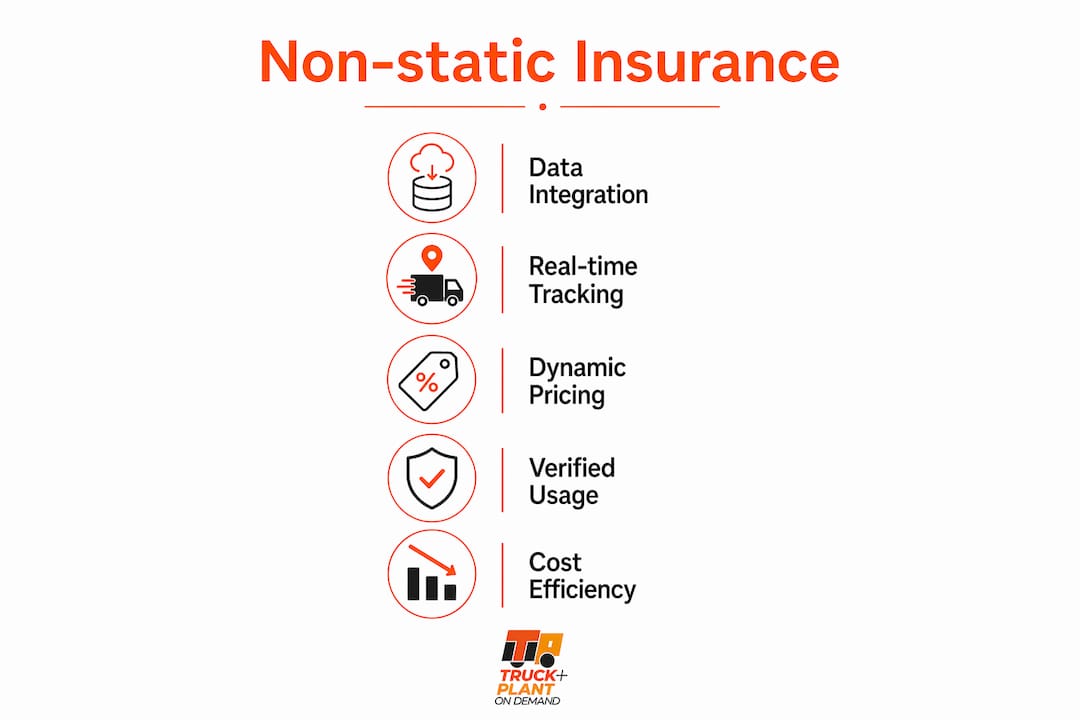
- It relies on telematics and live data to accurately reflect operational risks and enable instant policy scaling.
Non-static insurance is defined as a coverage model that adjusts premiums and policy terms in real time based on actual asset usage, rather than charging a fixed annual premium regardless of activity. Unlike traditional static underwriting, which relies on demographic tables and annual snapshots, non-static models respond to live operational data. For business owners in construction, transport, and civil engineering, this distinction matters enormously. Your fleet sits idle during the rainy season. Your excavator works double shifts during a major contract. A static policy charges you the same premium either way. Non-static insurance does not.
What is non-static insurance and how does it work?
Non-static insurance, also called usage-based or dynamic insurance, sets premiums based on what your assets actually do, not what an actuary assumes they might do. The industry term you will encounter most often is “usage-based insurance” or UBI. Both phrases describe the same core mechanic: real-time data drives real-time pricing.
The technology behind it relies on telematics, onboard sensors, and live data streams connected to an underwriting engine. These systems track metrics that directly reflect risk exposure:
- Hours operated: A tipper truck running 12-hour shifts carries more risk than one parked in a yard.
- Mileage and route type: Highway kilometres differ in risk profile from urban stop-start delivery routes.
- Idle time: Assets sitting unused represent near-zero risk and should attract near-zero premium.
- Load and operating conditions: Heavy plant under sustained load faces different wear and failure rates than lightly used equipment.
Telematics and operational data allow insurers to eliminate premiums for idle assets entirely and apply micro-segmentation to active risk. That is a structural shift from annual guesswork to continuous accuracy.
AI systems process this data continuously, adjusting policy pricing as conditions change. The result is a policy that mirrors your operations rather than a fixed contract written once a year and forgotten. Static underwriting relies on demographic tables that often fail to capture the complex, variable behaviour of modern construction and transport businesses.

Pro Tip: Before signing any usage-based policy, confirm exactly which data points the insurer monitors and how frequently the premium recalculates. Weekly adjustments deliver far more accuracy than monthly ones.
What are the benefits of non-static insurance for operators?
The practical advantages of flexible, dynamic cover go well beyond a lower monthly bill. Here is how non-static insurance changes the financial and operational picture for businesses in construction, transport, and civil engineering:
-
You stop paying for cover you do not need. Dynamic insurance models reduce wasted premium costs by providing coverage at the moment of need. A grader sitting on a depot over a public holiday does not need the same cover as one operating on a live road project.
-
Your premium reflects your actual risk cycle. Construction projects have defined phases. Civil engineering contracts ramp up and wind down. Usage-based cover aligns with those cycles automatically, so your insurance cost tracks your revenue, not a fixed overhead.
-
You gain real visibility into operational risk. Dynamic underwriting enables insurers to identify micro-segments of operational behaviour and proactively flag risk before it becomes a claim. That means fewer incidents, less downtime, and lower long-term costs.
-
You can scale cover up or down instantly. Win a new contract and need to add three vehicles to your fleet this week? Non-static policies accommodate that without the paperwork delays typical of annual policy amendments.
-
Your insurer becomes a risk partner, not just a claims payer. Active insurance models shift the insurer’s role from reactive to proactive, creating a partnership focused on preventing losses rather than simply settling them.
Pro Tip: Track your own telematics data independently. When you can verify the numbers your insurer uses to calculate your premium, you hold the insurer accountable and can dispute inaccurate readings.
For a deeper look at how flexible fleet premiums work in practice, Truckplant’s resources cover the mechanics in detail.
Non-static vs non-admitted insurance: clearing up the confusion
Business owners frequently confuse two terms that sound similar but describe entirely different things. Understanding the difference protects you from making a costly mistake when reviewing policy documents or responding to tender requirements.
Non-static insurance refers to the pricing and coverage methodology. It describes how a policy is structured and how premiums are calculated. It has nothing to do with the regulatory status of the insurer.
Non-admitted insurance refers to the regulatory licensing of the insurer. Non-admitted policies come from carriers not licensed by state or national regulators, often providing coverage for niche or hard-to-insure risks. These carriers are not inherently inferior in financial strength, but they carry specific implications you need to know.
Key distinctions to keep in mind:
- Non-admitted insurers do not participate in state guaranty funds. If the insurer fails, you have no state-backed fallback.
- Extra premium taxes typically ranging from 1% to 6% apply to non-admitted transactions, and these are usually passed to the policyholder.
- Some government contracts and tenders explicitly require admitted insurance. Submitting a non-admitted policy in those situations can disqualify your bid.
- Surplus lines insurers (a category of non-admitted carriers) can write custom policy language unavailable from admitted carriers, which is useful for unusual risk profiles.
One additional clause worth checking in any commercial policy is non-assessability. Non-assessable policies protect you from additional charges if your insurer experiences financial losses. This protection is increasingly standard in modern commercial insurance, but not universal. Always verify it is included before signing.
For a clear breakdown of insurance terminology relevant to fleet owners, Truckplant’s practical guide covers the key concepts without the legal jargon.
The distinction between admitted and non-admitted insurance is also critical when operating across multiple jurisdictions, as licensing requirements vary significantly by country and region.
How to implement non-static insurance for your business
Moving from a static annual policy to a usage-based model requires preparation. The technology and the contract terms both need to be right before you commit.
Identify the right insurer or broker. Not every insurer offers genuine usage-based products. Look for providers with direct telematics integration and transparent premium calculation methods. Ask for a sample premium statement showing exactly how usage data translates to cost. Understanding transportation compliance requirements for your fleet also helps you ask the right questions during the selection process.
Ask the right questions before signing:
- What data does the insurer collect, and who owns it?
- How frequently does the premium recalculate?
- What happens to my premium if my telematics device fails or loses signal?
- Can I adjust my covered assets mid-policy without penalty?
- Does the policy include a non-assessable clause?
Integrate your telematics platform. Implementing real-time usage-based insurance requires connecting telematics and operational monitoring systems to the insurer’s underwriting engine. If your fleet already uses a GPS or fleet management system, confirm it is compatible with your insurer’s data requirements before switching.
Check your contractual obligations. Some project contracts, government tenders, and financing agreements specify minimum insurance requirements or mandate admitted carriers. Review these before selecting a non-admitted surplus lines provider, even if their product is otherwise a better fit.
Run a parallel period. For the first 30–60 days, track what your usage-based premium would have been against your existing static premium. This gives you a concrete cost comparison and confirms the new model delivers the savings you expect. The on-demand insurance setup process at Truckplant walks through this transition in practical terms.
My view on where non-static insurance is heading
My view on where non-static insurance is heading
The biggest mistake I see operators make is treating insurance as a fixed overhead, something to budget once a year and ignore. Insurance analysts describe this as the core failure of static thinking: coverage becomes a passive cost rather than an active operational tool.
Non-static insurance forces a different mindset. When your premium moves with your operations, you start paying attention to the data behind it. That attention is where the real value lives. Operators who engage with their telematics data, who review their risk profiles regularly, and who treat their insurer as a partner rather than a vendor consistently get better outcomes.
The caution I would offer is this: not every insurer offering “flexible” cover has actually built the infrastructure to deliver it. Some products are static policies with a usage-based label attached. Ask for the data. Ask how the premium is calculated. If the insurer cannot show you the mechanics clearly, the product is probably not what it claims to be.
Within the next five years, I expect autonomous underwriting systems to handle most premium adjustments without human intervention. The operators who have already integrated telematics and built data-sharing relationships with their insurers will be positioned to benefit immediately. Those still on annual static policies will be playing catch-up.
— Coert
Truckplant’s on-demand cover for construction and transport fleets
Truckplant built its Truck & Plant On-Demand™ model specifically for operators who cannot afford to pay for cover they do not need. Whether you run a single tipper or a mixed fleet of commercial vehicles and yellow plant machinery, the cover adjusts to your actual operations.
You choose what to insure, when to insure it, and how. Premiums align to real usage, not fixed annual commitments. That means your insurance cost tracks your project pipeline rather than sitting as a flat overhead regardless of activity. For South African operators in civil, construction, and transport, Truckplant offers fleet insurance on demand that puts you in control of your cover from day one. The importance of getting this right for transport businesses cannot be overstated, and Truckplant’s model is built around exactly that need.
Key takeaways
Non-static insurance is the most cost-efficient coverage model available to construction, transport, and civil engineering operators because it charges only for active risk, not fixed annual exposure.
| Point | Details |
|---|---|
| Definition clarity | Non-static insurance adjusts premiums based on real-time usage data, not fixed annual rates. |
| Not the same as non-admitted | Non-admitted insurance refers to regulatory licensing, not pricing methodology. Always verify which applies. |
| Core technology | Telematics and live data feeds drive premium calculations, eliminating charges for idle assets. |
| Non-assessable clause | Verify your policy includes this clause to avoid retrospective charges beyond your agreed premium. |
| Implementation step | Run a 30–60 day parallel comparison before fully switching to confirm actual cost savings. |
FAQ
What is the non-static insurance definition in simple terms?
Non-static insurance is a policy that adjusts your premium based on how much and how intensively you actually use your insured assets, rather than charging a flat annual rate.
How does non-static insurance differ from static insurance?
Static insurance charges a fixed premium set once a year using historical data. Non-static insurance recalculates premiums continuously using live telematics and operational data.
Is non-static insurance the same as non-admitted insurance?
No. Non-static describes how premiums are calculated. Non-admitted describes whether the insurer holds a regulatory licence in your jurisdiction. The two concepts are unrelated.
What types of businesses benefit most from non-static insurance?
Construction companies, civil engineering contractors, and transport fleet operators benefit most, as their asset usage and risk exposure fluctuate significantly across project cycles and seasons.
Do I need special equipment to use non-static insurance?
Most usage-based policies require telematics devices or integration with an existing fleet management system to feed live data to the insurer’s underwriting engine.