


TL;DR:
- Flexible insurance allows commercial fleet owners to adjust coverage and premiums based on operational needs.
- It helps prevent overpaying during slow periods and improves risk management when business conditions change.
Insurance flexibility is the ability to adjust your coverage, premiums, and insured assets as your business operations change. For commercial vehicle and machinery owners, it is not a luxury. It is the difference between paying for cover that matches your actual risk exposure and overpaying for a fixed policy that ignores the reality of how your fleet or equipment actually operates.
Table of Contents
- Why insurance flexibility matters for your commercial operations
- 1. You only pay for cover when you actually need it
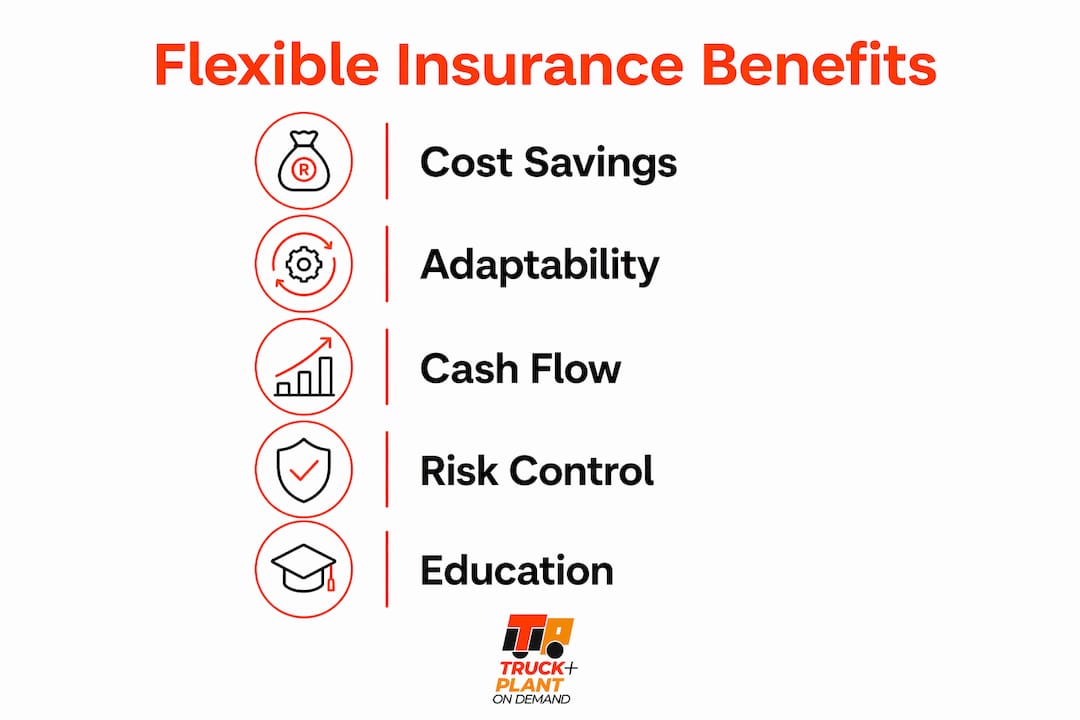
- 2. Your coverage adapts as your fleet evolves
- 3. Flexible cover supports better cash flow management
- 4. Tailored cover reduces gaps in risk management
- 5. You stay in control when business conditions shift
- 6. Digital tools make policy management practical
- 7. Education removes the biggest barrier to adoption
- Common misconceptions about flexible insurance
- How to evaluate flexible insurance for your business
- What flexible insurance features actually look like in practice
- How insurance flexibility affects your costs and risk exposure
- Real business scenarios where flexibility makes the difference
- Key takeaways
- The industry is moving toward flexibility, not away from it
- Stop overpaying for cover your fleet doesn’t need right now
Why insurance flexibility matters for your commercial operations
Commercial fleets and plant machinery do not operate at a constant level. A civil contractor may run ten excavators at full capacity in summer and park half of them through winter. A transport operator might add vehicles during peak freight season and scale back in quieter months. Fixed premiums ignore all of that, charging you the same rate regardless of whether your assets are generating revenue or sitting idle.
Flexible insurance solves this by allowing dynamic adjustment of coverage and premiums to match fluctuating business needs, preventing both over-insurance and under-insurance. The core benefits are straightforward:
- Cost control: You stop paying premiums on idle or non-operating assets.
- Risk alignment: Your cover level matches your actual exposure at any given time.
- Operational agility: Coverage scales up or down as your fleet size and job requirements change.
- Cash flow protection: On-demand premium payments preserve working capital during slow periods.
Truck & Plant On-Demand™ was built specifically around this premise. You choose what to insure, when to insure it, and how to insure it, with full control sitting in your hands rather than locked into a 12-month contract.
1. You only pay for cover when you actually need it
The most direct advantage of flexible insurance is cost efficiency. On-demand insurance prevents paying premiums for idle or non-operating fleet assets, which is a real saving for any business with seasonal or project-based operations. A construction company that parks its yellow plant machinery between contracts should not carry the same premium burden as when those machines are active on site.
2. Your coverage adapts as your fleet evolves
Fleet composition changes constantly. You acquire new vehicles, retire old ones, and take on specialist machinery for specific contracts. Flexible policies let you add or remove assets from your cover without starting a new policy from scratch. This matters most when you are managing a mixed fleet of trucks, trailers, and plant equipment across multiple job sites.

3. Flexible cover supports better cash flow management
Fixed annual premiums create a predictable cost, but they also create a fixed drain regardless of revenue. On-demand cover ties your insurance spend more closely to your income cycle. During high-revenue periods, you carry full cover. During slower months, you scale back on assets that are not in use. This alignment between income and outgoings gives you more control over your working capital.
Pro Tip: During peak business periods, consider funding your policy above the minimum required level. This builds a buffer that can offset premium obligations during leaner months. Just be aware of the tax implications of over-funding, particularly if your policy structure could trigger a Modified Endowment Contract classification.
4. Tailored cover reduces gaps in risk management
A one-size-fits-all policy rarely fits the actual risk profile of a commercial fleet. Different vehicles carry different risks: a tipper truck on a construction site faces different exposures than a long-haul refrigerated trailer. Flexible insurance lets you tailor coverage types and limits to each asset category, so you are not under-covered on high-risk equipment or over-covered on lower-risk vehicles.
5. You stay in control when business conditions shift
Flexible policies give owners a sense of control and security over unpredictable business and life changes. Consumers in a 2024 study described flexibility as making them feel “not locked in” and “more secure.” For commercial operators, that sense of control is practical, not just psychological. When a contract falls through or a new one accelerates your timeline, you need cover that responds at the same pace.
6. Digital tools make policy management practical
Modern flexible insurance works because the technology behind it has caught up with the concept. According to Capgemini’s research on insurance expectations, customers expect to toggle coverage on demand via apps with instant cost previews, similar to banking apps. For fleet operators managing multiple assets across different sites, app-based controls are not a convenience feature. They are what makes on-demand cover operationally viable.
7. Education removes the biggest barrier to adoption
The main reason commercial owners hesitate around flexible insurance is unfamiliarity with how it works. A 2024 study found that 89% of consumers preferred flexible policies once they understood the mechanics, despite initially fearing premium volatility. The fear is not of flexibility itself. It is of uncertainty. Once you understand how premiums adjust and what triggers coverage changes, the hesitation largely disappears.
Common misconceptions about flexible insurance
Flexible does not mean unreliable. This is the most persistent myth, and it costs operators real money by keeping them in rigid policies that do not serve their operations.
The genuine challenges are worth knowing:
- Policy lapse risk: Active monitoring is required. If premiums are underfunded and cash value depletes unnoticed, coverage can lapse without warning.
- Premium volatility: Costs can shift as your asset mix and usage patterns change. This requires more active management than a fixed annual policy.
- Underinsurance risk: The flexibility to reduce cover also creates the risk of reducing it too far. Subscription-based models in particular can lead to coverage gaps if owners lower protection during financial pressure without fully understanding the exposure they are leaving uncovered.
- Limited long-term accumulation: Flexible policies generally do not build the same long-term cash value as traditional fixed policies. For commercial operators, this is usually an acceptable trade-off given the operational benefits.
The solution to most of these challenges is straightforward: treat your policy as an active management tool, not a set-and-forget contract.
How to evaluate flexible insurance for your business
Choosing the right flexible cover requires more than comparing premium quotes. The key criteria to assess are:
- Coverage customisation options: Can you adjust individual assets, coverage types, and limits independently?
- Premium scheduling flexibility: Does the policy allow you to increase or decrease payments in line with your revenue cycle?
- Digital management tools: Does the insurer offer app-based controls for real-time adjustments?
- Policy terms on adjustments: Understand the rules around coverage limit changes and any underwriting requirements that apply when increasing cover.
- Provider reputation and support: Post-sale support matters when you need to make a rapid coverage change mid-contract.
Pro Tip: Review your cover at the start of each major project or contract cycle, not just annually. Aligning your insurance review with your operational calendar ensures your cover reflects your actual risk exposure at every stage.
For transport businesses managing variable fleets, group transport insurance structures offer a useful reference point for how variable-use policies can be structured around actual operational patterns rather than fixed annual assumptions.
What flexible insurance features actually look like in practice
Flexible commercial vehicle and machinery cover typically includes several practical features:
- On/off coverage toggles for individual vehicles or pieces of plant equipment
- Usage-based premiums that adjust with kilometres driven or hours operated
- Modular add-ons such as breakdown cover, goods-in-transit cover, or public liability, added or removed as contracts require
- Scalable fleet cover that allows you to add new vehicles mid-policy without a full policy restart
- Short-term cover options for machinery hired in for a specific project
The ability to compare annual vs on-demand cover is itself a useful exercise. Annual policies offer predictability; on-demand cover offers responsiveness. Many operators find the right answer sits in a hybrid approach, with core assets on annual cover and variable or seasonal assets managed on demand.
How insurance flexibility affects your costs and risk exposure
The cost management impact of flexible insurance is direct. You eliminate premiums on non-operating assets. You scale cover up when revenue supports it and scale back when it does not. Over a full operating year, this can produce meaningful savings compared to a fixed policy that charges the same rate regardless of utilisation.
The risk mitigation impact is equally practical. Fixed policies create a false sense of security. If your operations change significantly mid-year but your cover does not, you may be either over-exposed on new assets or carrying unnecessary cover on retired ones. Flexible cover closes that gap by keeping your protection aligned with your actual risk profile at all times.
Real business scenarios where flexibility makes the difference
Seasonal construction contractor: A contractor running six pieces of plant machinery scales back to two during the off-season. On-demand cover means premiums drop in line with the reduced fleet, preserving cash flow through the quieter months.
Growing transport operator: A fleet operator adds three new trucks to service a new logistics contract. Flexible cover allows those vehicles to be added immediately, without waiting for an annual renewal or paying a penalty for mid-term changes.
Project-based civil engineer: A civil engineering firm hires in specialist equipment for a six-week project. Short-term modular cover protects those assets for exactly the duration needed, with no residual premium once the project ends.
These scenarios reflect the operational reality of commercial fleets and plant machinery. The common thread is that business needs change faster than annual insurance cycles can accommodate.
Key takeaways
Flexible insurance is the most cost-efficient and operationally responsive cover model for commercial vehicle and machinery owners whose business needs change throughout the year.
| Point | Details |
|---|---|
| Cost efficiency | Flexible cover eliminates premiums on idle assets, aligning insurance spend with actual operations. |
| Active management required | Policy lapse risk is real; owners must monitor funding levels to maintain uninterrupted cover. |
| Education drives adoption | 89% of consumers preferred flexible policies after understanding how they work. |
| Digital tools are essential | App-based controls make on-demand cover operationally viable for multi-asset fleet operators. |
| Truckplant’s approach | Truck & Plant On-Demand™ gives commercial operators full control over what, when, and how they insure. |
The industry is moving toward flexibility, not away from it
The shift from fixed annual contracts to modular, on-demand insurance is not a trend. It is a structural change in how commercial operators expect insurance to work. Capgemini’s research shows that 71% of under-40s want coverage that evolves with their lives, while only 36% of insurers currently offer flexible models. That gap is closing, and the insurers closing it fastest are the ones building digital-first, app-controlled products.
Truck & Plant On-Demand™ sits at the front of this shift for commercial vehicles and plant machinery. The product was designed around the reality that a civil contractor’s insurance needs in March look nothing like their needs in August. Pay-per-use and subscription-based models are becoming mainstream across the industry, and the operators who adopt them earliest gain a genuine cost and operational advantage over those still locked into rigid annual policies.
The future of commercial insurance is not a single annual contract. It is a live, adjustable tool that reflects your business as it actually operates.
Stop overpaying for cover your fleet doesn’t need right now
Truckplant built Truck & Plant On-Demand™ for exactly the operators reading this article: commercial vehicle and plant machinery owners whose cover needs change with every contract, season, and job site. The difference from a traditional annual policy is concrete. You pay for cover when your assets are active and stop when they are not. No fixed monthly premium regardless of utilisation. No penalty for scaling back during a quiet period.
Whether you run a single truck, a mixed construction fleet, or heavy plant machinery across multiple sites, Truckplant tailors cover to your operational reality. You control what is insured, when it is insured, and at what level. Get a quote for on-demand fleet cover and see what your insurance should actually cost when it is built around your business.