


Pay-as-you-go vehicle cover is on-demand commercial insurance you switch on and off to match real operational hours, hires, or engine cycles, rather than paying a fixed annual premium regardless of use. If you operate a fleet, run a plant or tool hire business, or manage seasonal construction equipment, this model is worth serious consideration. Truck & Plant On-Demand™ is purpose-built for exactly these industries, offering real-time adjustable cover, digital claims management, and coverage for trucks, trailers, plant, and hired-in equipment. Read on for US regulatory checks, telematics best practices, and a step-by-step implementation plan.
Table of Contents
- How pay-as-you-go commercial vehicle cover works
- When on-demand cover saves money versus traditional fleet policies
- What drives cost for pay-as-you-go cover
- Step-by-step checklist to implement on-demand cover
- How telematics unlocks real insurance value
- How claims work under pay-as-you-go cover
- US regulatory and compliance considerations
- Questions to ask and red flags to watch
- Key takeaways
- The case for on-demand cover is stronger than most operators realise
- Truck & Plant On-Demand™: cover that moves with your business
- Useful sources and regulatory references
How pay-as-you-go commercial vehicle cover works
On-demand cover activates through one of four routes:
- Manual portal toggle: Log in, select the vehicle or equipment, set the coverage type, and authorise. Cover is live within minutes.
- API or rental-software integration: Your hire management system triggers activation automatically when a booking is confirmed, then deactivates on return.
- Telematics-triggered activation: Engine-on events or GPS geofence departures can signal the insurer’s platform to open a policy window.
- Broker-initiated short-term policy: A broker places a short-term binder for a specific job or hire period, often used for specialist plant.
Billing triggers and metrics vary by insurer. Common models include per-hour, per-day, per-hire, or engine-hours for plant. Pro-rated premiums are calculated against the base rate filed with the state, plus applicable surplus lines taxes and fees where the insurer is non-admitted.
Policy windows typically carry a minimum of one hour or one day, with maximum continuous windows of 30 or 90 days before a formal renewal or re-activation is required. Permitted classes span light-duty commercial vehicles, heavy trucks, trailers, and yellow plant machinery.
Two quick operational examples:
- One-day hire activation: A tool hire company confirms a customer booking for a telehandler. The rental software calls the API, opens a hired-in plant policy for 24 hours, and closes it automatically on return scan. The day’s premium is invoiced on the monthly statement.
- Multi-day plant hire with staged cover changes: A civil contractor activates physical damage and liability cover on a crawler crane for a seven-day bridge project. On day three, a second excavator joins the site. The operator adds it via the portal in under two minutes, and the billing adjusts from that hour forward.
When on-demand cover saves money versus traditional fleet policies
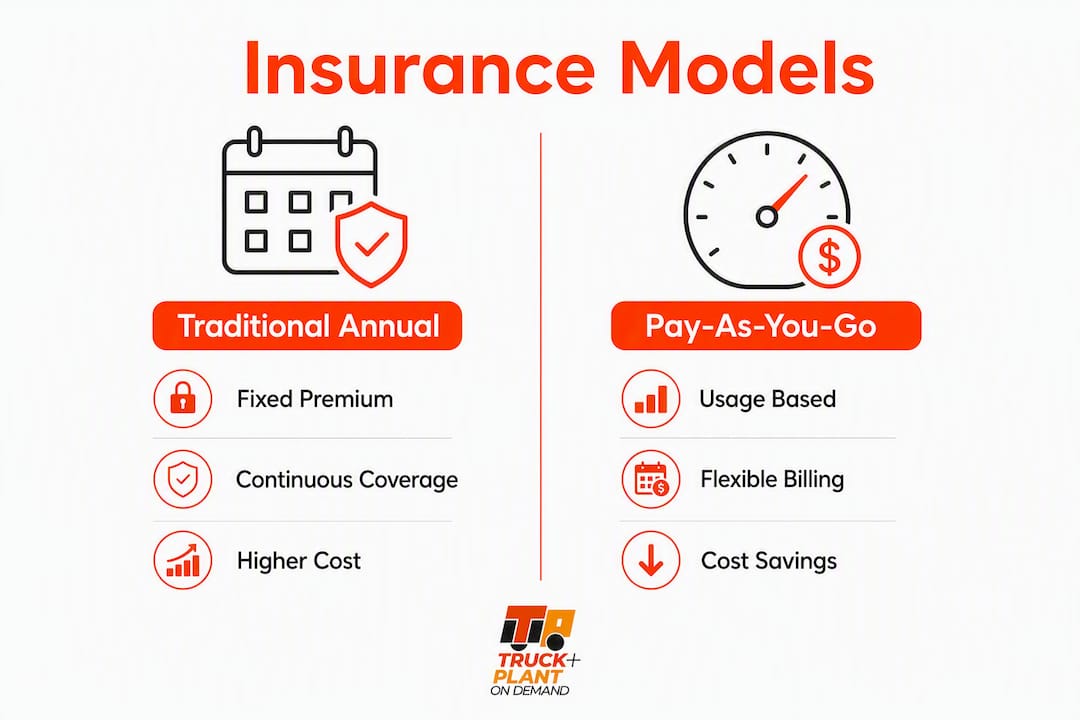
Compare annual vs on-demand vehicle insurance for fleets to see the full structural differences. The table below captures the practical decision points.
| Dimension | On-demand cover | Traditional annual fleet policy |
|---|---|---|
| Cost flexibility | Pay only for active hours or hires | Fixed premium regardless of utilisation |
| Admin overhead | Digital activation; auto-billing | Renewal cycles, endorsements, mid-term adjustments |
| Claims exposure | Shorter active windows reduce aggregate exposure | Full-year exposure on every listed vehicle |
| Best fit | Seasonal fleets, hire fleets, rarely-used plant | High-mileage dedicated delivery or long-haul fleets |
On-demand cover suits you when:
- Equipment sits idle for weeks between jobs (seasonal construction, event transport).
- You hire out vehicles or plant to third parties and need per-hire liability.
- Your fleet size fluctuates and adding or removing vehicles mid-term is frequent.
Annual cover tends to be more cost-effective when vehicles run five or more days per week year-round, because the per-day equivalent of an annual premium falls below most on-demand day rates at high utilisation. A practical threshold: if a vehicle is active fewer than 200 days per year, on-demand pricing usually wins.
What drives cost for pay-as-you-go cover
Primary underwriting factors:
- Vehicle classification: VIN-level weight class, body type, and GVWR determine base rate filings.
- Trade use: Contractors, hazmat haulers, and crane operators attract higher rates than general freight.
- Driver records: MVR scores and prior at-fault losses are the single largest individual risk factor.
- Location and state filings: High-litigation states such as Florida, New York, and Louisiana can cost 30–100% more than national averages; lower-risk states like Ohio or Idaho may run 20–35% below average.
- Loss-run history: A clean three-year loss run is the most powerful lever at renewal.
Telematics changes the pricing profile in two ways. Formal usage-based insurance (UBI) programs offer discounts typically ranging from 5–15%, with top-performing fleets reaching 20–30% over time as behavioural data improves the loss run. Even without a formal UBI program, presenting clean telematics reports at renewal gives underwriters a concrete reason to hold or reduce pricing.
Sample pricing models (light-duty commercial, 2026):
| Coverage model | Representative range | Notes |
|---|---|---|
| Per-day (light van/pickup) | $8/day | Based on monthly rates of $250–$400 pro-rated |
| Per-day (higher-risk trade) | $15/day | Trades exceeding $450/month |
| Per-hire (plant, short-term) | Varies by class | Minimum premiums often apply |
| Blended monthly minimum | Carrier-specific | Protects insurer against very low-use months |
Deductible choices affect effective per-day cost directly. A higher deductible lowers the daily rate but increases your out-of-pocket exposure per claim, so match the deductible to your cash-flow tolerance, not just the headline rate.
Step-by-step checklist to implement on-demand cover
- Define scope: List every vehicle class, equipment type, and coverage type required (liability, physical damage, hired-in plant, environmental, general business liability).
- Confirm state filings: Verify the insurer is admitted or holds a surplus lines licence in every state where you operate.
- Check telematics compatibility: Ask the insurer which devices or data formats they accept for UBI discounts before purchasing hardware. Not every carrier accepts third-party telematics data for formal discounts.
- Integrate rental or fleet software: Provide API credentials and map the data fields the insurer requires (asset ID, activation timestamp, operator ID, return timestamp).
- Set operator training: Train drivers and hire desk staff on activation, deactivation, and the consequences of operating without confirmed cover.
- Run a 30–90 day pilot: Capture baseline loss-run inputs and telematics metrics before full rollout. This is the fastest way to quantify on-demand value to underwriters and internal stakeholders.
- Establish billing reconciliation: Agree on the billing cycle, invoice format, and dispute process before go-live.
- Set renewal targets: Define the loss-ratio and telematics benchmarks you will present at renewal to negotiate pricing.
Pro Tip: Use a broker or integration partner who already has a relationship with your target insurer. They can confirm device compatibility, shorten the API integration timeline, and often negotiate pilot-program clauses that protect you if early loss experience is unfavourable.
See the vehicle insurance checklist 2026 guide for a printable procurement reference.

How telematics unlocks real insurance value
Device choice matters before anything else. Many formal UBI programs require the insurer’s own device or an approved partner; self-submitted data exports are often not sufficient for formal discounts. Confirm compatibility at procurement, not after installation.
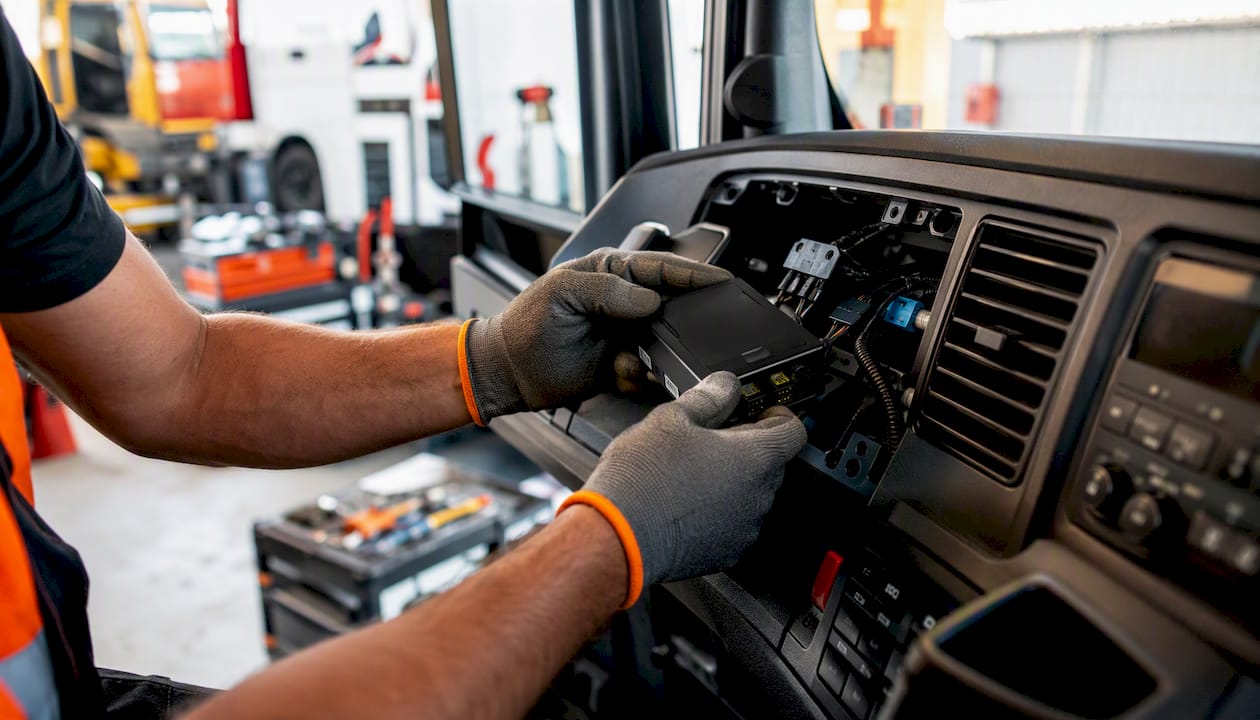
Active use of the data is where the real value sits. Fleets that combine driver coaching with telematics report meaningful reductions in crashes and claims, with 72% of such fleets reporting reduced crashes and/or claims when training and telematics are used together. A device that logs data nobody reviews delivers far less value than a structured coaching programme that targets harsh braking, speeding, and idle time.
Key metrics to track and report at renewal:
- Harsh braking and acceleration events per 1,000 miles
- Speeding incidents (percentage of miles above posted limit)
- Idle time as a percentage of engine hours
- Total miles or engine hours per asset
- Theft recovery rate and time-to-recovery
GPS-enabled recovery lowers loss severity on comprehensive claims by reducing the time a stolen vehicle or piece of plant remains unrecovered, which directly cuts paid claim amounts and improves your loss-to-premium ratio.
Statistic: 82% of commercial policyholders now use telematics, making it a baseline expectation rather than a differentiator. The operators who gain pricing advantage are those using data for active coaching, not just passive monitoring.
Pro Tip: Prioritise video evidence from dashcams. Clear footage accelerates claims decisions and is the most effective defence against fraudulent or ambiguous third-party claims. Pair it with telematics reports in every claim submission. For a deeper look at telematics in fleet insurance, Truckplant’s blog covers device selection and carrier compatibility in detail.
How claims work under pay-as-you-go cover
Typical claims flow for short-term activations:
- Report the incident immediately through the insurer’s digital claims portal, confirming the active policy window at the time of loss.
- Submit telematics data, dashcam footage, and photos within the insurer’s evidence window (typically 24–72 hours).
- The adjuster contacts you within the SLA window. When telematics and video are available, many carriers commit to accelerated initial decisions.
- Settlement is calculated against the active policy period. Pro-rated premiums already paid are credited where the claim closes before the window ends.
Service levels to demand in your SLA:
- Acknowledgement of new claims within 4 business hours.
- Initial adjuster contact within 1 business day.
- Accelerated decision timeline (target 5–10 business days) when telematics and video evidence are submitted.
- Digital claims portal with real-time status updates.
- Clear dispute-resolution process with defined escalation timelines.
For fleet operator compliance requirements that interact with claims handling, including driver licensing and hours-of-service records, Velocerta’s guidance is a useful reference.
US regulatory and compliance considerations
State-level checks to complete before activation:
- Confirm the insurer is admitted in each operating state or holds a valid surplus lines licence.
- Verify minimum liability limits meet state requirements and any contractual requirements from general contractors or hire customers.
- Request sample endorsements for hired-in plant, environmental liability, and any hazmat exposure before binding.
- Check state Department of Insurance (DOI) bulletins for any restrictions on short-term commercial policy structures in your state.
Operational compliance items:
- Maintain current MVR checks on all operators, updated at least annually.
- Confirm ELD and HOS compliance for trucks subject to FMCSA rules; some carriers require ELD data as part of the policy conditions.
- Keep certificates of insurance (COIs) current and job-site-specific; general contractors typically require named-insured or additional-insured endorsements.
- For plant transporting hazardous materials, confirm environmental liability endorsements are in place before each activation.
This article provides general information, not legal or insurance advice. Verify current state requirements with your state DOI or a licensed commercial insurance professional.
Questions to ask and red flags to watch
Decision checklist:
- What is the minimum policy window and minimum premium?
- Which telematics devices or data formats does the carrier accept for UBI pricing?
- What are the claims SLA commitments, and are they in writing?
- How is the premium calculated, and can you see the rate formula?
- What are the maximum continuous coverage windows before re-activation is required?
Red flags that should pause a purchase:
- Opaque billing with no itemised premium breakdown.
- Required long-term minimum commitments that negate the flexibility of on-demand cover.
- No digital claims portal or inability to ingest telematics and video evidence.
- Insurer refusal to accept your existing telematics data for any pricing consideration.
- Unclear jurisdictional coverage or missing state filings for your operating states.
Validate answers quickly by requesting a sample policy, a pilot-program clause with defined exit terms, and at least two references from operators in your trade class. Optimizing fleet insurance premiums with flexible solutions covers the negotiation tactics in more detail.
Key takeaways
On-demand commercial vehicle cover delivers real cost savings for fleets and hire businesses with variable utilisation, but only when telematics is actively used for coaching and the insurer’s device requirements are confirmed before procurement.
| Point | Details |
|---|---|
| Match cover to utilisation | On-demand pricing wins when a vehicle or asset is active fewer than 200 days per year. |
| Confirm device compatibility early | Not every carrier accepts third-party telematics data; verify before purchasing hardware. |
| Use telematics actively | 72% of fleets combining coaching with telematics report reduced crashes and/or claims. |
| Run a 30–90 day pilot | A structured pilot captures baseline loss-run data and builds the case for renewal pricing. |
| Truckplant’s solution | Truck & Plant On-Demand™ provides real-time adjustable cover for commercial vehicles and plant, with digital claims management and no fixed annual premium. |
The case for on-demand cover is stronger than most operators realise
The conventional wisdom in commercial fleet insurance is that annual policies are always cheaper at scale. That is true for high-utilisation, dedicated fleets. But for the majority of construction, plant hire, and seasonal transport operations, the annual model forces you to pay for cover on assets that sit idle for weeks or months. The premium does not pause when the machine does.
What operators often underestimate is the compounding effect of clean telematics data on renewal pricing. The initial UBI discount is modest. The real gain comes two or three years in, when a demonstrably improving loss run gives underwriters a concrete reason to hold pricing below market movement. That is a structural advantage that on-demand operators can build more quickly, because shorter active windows mean fewer total exposure hours and a cleaner loss-to-premium ratio from day one.
The operators who get the most from this model are not the ones who simply switch from annual to on-demand. They are the ones who treat the data as a management tool, run structured coaching programmes, and show up at renewal with a report that tells the underwriter exactly why their fleet is a better risk than it was twelve months ago.
Truck & Plant On-Demand™: cover that moves with your business
Traditional fleet policies charge you the same premium every month, whether your equipment is on a jobsite or sitting in a yard. Truck & Plant On-Demand™ is built on a different premise: you pay only for the cover you actually use, and you adjust it in real time as your operations change.
Cover spans commercial trucks, trailers, yellow plant, and hired-in equipment, with options for liability, physical damage, hired-in plant, environmental liability, machinery breakdown, and general business liability. Digital claims management means evidence submission and status tracking happen through one portal, not a phone queue. Onboarding follows three steps: request a quote, run an integration pilot with your rental or fleet software, and move to full rollout with renewal benchmarks set from day one.
To get a quote or start a pilot for your fleet or hire operation, visit the Truck & Plant On-Demand™ fleet insurance page and submit your fleet details. A specialist will respond with a tailored proposal.
Useful sources and regulatory references
- How telematics is changing commercial auto insurance — Central Insurance: data on coaching, crash reduction, and telematics adoption rates.
- Why your fleet insurance might be lower with GPS tracking — Surety Business: UBI discount ranges, device compatibility warnings, and theft-recovery impact.
- Commercial auto insurance cost: 2026 average rates by state — Construction Coverage: state-by-state rate variation, vehicle class benchmarks, and loss-run guidance.
- Fleet insurance: how fleet coverage works — Geotab: fleet policy structures, telematics integration, and cost-reduction tactics.
- Telematics insurance: how it works — Geotab: UBI mechanics, GPS data metrics, and insurer risk-profiling methods.
- Contractors mobile equipment insurance — US Assure: construction equipment policy structures and coverage triggers.
- Telematics in fleet management: efficiency and cost savings — ORNER: operational ROI of telematics for fleet managers.
- State DOI resources: Search your state’s Department of Insurance website for surplus lines licence registers, minimum liability limit schedules, and approved short-term commercial policy endorsements.
- Truckplant blog: telematics, implementation, and fleet insurance strategy — internal resources covering device selection, carrier compatibility, and renewal negotiation.