


Reefer breakdown cover is an endorsement to a motor truck cargo policy that pays for spoiled temperature-sensitive freight when a refrigeration unit fails mechanically or electrically. If you haul produce, dairy, seafood, pharma, or floral loads, you need it. Insurers won’t pay a claim without verifiable maintenance logs and temperature data to back it up.
TL;DR:
- Most fleets hauling high-value perishables like pharmaceuticals, seafood, and produce require reefer breakdown coverage due to their fast spoilage and strict temperature demands.
- Premium costs depend heavily on reefer unit age, maintenance history, commodity type, and telematics data, with documented history and temperature logs favoring lower rates.
- Claims are approved only when detailed records such as pre-trip inspections, maintenance logs, and actual controller data are preserved from before and during the trip.
- On-demand reefer insurance is suitable for irregular or seasonal operators, offering flexibility to activate coverage only during actual reefer loads rather than paying yearly premiums.
- Standard cargo policies exclude spoilage from refrigeration failure, making the reefer breakdown endorsement essential for protecting against mechanical and electrical unit failures.
Table of Contents
- What reefer breakdown cover actually pays for
- Who actually needs this endorsement, and when
- Limits, deductibles, and what drives your premium
- Documentation and the claims process: what adjusters actually check
- Loss prevention that actually improves your terms
- When on-demand cover fits better than a scheduled endorsement
- Getting flexible reefer breakdown cover started
- Where to verify the details
- Sources
- FAQ
What reefer breakdown cover actually pays for
Standard motor truck cargo policies protect freight against collision, theft, and fire. They typically stop short of covering spoilage caused by a refrigeration unit that quietly fails somewhere on I-80. That gap is exactly why the endorsement exists: cargo forms exclude mechanical refrigeration failure by design, and reefer breakdown fills it.
The endorsement responds to specific, definable triggers, not general spoilage risk. Covered perils usually include:
- Mechanical breakdown of the compressor, condenser, or evaporator
- Electrical faults in the control system or wiring harness
- Fuel system failures that stop the unit mid-transit
- Covered accidents that physically disable the reefer, even when the trailer itself is drivable
Payout is generally structured as the invoice value of the spoiled goods minus any salvage recovered, subject to the policy’s per-load limit. The Institute Frozen/Chilled Food Clauses (A) 2017 remain a widely referenced benchmark for how breakdown triggers and stoppage thresholds get worded, even outside marine contexts. Some forms specify a minimum outage duration before a claim qualifies, so read the exact wording rather than assume a universal standard.
Who actually needs this endorsement, and when
Not every truck with a reefer box needs a standalone breakdown endorsement, but most that haul temperature-sensitive freight regularly do. Ask yourself these questions before deciding:
- Does your freight mix include produce, dairy, seafood, pharmaceuticals, or floral products? These commodities spoil fast and carry high invoice values, making them the categories insurers and shippers scrutinize hardest.
- Do your brokers or shippers require proof of cover before tendering a lane? Many contracts now name reefer breakdown cover explicitly as a condition of doing business, particularly on pharma and seafood lanes.
- How old is your reefer unit, and what’s its loss history? Older units with prior breakdowns draw tighter scrutiny and higher premiums, which affects whether scheduled cover or on-demand cover makes more financial sense.
- How frequently do you actually run reefer loads versus dry van? Occasional reefer work for an otherwise dry-van fleet changes the cover conversation entirely.
If your answers point to regular, high-value perishable freight, treat this endorsement as a baseline requirement, not an option to weigh later.
Limits, deductibles, and what drives your premium
Per-load limits on reefer breakdown endorsements commonly reflect typical load values, with fleets hauling higher-value commodities like pharma or seafood often carrying higher aggregate limits. Deductibles vary by carrier and by how much risk the operator is willing to absorb before the endorsement kicks in.
Several factors move your premium up or down:
- Unit age and maintenance history. A well-documented, recently serviced unit underwrites more favorably than one with a thin maintenance file.
- Commodity type. Pharmaceuticals and seafood carry tighter temperature tolerances and higher spoilage costs, which pushes premiums higher than produce or general chilled goods.
- Telemetry and data-logging. Continuous temperature monitoring gives underwriters confidence that any excursion will be documented, which can soften pricing.
- Loss runs. A history of prior breakdown claims signals higher risk and typically raises both premium and deductible expectations.
Market comparisons show that these variables, not a flat industry rate, explain most of the price spread between operators. Two fleets running identical lanes can pay very differently depending on unit age and how disciplined their documentation is.
Pro Tip: Before requesting quotes, pull your last 12 months of preventive maintenance invoices and loss runs. Underwriters price uncertainty, not just risk, so a clean paper trail often earns better terms than the unit’s actual age would suggest.
Documentation and the claims process: what adjusters actually check
Claims on reefer breakdown cover live or die on documentation. Adjusters reconstruct a timeline from your controller data and paperwork to decide whether a genuine mechanical failure occurred during transit, according to FreightWaves’ guide for fleet owners. Missing records are the single most common reason claims get denied.
When a unit fails, follow these steps immediately:
- Notify your insurer and dispatch as soon as the failure is confirmed, not after delivery.
- Preserve the cargo exactly as found. Don’t reload, re-ice, or attempt a fix that alters the evidence.
- Download the reefer controller or data-logger history covering the full trip, not just the failure window.
- Photograph the unit, the set point display, and the cargo condition before anyone touches anything.
- Follow the insurer’s salvage instructions rather than disposing of goods independently.
Beyond the failure itself, adjusters want the paper trail that existed before the trip even started: pre-trip inspection records, maintenance invoices, the bill of lading showing the declared set point, and pulp temperature readings taken at pickup. Together, these establish that the cargo met shipper requirements before anything went wrong, and that gap is exactly what carriers with institutionalized pulp testing and telematics downloads close, which speeds settlement and reduces disputes. Denials most often trace back to gaps in this chain: no maintenance log, a pre-existing fault the operator knew about, or evidence pointing to operator error rather than mechanical failure.
Loss prevention that actually improves your terms
Underwriters reward fleets that can prove discipline, not just fleets that own newer trucks. Build these habits into daily operations:
- Pre-cool the trailer and log pulp temperatures at every pickup, before the doors close.
- Train drivers on set points and alarm response. A driver who ignores an alarm for six hours turns a minor fault into a full loss.
- Retain telematics data for the length of your claims window, with a clear procedure for downloading it the moment an alarm fires.
- Set a replacement age for aging units rather than running them until they fail on a load worth more than the truck.
- Put shipper responsibilities in writing, particularly around who owns temperature verification at pickup versus during transit.
Pro Tip: When you submit for renewal or a new quote, bundle recent PM invoices with a telematics report showing average alarm response time. That simple package often does more to soften an underwriter’s stance on unit age than the age itself.
When on-demand cover fits better than a scheduled endorsement
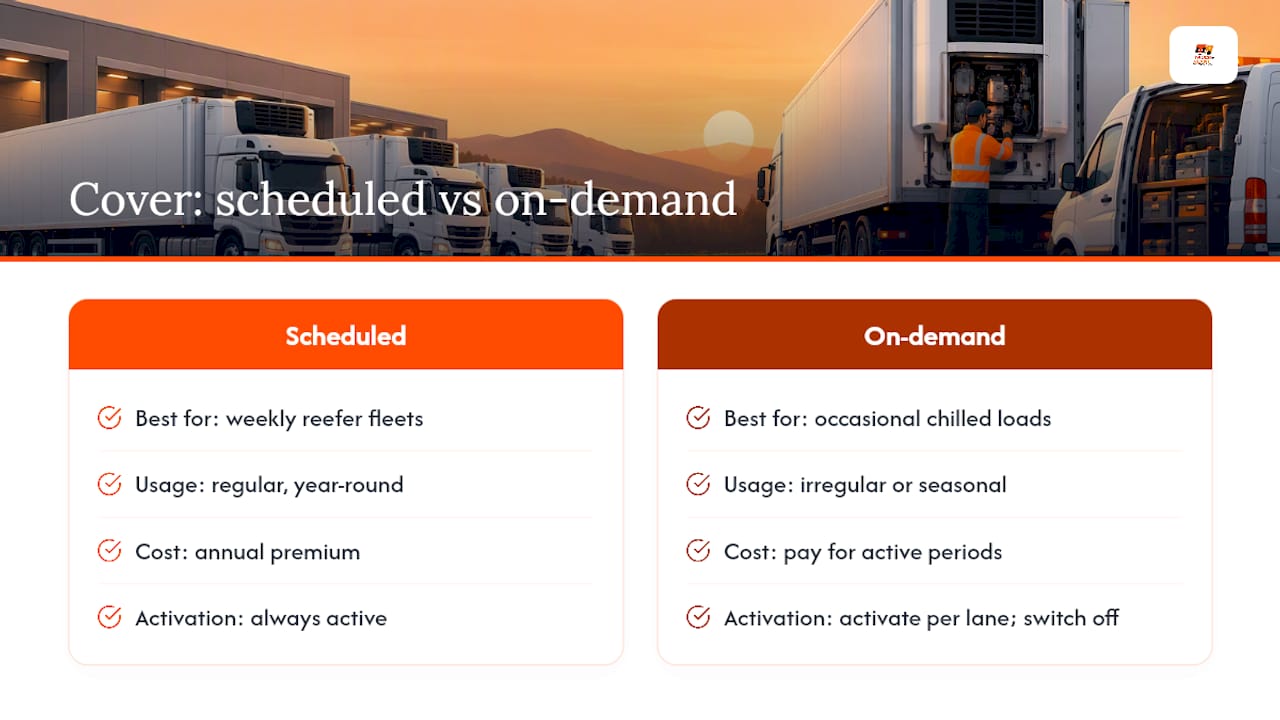
A scheduled annual endorsement makes sense for a fleet that runs reefer freight every week. It makes far less sense for an owner-operator or mixed-use fleet that takes on a chilled load occasionally and runs dry van the rest of the time. Paying a full year’s premium for cover you use eight weeks out of twelve is the kind of inefficiency on-demand insurance solutions are built to eliminate.
If your reefer work is irregular, seasonal, or tied to a handful of contracts, on-demand cover lets you activate protection for the lanes you’re actually running and switch it off when you’re not. Match the cover model to your actual operating pattern, not the other way around.
— Coert
Getting flexible reefer breakdown cover started
Traditional reefer breakdown endorsements lock you into a fixed annual premium whether you’re running chilled freight every week or three months out of the year. Some on-demand insurance options let you activate cover when a reefer load is on the books and adjust it as your lanes change, so you’re never paying full-year rates for part-time exposure.
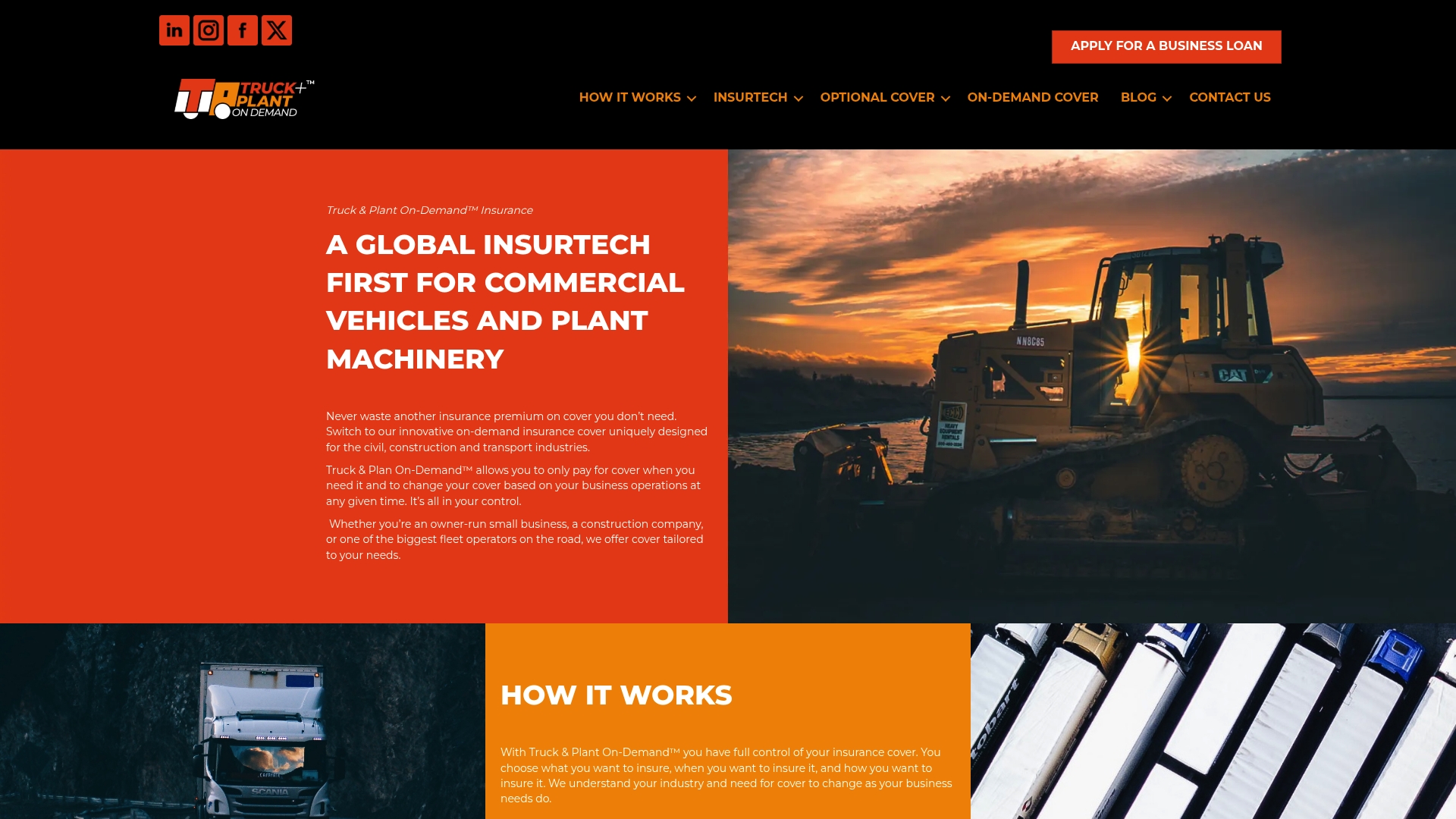
The product features that matter most for reefer operators include:
- On-demand activation tied to when you’re actually hauling temperature-sensitive freight
- Flexible limits you can adjust as load values or lane mix change
- Simplified admin with no named-driver requirements
- Claims support built around fast authorization
Before you request a quote, pull together your unit maintenance records and recent temperature logs. That paperwork speeds up underwriting and gives you a stronger negotiating position on limits. If your operation spans multiple lines, fleet insurance or goods-in-transit cover may round out your protection alongside the reefer endorsement. Start by reviewing your options at Truck & Plant On-Demand™ and requesting a quote tailored to your actual lane frequency and commodity mix.
Where to verify the details
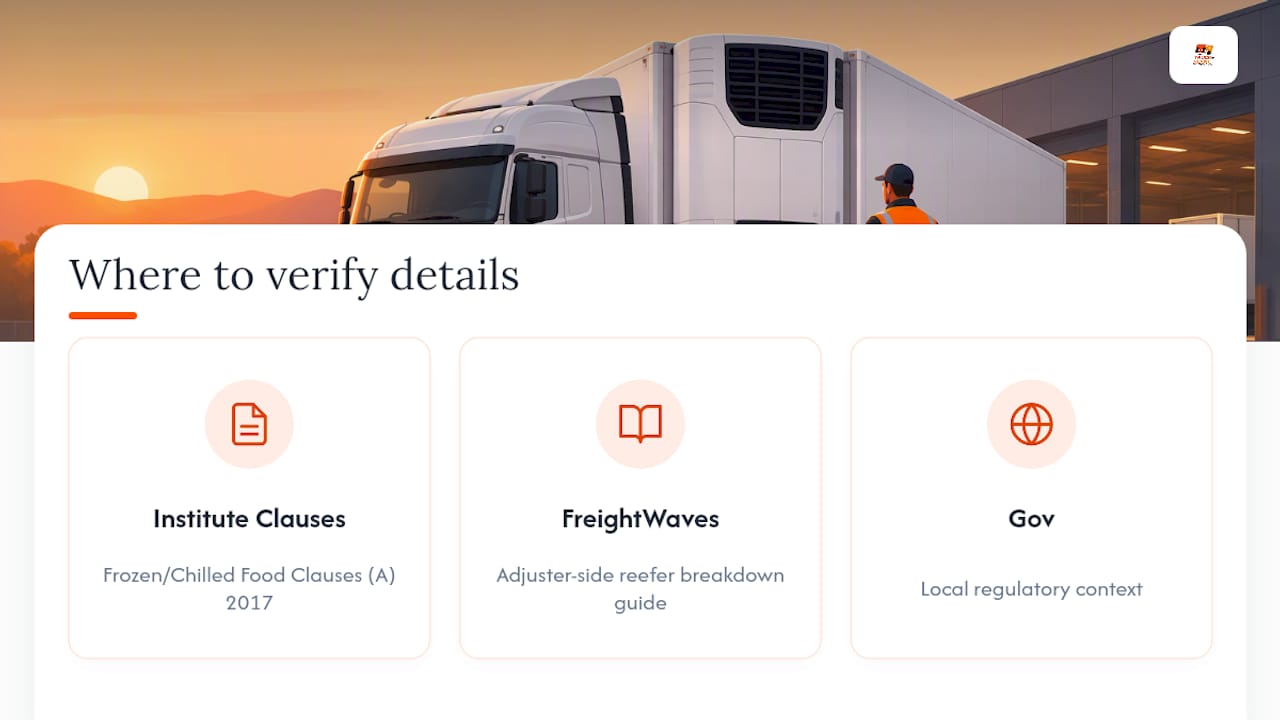
Check the Institute Frozen/Chilled Food Clauses (A) 2017 for standard breakdown wording, FreightWaves’ reefer breakdown guide for adjuster-side practice, and Gov for local regulatory context.
Sources
- Institute Frozen/Chilled Food Clauses (A) 2017 (CL. 430)
- Reefer breakdown coverage: Guide for truckers & fleet owners — FreightWaves
- Reefer breakdown — Dispatched glossary
- Refrigerated truck insurance — MyMoneyComparison
FAQ
What is reefer breakdown coverage?
Reefer breakdown coverage is an endorsement to a motor truck cargo policy that pays for spoiled temperature-sensitive freight when a refrigeration unit suffers a mechanical or electrical failure. Standard cargo policies generally exclude this kind of mechanical failure, which is why the endorsement exists as a separate purchase.
What is covered in equipment breakdown coverage?
Equipment breakdown coverage, in the reefer context, responds to compressor failure, electrical faults, fuel system problems, and covered accidents that disable the unit while cargo is in transit. It typically pays invoice value minus salvage, subject to your policy’s per-load limit and any breakdown duration threshold specified in the clause wording.
How much does mechanical breakdown insurance cost?
Premiums vary by unit age, commodity type, telemetry use, and loss history rather than following a flat rate, as market comparisons show. Fleets with clean maintenance records and continuous temperature monitoring generally see more favorable pricing than those without. An on-demand alternative like Truck & Plant On-Demand™ has no published flat price; current terms are available by requesting a quote at Truckplant.
What is covered by cargo insurance?
Standard cargo insurance covers loss from events like collision, theft, fire, and overturn, but it typically does not extend to spoilage from refrigeration unit failure. That gap is precisely what the reefer breakdown endorsement fills, and it’s why operators hauling perishables carry both policies together rather than relying on cargo cover alone.
What documents do I need to file a reefer breakdown claim?
You’ll need pre-trip inspection records, maintenance invoices, the bill of lading showing the declared set point, pulp temperature readings at pickup, and a full download from the reefer controller or data logger. Missing any of these is a leading cause of claim denial, so building this file before a failure happens matters more than scrambling for it afterward.