


Pay-as-you-go insurance is on-demand, usage-based commercial cover you switch on for specific vehicles, plant or jobs and pay only for the period or exposure you insure. It’s built for fleets and hire businesses whose asset use swings through the year, not the ones running the same trucks on the same routes every day.
If you run seasonal plant hire, take on ad hoc subcontracts, rent out equipment short-term, or run night trailers with unpredictable exposure, this model tends to fit better than an annual blanket policy. If your fleet is stable and predictable, the flexibility matters less.
Underwriters pricing this kind of cover expect to see:
- Telematics data showing driver behaviour and route exposure
- Dashcam footage or an indexed incident clip library
- A stolen-vehicle recovery (SVR) track record
One limit worth stating upfront: none of this guarantees a lower premium. Good data earns better terms; thin or poor data can push pricing the other way.
Key Takeaways
Pay-as-you-go commercial insurance ties premiums to actual usage and telematics evidence, rewarding fleets that can document driver behaviour, route exposure, and recovery performance.
| Point | Details |
|---|---|
| Definition | On-demand cover you activate per vehicle, job or period, paying only for insured exposure. |
| Best fit | Seasonal plant hire, ad hoc subcontracts, and fleets with variable or intermittent use. |
| Evidence wins renewals | A 12-month telematics history with scorecards, heatmaps, and SVR logs strengthens negotiating position. |
| Data cuts both ways | Strong driving data can lower rates; poor data can raise them, since telematics prices risk, not loyalty. |
| Practical option | Truck & Plant On-Demand™ offers activation-based cover for vehicles, trailers, and plant with digital claims handling. |
Table of Contents
- How does pay-as-you-go insurance work?
- What do underwriters look for in fleet risk?
- What should go in your renewal evidence pack?
- What are the benefits and limitations of pay-as-you-go cover?
- Who qualifies, and how long before it pays off?
- How do you implement pay-as-you-go insurance in a fleet?
- Truck & Plant On-Demand™: cover that matches how you actually work
- A quick view on when to switch
- Frequently asked questions
- Sources
How does pay-as-you-go insurance work?
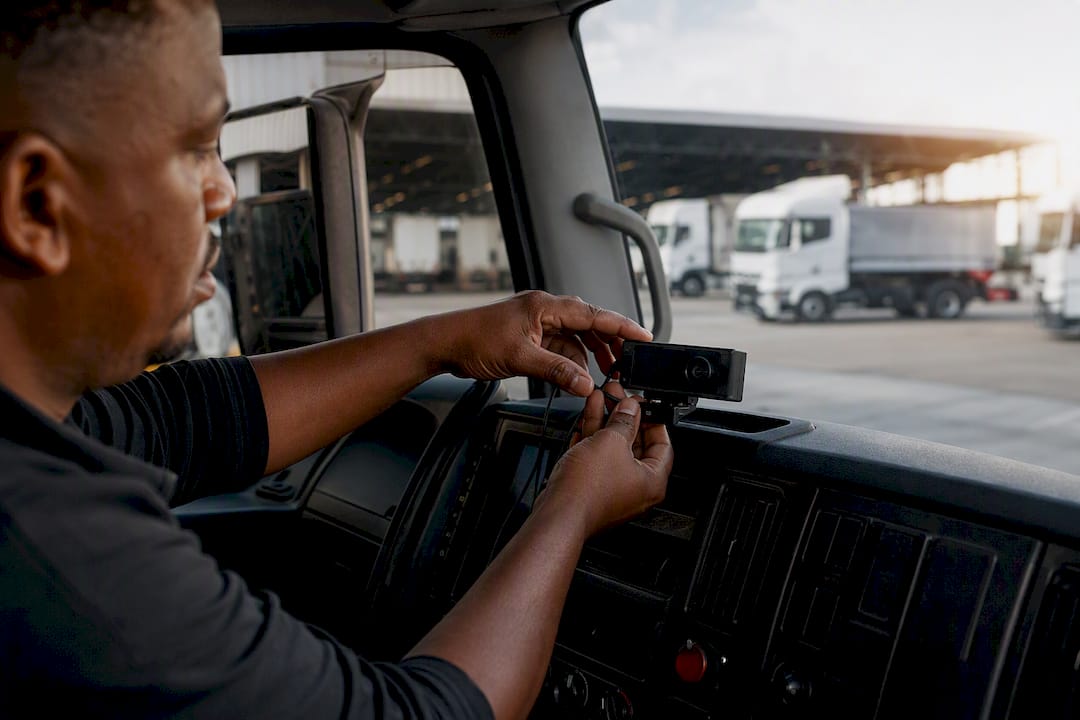
The flow runs in four stages: you activate cover, telematics and dashcam devices capture operational data, an insurer underwrites and prices based on that data, and claims get processed using the recorded evidence. Nothing about that sequence resembles the annual “set it and forget it” fleet policy most operators grew up with.
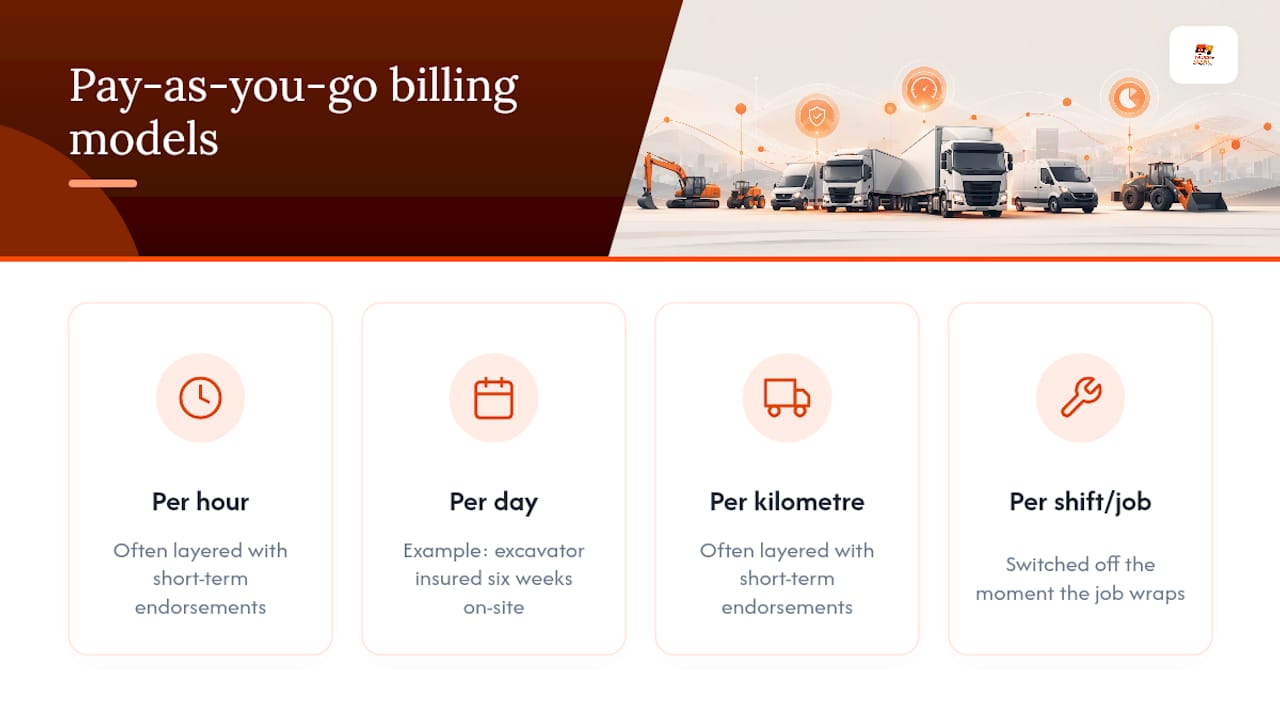
Billing usually follows one of a few models: per hour, per day, per kilometre, or per shift/job, often layered with short-term endorsements that extend or shrink cover as a contract starts or ends. A civil contractor might insure a excavator for the six weeks it’s on-site, then switch it off the moment the job wraps.
It’s worth being clear about who does what. A licensed insurer underwrites the risk and carries the liability. Telematics and dashcam providers supply the data that informs pricing, but they don’t issue the policy themselves — technology providers enable risk visibility while licensed insurers underwrite the actual cover.
That distinction matters when data-led underwriting actually pays off. One insurer running a telematics-based program reported an 8.3% improvement in loss ratio, with roughly 30% of customers qualifying for discounts once driving data replaced blanket risk assumptions.
A simple way to picture it: activation → telematics capture → insurer pricing → claims handling, with each stage feeding the next. For a deeper breakdown of how this compares to annual policies, see how on-demand insurance differs from traditional fleet cover.
What do underwriters look for in fleet risk?
Underwriters price operational patterns, not individual trucks. The core variables they weigh are:
- Driver behaviour (harsh braking, speeding events, fatigue indicators)
- Route exposure, including night-run percentage and high-risk corridors
- Vehicle theft history and SVR recovery performance
- Video evidence from incidents
- Cargo class and claims history
Telematics turns those variables into standardised numbers underwriters can actually compare: events per 100 kilometres, night-run exposure as a percentage of total hours, and route-heatmap breakdowns by corridor. That’s a shift from provincial loss-ratio averages toward metrics specific to your own fleet, a change the FIA notes has become standard practice in commercial motor underwriting.
Pro Tip: A 12-month telematics history with no significant gaps carries far more weight than six months of near-perfect data. Consistency reads as credibility to an underwriter.
Indexed incident clips and documented SVR response times reinforce that picture. But the relationship isn’t automatically favourable: telematics produces evidence-based pricing, not a guaranteed discount — a fleet with poor driving patterns on record can see premiums rise once that data is visible.
What should go in your renewal evidence pack?
Bringing a 12-month indexed evidence pack to a broker meaningfully improves your negotiating position, according to fleet insurance analysis on telematics in high-risk areas. Underwriters respond to specifics, not assurances.
Build your pack around:
- A 12-month driver scorecard with coaching logs attached
- A route-history heatmap broken down by corridor and time of day
- An indexed incident clip library with GPS pins and geofence tags
- SVR logs showing average alert time and recovery time
- A dispatcher audit trail confirming SOP compliance
Each incident clip should carry a consistent set of fields: timestamp, vehicle ID, geofence location, speed at the moment of the event, an event tag, and a direct link to the uploaded footage. That level of structure turns a stack of raw footage into courtroom-grade evidence that shortens contested claims from months to days.
Pro Tip: Package one standardised PDF per claim rather than handing over a folder of loose files. Brokers move faster on a pack they can scan in under two minutes. For a template approach, Truckplant’s guide on telematics in fleet insurance walks through exactly what to index and why.
What are the benefits and limitations of pay-as-you-go cover?
The chief benefits are cost alignment with actual use, short-term flexibility, evidence-led claims handling, and faster recovery outcomes when something goes wrong. The trade-off is that you need clean, consistent data to unlock those advantages.
Benefits:
- Pay only for the periods or assets genuinely at risk, which suits seasonal plant and intermittent hire fleets
- Video and GPS evidence speeds up claims resolution and cuts disputed outcomes
- Strong SVR records and monitoring can improve recovery rates on stolen assets
Limitations:
- Poor telematics data can raise your rate instead of lowering it
- Short activation windows carry administrative overhead compared to a single annual renewal
- Devices and dashcams typically need insurer approval before they count as evidence
One case worth noting: a telematics-based underwriting program cited night driving as a strong risk predictor, which is exactly the kind of pattern that either helps or hurts you depending on what your own data shows.
Handle driver and location data responsibly. Telematics and dashcam data involves personal information under South Africa’s POPIA framework, so confirm your provider’s data-handling terms before rollout. For more on weighing the trade-offs, read how flexible cover can optimise fleet premiums.
Who qualifies, and how long before it pays off?
Most underwriters want six to twelve months of consistent telematics history before they’ll confidently reprice a fleet. A shorter record can still support a quote, but you’ll have less room to negotiate.
Eligibility usually turns on your fleet profile, cargo class, prior claims record, and whether you’ve installed insurer-approved tracking and dashcam hardware. Insurers are specific about approved devices, so confirm compatibility before you invest.
When the pricing conversation starts, come prepared:
- Ask for a telematics-informed quote rather than a flat fleet-average rate
- Request a defined discount band tied to your scorecard performance
- Offer to bundle monitoring and rapid-response services to lower theft exposure
Negotiation works better with leverage. Bring comparative corridor heatmaps, ask for a provisional short-term trial before committing to a full switch, and don’t limit yourself to one broker. Multiple quotes against the same evidence pack tend to surface better terms. Truckplant’s renewal tips for fleet operators covers this negotiation sequence in more detail.
How do you implement pay-as-you-go insurance in a fleet?
Roll this out in stages rather than switching your whole fleet at once: pilot, measure, present evidence, then scale.
- Pick a pilot cohort. High-use, high-value, or high-variability assets show the clearest results fastest.
- Install insurer-approved telematics and dashcams across that cohort.
- Define your event and reporting standards before data starts flowing.
- Run the pilot for at least six months to build a credible record.
- Prepare your evidence pack and approach brokers with it.
- Negotiate short-term trial pricing and clear service-level terms.
- Roll out fleet-wide once the pilot outcomes hit your targets.
Loop in IT, operations, drivers, and your broker from day one, since driver buy-in affects data quality more than any hardware choice does. Track these KPIs through the pilot:
- Events per 100 kilometres
- Average recovery time on incidents
- Incident upload latency from event to clip availability
A vehicle insurance checklist can help structure this rollout, and a telematics guide like Nomora’s fleet manager overview is a useful reference for choosing hardware that meets insurer approval standards.
Truck & Plant On-Demand™: cover that matches how you actually work
Truckplant built Truck & Plant On-Demand™ around a simple idea: you shouldn’t pay a flat premium every month when your operational exposure isn’t flat. It covers commercial vehicles, trailers, plant, and tool hire equipment, and you activate or adjust it as your jobs change, not on a fixed annual cycle.

Getting started is quick. You activate cover digitally, choose the policy window that matches your job or season, and manage claims through a dedicated portal. Operators who already run telematics can bundle that data into their policy setup, which speeds up the underwriting conversation described earlier in this article.
Whether you’re running one excavator between contracts or managing a mixed fleet of trucks and trailers, get a quote through Truck & Plant On-Demand™ fleet insurance and see how activation-based cover compares to what you’re paying now.
A quick view on when to switch
Pay-as-you-go cover makes the most sense for fleets with intermittent assets, short-term hires, or telematics data mature enough to back a negotiation. If your fleet runs the same vehicles at the same utilisation year-round, the administrative overhead of activation cycles may outweigh the flexibility gains, and traditional annual cover stays the simpler call.
Frequently asked questions
Is pay-as-you-go insurance the same as usage-based insurance?
Is pay-as-you-go insurance right for my fleet?
It fits best if your assets sit idle for stretches, your jobs are short-term, or you already run telematics that can document driver and route data. Stable, high-utilisation fleets often gain less from switching.
How do I compare pay-as-you-go insurance options?
Look at activation flexibility, claims turnaround, telematics integration, and whether the insurer accepts your existing dashcam and tracking hardware before requiring new devices.
Does pay-as-you-go insurance guarantee lower premiums?
No. It gives you the tools to negotiate based on real data, but a poor driving or claims record can push pricing higher, not lower.
Sources
- The role of telematics in insurance (FIA)
- Fleet insurance premiums: using telematics in high-risk areas (TG Tracking)
- Absa boosts loss ratios by +8% with Sentiance’s mobility and driving insights (Sentiance case study)